


Introduction
Electromagnetic compatibility (EMC) is not just a feature in the architecture of modern electronics, but the foundation of reliability for sensitive electronic components. With the move to a high-frequency 5G communications, dense IoT sensor networks, and high-voltage electric vehicle architectures, Electromagnetic Interference (EMI) has become a fringe issue to a failure mode driven by pervasive electromagnetic radiation. EMI is an effective pollutant in the electronic spectrum, and it interferes with the operation of devices by means of electromagnetic signals in the radio frequency (RF) spectrum.
The remedy- an emi shield- is the habit of minimizing this field by obstructing it with obstacles composed of conductive material or magnetic materials. This is necessitated by two different imperatives: regulatory compliance (to ensure that a device does not emit noise) and susceptibility protection (to ensure that a device does not malfunction as a result of external noise). In a sensitive medical biosensor or a massive industrial servo drive, the inability to confine these signals leads to corruption of data, system crashes, or disastrous hardware failure.
Nevertheless, the problem of EMI shielding is actually an optimization problem. It involves the engineer striking a balance between the strict laws of physics, namely attenuation, conductivity, and permeability, and the economic and mechanical reality of production. This guide offers a structural discussion of shielding materials, the rationale of their choice, and the importance of precision hardware in shield integrity.
What are EMI Shielding Materials and How they work?
.webp)
Fundamentally, EMI shielding material is a physical shield that is meant to reduce the energy of an electromagnetic wave to a level that is no longer harmful to the target system. These materials are the main shield in the lexicon of industrial design against Electromagnetic Interference (EMI) the silent, ubiquitous pollutant of the industrial era that impairs performance and interferes with communication. The material, be it made of conductive metals, magnetic laminates, or composite elastomers, serves as a required wall, forming a safe electronic environment by preventing undesired energy transfer.
This barrier is characterized by its Shielding Effectiveness (SE) which has a dual-purpose: it offers immunity (it does not allow external fields to enter the enclosure) and it suppresses emissions (it does not allow internal energy to escape and disrupt other devices). The control of this interference is a competitive necessity in an ever-connected and automated world, which is being propelled by high-speed data, 5G, and high-power industrial machinery. To the industrial hardware engineer, effective shielding is a very important field that combines material science and mechanical engineering. The difficulty is in choosing a material that provides the required attenuation without affecting the structural, thermal, or cost considerations of the end product, and understanding that the most effective shielding material is of no use when the end product is defective.
The success of this barrier is not a magic, but it is controlled by Maxwell equations and depends on three different physical processes to prevent the wave:
- Reflection (The Major Mechanism of Electric Fields): To reflect a wave, the shield should have mobile charge carriers, which respond to the external field. The incident of an electromagnetic wave on a conductive surface causes a current to be induced which creates an opposing field, which reflects the energy back. Therefore, the requirement is high electrical conductivity, and that is why such metals as copper and aluminum are typical options.
- Absorption (The Primary Mechanism of Magnetic Fields): As an electromagnetic wave passes through a material, the energy is absorbed as heat because of ohmic losses and magnetic hysteresis. Absorption plays a vital role in the protection against magnetic fields and high-frequency radiation. The material thickness is a critical factor in this case; with frequency, the current flows on the surface only (the “skin effect”). The material should be thick to absorb the energy before it leaves the other side to be effective.
- Multiple Reflections: This process takes place in the shield itself, especially in composite or laminated materials. The waves are reflected between internal boundaries or particles (silver flakes in a silicone elastomer), and the signal is further attenuated before it can escape.
EMI Shielding Materials: Composition and Forms
A wide range of shielding materials is available in the market, each of which is optimized to particular parts of the spectrum and environmental conditions. These can be broadly classified as metallic and non-metallic (composite).
Detailed Comparison of Commercial Metallic Materials
Although there are exotic alloys used in niche applications, most industrial and commercial shielding is based on three basic metals: Copper, Aluminum, and Steel. The choice between them is a trade-off between conductivity (high frequency reflection), permeability (low frequency absorption), and structural feasibility.
- Copper: The Unrivaled Gold Standard of High-Frequency Applications.Copper is the standard by which all other electrical conductors are judged (100% IACS). It is the best option when it comes to attenuation of high-frequency radio waves (RF) and microwaves due to its ability to serve as an almost perfect mirror to electric fields. It is easy to solder and shape into complex shapes due to its malleability. There is however a caveat to this performance: copper is heavy, costly and very reactive to oxygen. It oxidizes quickly without tin or nickel plating, resulting in the loss of surface conductivity and shielding effectiveness. As a result, copper is commonly used in sensitive applications such as MRI rooms (RF cages), board-level shielding cans, and high-speed data cabling where signal integrity is essential.
- Aluminum: Provides the Best Weight to Conductivity Ratio in Structural Enclosures. Aluminum is the standard in the industry in terms of structural enclosures and it prefers a balance between weight and performance. Although it has a conductivity of just approximately 61 percent of that of copper, its strength-to-weight ratio is so high that it cannot be replaced in mobile and large-scale applications, including electric vehicle battery packs and outdoor 5G base stations. Another special property of aluminum is that it forms an oxide coating naturally; although this prevents severe corrosion, the oxide is an electrical insulator. Thus, in order to provide the ground connection necessary to shield, the aluminum surfaces should be chemically treated (e.g., chromate conversion) or plated. It is the best option when mass and cost are the main limitations.
- Steel: Preeminence in Low-Frequency Magnetic Absorption by Excellent Permeability. Steel works under another physical principle. As compared to copper and aluminum which depend on conductivity to reflect energy, steel is ferromagnetic and employs its high permeability to absorb magnetic flux lines. This causes it to be the best solution in blocking low-frequency interference (H-fields), including the hum produced by power transformers, motors, and inverters. Although its low conductivity renders it ineffective at blocking high-frequency RF, its physical rigidity and low cost render it the standard in heavy industrial control cabinets and server racks that need to survive physical abuse and the harsh factory environment.
In order to add up these differences, the following matrix measures the critical performance trade-offs of copper, aluminum and steel.
| Feature | Copper | Aluminum | Steel (Mild/Carbon) |
| Best For | High-Frequency RF & Precision | Weight-Sensitive & General Enclosures | Low-Frequency Magnetic & Durability |
| Shielding Mechanism | Reflection (Excellent) | Reflection (Good) | Absorption (Excellent) |
| Conductivity (IACS) | 100% | ~61% | ~10% |
| Magnetic Permeability | 1 (None) | 1 (None) | 100 – 2,000 (High) |
| Corrosion Resistance | Low (Needs Plating) | Medium (Oxide Layer) | Low (Needs Painting/Coating) |
| Cost | High | Medium | Low |
| Weight | Heavy | Light | Heavy |
Non-metallic and Composite Shielding Materials
With the continued reduction in size of electronic devices and weight a luxury consideration, engineers are increasingly considering composites. These materials consist of a non-conductive matrix (e.g. plastic or rubber) with conductive fillers to provide shielding properties, and may have a dual purpose such as environmental sealing or structural support.
- Conductive Elastomers: Environmental Sealing + EMI Protection These are basically rubbers (silicone, fluorosilicone or EPDM) filled with conductive particles such as silver-plated aluminum, nickel-graphite or carbon. Their main benefit is duality: they are a waterproof environmental seal (IP rating) and at the same time, they create electrical continuity between mating surfaces. Due to their ability to resist extreme weather and fluids, they are the default in outdoor telecommunications equipment, military radios, and automotive ECU housings where moisture intrusion is equally lethal as electromagnetic interference.
- Conductive Coatings and Paints: Turn Plastic Housings into Shields When weight reduction is the key factor, engineers tend to use plastic enclosures instead of metal, yet plastic is not opaque to EMI. This is solved by conductive paints, acrylics or urethanes containing copper, silver or nickel, which form a thin conductive layer on the inside of the plastic part. This method can be used to produce complex, lightweight geometries that would otherwise be unfeasible or prohibitively expensive to cut out of solid metal. The solution is common in medical equipment (such as patient monitors) and consumer electronics, where the device needs to be portable but needs to be shielded to avoid cross-talk.
- Fabric-over-Foam Gaskets: Provide Low Compression Solutions to Delicate Assemblies This composite is made of a conductive fabric (typically nickel/copper-plated nylon) that is wrapped around a soft urethane foam core. The distinguishing feature of the material is its extreme softness; it is very easy to compress. This is best suited to applications where a rigid rubber gasket would distort the housing or where the closure force is not so great. As a result, Fabric-over-Foam is used in the industry as a consumer electronics gap (such as laptop lids), server faceplates, and indoor cabinet doors with high conductivity and no mechanical stress.
- Form-in-Place (FIP) Gaskets: Precision Shielding of Complex Geometries FIP technology is a robotic arm that dispenses a bead of conductive silicone onto a metal or plastic housing, which then cures in place. This process does not require manual assembly and can have very complex gasket paths on very small flanges (as thin as 0.5mm). Due to its space savings and accurate positioning, FIP is widely used in high-density telecom base stations (5G RRUs) and compartmentalized military electronics where every millimeter of space counts.
- Conductive Plastics: Offer Integral Shielding without Secondary Processing Unlike coatings that are added after injection molding, conductive plastics are polymers (PA, PC, ABS) that are filled with stainless steel fibers or carbon nanotubes during injection molding. The section comes out of the mold naturally covered. Although typically less attenuating than pure metal, this material simplifies the supply chain by eliminating the painting or plating process. It is finding more applications in automotive sensor housings and industrial connectors where high-volume manufacturing efficiency is the key factor.
.webp)
Selection Guide: 5 Factors to Select the Right Material
The choice of the best material is a fallacy; the choice of the best material to use is the one that fits the particular limitations of the system. This decision matrix has five critical vectors that trade physics and engineering reality.
Frequency Range and Attenuation Requirement
The frequency of the interference is the main criterion of the material selection, and it determines the physical mechanism of the shield required. High-frequency waves (RF, 5G, Wi-Fi) propagate mostly on the surface of a conductor because of the skin effect. Thus, in the shielding of frequencies beyond 10 MHz, the engineer should focus on high electrical conductivity; such materials as Copper foil, Aluminum, or Silver-plated elastomers are the best since they reflect this energy effectively. On the other hand, low-frequency magnetic fields (like the 50/60Hz hum of power transformers) can penetrate deep into conductive metals. To prevent them, it is necessary to focus on magnetic permeability rather than conductivity. Thin conductive foils are of no use in such cases, but thick Steel or special Mu-Metal is needed to absorb and bend the magnetic flux lines back.
IP Ratings and Environmental Resistance
An EMI gasket is frequently used as an environmental seal, that is, its mechanical failure ensures an electrical failure. The decision on the binder (rubber) material is strictly determined by the operating environment. In severe outdoor or marine conditions with UV radiation, fuel, or salt spray, Fluorosilicone binders are necessary to avoid degradation and pure silver fillers are not to be used because they can move in humidity. In the case of controlled indoor settings, standard Silicone or Urethane foam is adequate. The engineer should make sure that the material is capable of cycling the particular temperature of the device without cracking because a broken seal will result in the moisture corroding the conductive path.
Galvanic Compatibility and Corrosion Prevention
The most prevalent cause of long-term shielding failure is galvanic corrosion. In the presence of an electrolyte (such as humidity or salt air), two dissimilar metals in contact with each other form a battery that consumes the material, destroying the electrical bond. The rule of selection is to reduce the difference in electrochemical potential between the gasket and the mating flange to the lowest possible value, preferably less than 0.25V in severe conditions. As an example, a noble Silver-filled gasket on an active Aluminum chassis will rapidly pit the aluminum; a more suitable option would be Silver-plated Aluminum or Nickel-Graphite fillers to suit the chassis potential and maintain the integrity of the grounding.
Mechanical Properties: Compression and Hardness
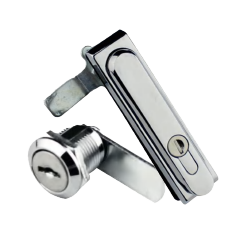
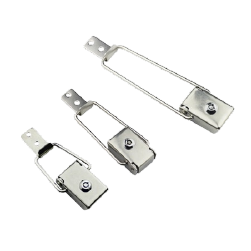
To create a low-impedance connection, a conductive gasket needs to be compressed, although the force available is constrained by the enclosure design and hardware. When the enclosure is a thin sheet metal door, a hard, solid rubber gasket will cause the door to be warped prior to the gasket compressing, leaving gaps. These low-compression applications need soft Fabric-over-Foam or hollow extrusion gaskets. On the other hand, Solid D-Shape Elastomers are used when rigid cast aluminum housings are required or heavy industrial flanges (held by high-compression hardware such as the industrial latches of KUNLONG) are needed. They are capable of high closure forces and offer better environmental sealing without experiencing the problem of compression set where the material does not rebound after the door is opened.
Economical and Legal Adherence
Lastly, the decision is driven by the economics of the product lifecycle. Although Silver has the best performance, it is not economically viable in commodity consumer electronics. The engineer should estimate the Total Cost of Ownership and not the price of the raw material. As an example, Conductive Plastic might cost more per pound of raw material than standard ABS, but it can be the less expensive solution due to the absence of a second painting line or plating process, simplifying logistics and shortening the manufacturing time. Also, the material selection should be consistent with the regulatory standards such as RoHS (limiting lead and hazardous materials) and UL94 flammability standards, which cannot be compromised in the name of consumer safety.
Applications of EMI Materials
The various industries have different interference profiles and environmental constraints that determine the selection of materials. The analysis below disaggregates the best shielding plans of critical sectors.
.webp)
- Medical Devices: Shielding in the medical sector is a patient safety issue. In the case of heavy imaging equipment such as MRI machines, the main issue is to contain huge magnetic fields. In this case, the only possible solution is the Mu-metal or thick silicon steel, which are high-permeability materials that are needed to conduct the magnetic flux. On the other hand, weight and ergonomics are the most important factors in the case of portable patient monitors and diagnostic tools. The conductive coating (copper/nickel paints) applied by engineers on the inside of plastic housings is usually sprayed. This method offers enough attenuation to internal cross-talk without the burden of a metal enclosure. An important warning in this industry is biocompatibility: any external shielding material should be non-toxic and hypoallergenic, which means that nickel-based coating on surfaces of contact with the user should be avoided.
- Automotive and Electric Vehicles (EV): The electrification of the automotive powertrain has created an unfriendly EMI environment with high-voltage switching noise in inverters and battery management systems. The standard here is aluminum housings, which provide the best trade-off between thermal management, structural integrity, and weight reduction. Nickel-Graphite filled silicones are the material of choice to seal these housings. They offer strong protection against broadband noise and are not affected by the corrosive nature of road salt and automotive fluids. The unique problem in this industry is vibration; the material used should have a good rebound memory so that the seal remains constant throughout the years of physical shock and thermal cycling of the vehicle.
- Industrial Automation and Telecommunications: In the case of industrial control cabinets and outdoor telecom base stations, physical durability and longevity are the key factors. Large enclosures are preferably made of zinc-plated steel because it can absorb low-frequency magnetic interference produced by heavy motors and transformers. In the case of the gaskets, Monel or Steel wire mesh is frequently utilized due to its resistance to abrasion and high mechanical strength. Form-in-Place (FIP) conductive gaskets are used in the 5G telecom industry where heat sinks are made of die-cast aluminum and applied directly to the heat sinks to conserve space. The main danger of this industry is the slot antenna effect: huge cabinet doors tend to bend, forming long cracks that allow EMI to escape, and high-compression hardware is required to ensure a consistent seal.
- Aerospace and Defense: In aerospace, each gram of weight is directly proportional to fuel expenditure, which is why there is a move towards solid metals. Conductive carbon composites and aluminized thermoplastics (PEEK or Ultem plated with metal) are becoming more common in the industry. These materials provide the shielding performance of metal and the structural performance of plastic. Nevertheless, the criteria of selection in this case are the most strict; the materials should comply with the strict outgassing requirements (to avoid contamination of the sensors in the vacuum) and UL94 V-0 flammability requirements. Moreover, the shielding should be able to withstand severe thermal shock, which demands conductive elastomers that are flexible at high altitudes.
Important EMI Shielding Failure Categories and Prevention
Shielding effectiveness (SE) may fail in systemic failures even with high-quality materials. These failure modes are critical in preventative design.
Conductivity is undermined by Material and Environmental Degradation
The most prevalent long-term failure mode is the environmental degradation of the electrical bond. With time, oxidation or galvanic corrosion forms a non-conductive coating between the shield and the housing. When the resistance across a joint increases to a few milliohms, the shield is virtually an antenna. This involves strict environmental testing, e.g. salt spray (400h+) and mixed flowing gas tests, in the qualification stage. More importantly, engineers should strictly follow galvanic compatibility charts, where the gasket filler metal should be of the same electrochemical potential of the mating flange (e.g. passivated aluminum fillers in aluminum housings) to avoid the creation of a galvanic cell.
Flaws in Design Produce the Slot Antenna Effect
A shield is not often a solid box; it must be ventilated, have cable entry and displays. One of the biggest failures is when a seam or opening is a slot antenna. When the length of a slot is more than 1/20th of the wavelength of the interference frequency, the slot permits the free flow of energy, making the surrounding material useless. Geometric control is the solution. Honeycomb filters (waveguides) should be used in ventilation panels instead of plain slots. In the case of seams, the design should provide enough overlap and minimize the spacing between fasteners to subdivide long gaps into smaller non-resonant sections.
The Most Critical Failure Mode is Loss of Mechanical Integrity and Gaps
This is the most pernicious failure mode since it usually manifests itself once the device is out of the factory; a shield is as good as its seals. Field data points to the critical difference: generic hardware can lose 30-40% of its clamping force in only 1,000 cycles, whereas precision hardware can retain 95% integrity in 50,000 cycles, virtually eliminating 0.2mm micro-gaps that can reduce shielding effectiveness by more than 20 dB. Since the most sophisticated gasket is useless without regular compression, the investment in precision mechanics is not only the upgrade, but the minimum of the EMI compliance throughout the machine life.
Physical integrity is not the whole battle, however. The financial difference between these technologies is equally critical as the physical one when considered through the prism of Total Cost of Ownership. To demonstrate this difference, the following analysis compares the economic and operational reality of each shielding strategy:
| Technology Strategy | Total Unit Cost | Durability | Maintenance | Ideal Application |
| Conductive Paint / PVD | High (>$25.00) | Poor (Flakes off) | Difficult (Repaint) | Light Medical / Drones |
| Beryllium Fingerstock | High ($18 – $22) | Fragile (Snaps) | Expensive (Skilled) | Static Server Rooms |
| Form-in-Place (FIP) | Med-High (>$15.00) | Good (Permanent) | Impossible (Scrap Door) | Phones / Mass Prod. |
| Precision Hardware + Gasket | Low ($10.00) | Excellent (Rugged) | Easy (Gasket Swap) | Heavy Industry |
In the analysis of the above matrix, the financial superiority of Hardware-Led Sealing is mathematically indisputable. This is the reason why other technologies are profit-consuming in industrial use, and why precision hardware is the best solution:
- The Labor Trap of Surface Treatments: Surface treatment technologies such as Conductive Paint or PVD can be used on small medical devices, but in heavy industry, the labor of hand masking makes the effective cost exceed 25.00 per unit. Moreover, such finishes peel off during abrasion, and the rework is complex and expensive.
- The Fingerstock Material Premium: Beryllium Fingerstock is a good product to use in a static server room, but it is as expensive as a semi-precious metal. Protecting a typical cabinet perimeter raises the cost of BOM to $18.00-22.00 and its vulnerability in harsh conditions causes frequent breakages and costly warranty claims.
- The Service Dead-End of Form-in-Place (FIP): FIP is automated to produce smartphones in large quantities, but it poses a huge liability to large equipment. Since the gasket is bonded permanently, when one of the seals is damaged, you are forced to scrap the entire costly door, which is a hidden cost of maintenance that is much greater than the savings.
- Lastly, Hardware-Led Sealing is the Better Alternative: In sharp contrast, a Precision Hardware + Gasket approach does not have these premiums. You create the mechanical force to clamp with a generic off-the-shelf gasket of $2.00 by spending $8.00 on a precision adjustable latch. This makes a rugged, serviceable $10.00 Total System–and demonstrates that in the case of long-lasting industrial property, mechanical force is not only more serviceable, but much more profitable.
The engineering essence of the Adjustable Compression Series of KUNLONG is this philosophy, which is to employ better mechanics to reduce the overall manufacturing cost.
Solution of KUNLONG: Maximum EMI Shielding Effectiveness with Precision Hardware
The shield integrity is frequently undermined not by the material, but by the hardware that holds it. Although standard industrial components usually have tolerances of about 0.05mm, this variation can form microscopic holes that are lethal to high-frequency shielding. In comparison, high-precision versions, namely those designed by KUNLONG, have a precise error margin of 0.0005mm. This order of magnitude enhancement guarantees the consistent compression required to eradicate slot antenna leakage along the enclosure perimeter.
Moreover, generic hardware tends to fail when subjected to normal environmental conditions, cutting off the vital electrical grounding circuit, high-quality components need to be able to survive much more severe conditions. KUNLONG takes this standard far beyond the industry standard and tests products to 1,000 hours of salt spray to ensure long-term conductivity. This stringent process, backed by 30 years of experience in the engineering field and a 100 percent quality control measure (including 15 different checks per batch) ensures a 20,000+ cycle life, turning hardware into a strategic asset in EMI protection.
Testing Standards and Troubleshooting
The last step in shielding workflow is validation. The material datasheet is not enough to rely on, the final assembly has to be tested.
Important Industry Regulatory Standards
In order to be compliant, it is necessary to determine the particular regulatory framework that the application is subject to. Various industries have different priorities of risks- data integrity to life safety.
- Commercial and Consumer Electronics (IEC / CISPR): In the case of devices to be used in international markets (CE marking in Europe, FCC in the US), the IEC 61000 series is the most common standard of immunity (resistance to external noise). On the other hand, CISPR 22/32 regulates radiated emissions (to ensure that the device does not contaminate the spectrum).
- Military and Aerospace (MIL-STD): The most stringent standard that exists is the MIL-STD-461 protocol. It requires very high shielding (usually 80dB+) over a wide range. Sub-standards such as RE102 (Radiated Emissions) and CE102 (Conducted Emissions) require that shielding materials should be able to endure severe environmental conditions without compromising performance.
- Automotive (CISPR / ISO): CISPR 25 and ISO 11452 are now essential with the emergence of EVs. These standards are specifically concerned with the high-voltage switching noise produced by inverters that may cause interference with onboard infotainment and safety sensors.
- Medical Devices (IEC): IEC 60601-1-2 is special in the sense that it considers EMI a patient safety concern. The shielding should be such that life-support equipment is not brought to failure under the influence of a strong external interference (a nearby cell phone).
Common Failure Mode Troubleshooting
When the leak is detected by the “Sniffer” it is seldom because the shielding material is transparent at the frequency. It is nearly always a system assembly failure.
- Step 1 Check the Seams (The Mechanical Gap): This is the most common failure point. When the probe picks up noise along the door frame or the chassis mating line, it is a sign of a slot antenna effect. This implies that the conductor gasket is not being squeezed evenly, or the spacing between the fasteners is excessively large to block the frequency.
- Step 2 Test I/O Ports and Cables: Unshielded cables are frequently transmitting antennas, and they can be a source of internal noise. The remedy typically includes the addition of ferrite cores or better grounding of the cable shield to the chassis.
- Step 3 Check Apertures: The shield requires holes in the form of ventilation grilles and display windows. When these openings are excessive, they leak. The remedy is retrofitting with honeycomb waveguides or conductive glass.
The Solution to Seam Failures: In all cases where the diagnostic indicates a seam failure (Step 1), the cause is inadequate or uneven mechanical pressure. The gasket exists, but the hardware is failing to perform its duty. The short-term engineering solution is to replace the latches with high-precision, high-compression ones, like those designed by KUNLONG, to press the enclosure into a consistent seal, sealing the gap and restoring the electrical continuity needed to pass the test.
Future Prospect: When to think about Advanced Composite Materials
Nanotechnology is the frontier of shielding. MXenes (two-dimensional inorganic compounds) and graphene-enhanced polymers are set to provide the conductivity of copper at the weight of plastic.
Nevertheless, in the coming decade, the incorporation of these materials will continue to be based on the conventional mechanical closure techniques. With frequencies going up to mmWave (6G) range, the mechanical gaps will become even more intolerant, and the accuracy of hardware will become even more critical to the shielding equation.
Conclusion
EMI shielding is a multidisciplinary problem that cannot be addressed by materials only. It needs a symbiotic interaction between chemical characteristics of the shield (conductivity/permeability) and mechanical characteristics of the enclosure (compression/precision).
Engineers should no longer rely on datasheet values of shielding effectiveness, but must take into account the mechanical reality of the finished assembly. Choosing the right material depending on the frequency and environment, and combining it with high-precision hardware that ensures the structural integrity, one will not only guarantee compliance, but also the reliability of the system in the long-term.
FAQS
Q: What is the most effective material to block electromagnetic waves?
A: Copper and Mu-metal are some of the most efficient, where copper can deal with high-frequency EMI and Mu-metal can deal with low-frequency magnetic shielding.
Q: What are the magnetic shielding materials?
A: Mu-metal and Permalloy are high-permeability alloys.
Q: Is aluminum foil EMI shielding?
A: Yes. High-frequency EMI can be blocked by aluminum foil, but low-frequency magnetic fields cannot be blocked.