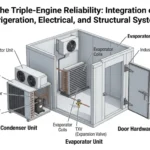



When an environmental test chamber goes down, the real cost isn’t the replacement part—it’s the halted production lines, compromised test data, and missed delivery deadlines. Sourcing the right environmental chamber parts requires more than just searching for a model number; it demands accurate diagnostics to prevent secondary failures. This guide provides a clinical approach to identifying, sourcing, and thoroughly eradicating the root causes of your environmental chamber’s downtime.
Environmental Chamber Parts: Triage and Diagnostic Fundamentals
The most expensive mistake in chamber maintenance is the “parts cannon” approach—blindly replacing high-value components based on superficial symptoms. Before sourcing any parts, you must establish the root cause. A burned-out compressor is often the victim of a failed relay, not the original culprit.
Use the following symptom-to-part diagnostic matrix to guide your initial multimeter testing before approving any purchase orders:
| Observed Symptom | Primary Suspect (Test First) | Secondary Suspect (High Value) |
|---|---|---|
| Fails to reach low temperature setpoints | Contactor / Refrigerant Leak | Cascade Compressor |
| Heating ramp rate is abnormally slow | Solid-State Relay (SSR) | Finned Tubular Heater |
| Erratic humidity fluctuations | Clogged Water Filter | Steam Generator / Atomizer |
| Chamber frosting / Constant compressor run | Door Latches / Hinges (Sagging) | Silicone Door Gaskets |
Thermodynamic Core Components: Heating and Refrigeration
The thermodynamic engine of your environmental chamber handles extreme stresses. Understanding the interaction between the heating circuitry and the refrigeration loop is critical for specifying the correct replacement specifications.
Cascade Compressors and Refrigerant Upgrades
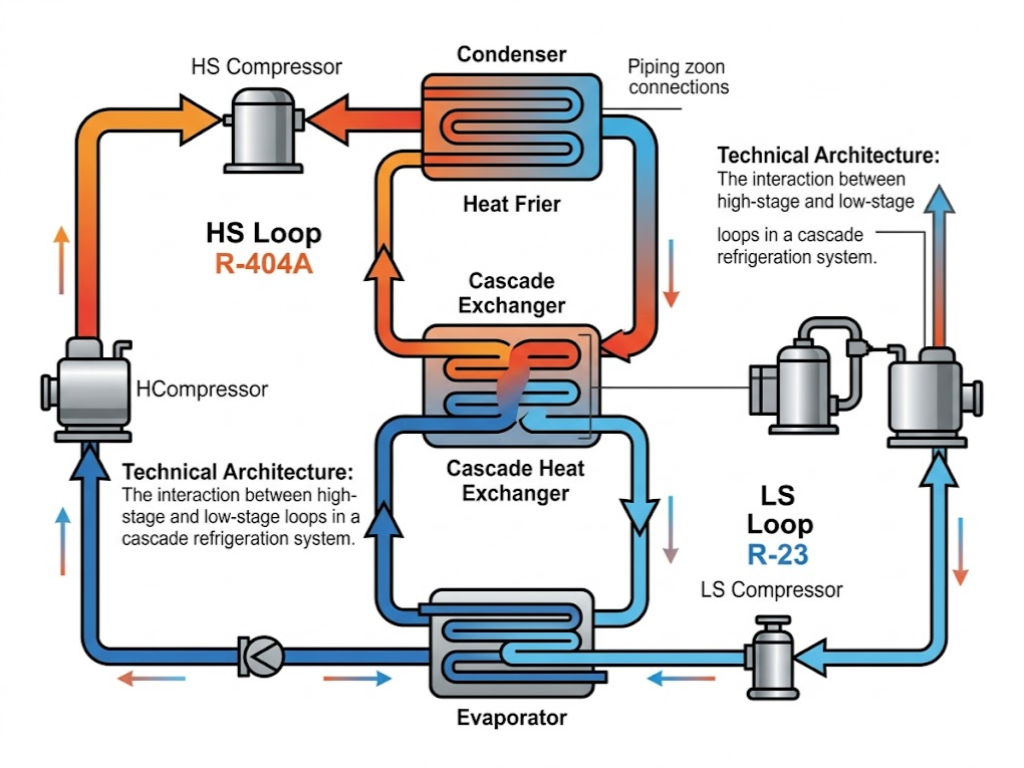
Ultra-low temperature environmental chamber rely on cascade refrigeration systems—a thermodynamic relay race where the high-stage loop cools the condenser of the low-stage loop. If one stage fails, the entire system collapses.
When replacing a compressor, you must navigate current environmental compliance. Due to EPA SNAP and global F-Gas regulations, legacy refrigerants are facing aggressive phase-outs. Sourcing a new compressor often requires ensuring compatibility with drop-in replacement refrigerants and potentially updating the expansion valves.
Finned Heaters and Solid-State Relays (SSRs)
Air heating is typically achieved via finned tubular elements. However, the physical heater is rarely the root cause of a heating failure. The control circuitry handles thousands of rapid switching cycles and is highly prone to short-circuiting.
Diagnostic Tip: Always test the SSR before ordering a heater. Replacing a low-cost SSR proactively can save a highly customized, expensive finned heater from a catastrophic meltdown caused by a relay stuck in the “closed” position.
Humidity and Moisture Control Systems
Humidity control accounts for the highest volume of operational complaints. Whether your system utilizes vapor generators, immersion heaters, or atomizing nozzles for humidification—or desiccant honeycomb wheels for dehumidification—the primary enemy remains constant: scaling.
Over 90% of steam generator failures are traced back to poor water quality. Mineral buildup insulates the heating elements, causing them to overheat and rupture. The most critical “part” in this system is preventative: the RO cartridge or inline water filter. Failing to maintain a strict replacement schedule guarantees the premature death of your humidity generation components.
Precision Nervous System: Sensors and Controllers
Even with perfect thermodynamic components, degraded sensors will ruin test data. Pt100/Pt1000 RTD probes and capacitive humidity sensors naturally suffer from “drift” over continuous thermal cycling. When calibration can no longer compensate for the drift, the sensor must be replaced to prevent the PID controller from executing erroneous heating or cooling commands.
If a legacy HMI or PID controller board fails, upgrading to a modern industrial controller involves complete I/O mapping and reprogramming the control loops to match your environmental chamber’s specific thermal mass.
Sealing Integrity: Door Hardware and Isolation
Here is a harsh engineering reality: You might be searching for a $5,000 cascade compressor replacement today, but the root cause was likely a $50 substandard door hinge installed by the OEM years ago.
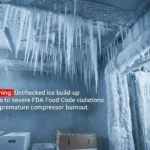
When structural isolation fails, it triggers a death spiral. A cheap hinge sags by just 1 millimeter > The gasket loses compression > External moisture breaches the environmental chamber (Thermal Bridging) > The compressor is forced to run 24/7 to compensate > The compressor burns out. The true root cause of most thermodynamic failures is a compromised mechanical seal.
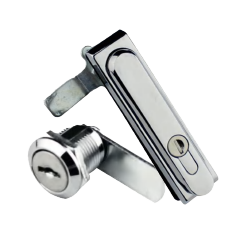
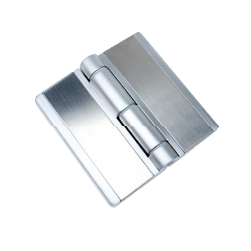
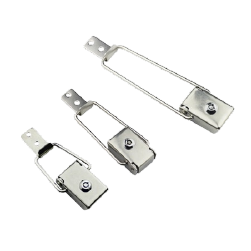
Heavy-Duty Hinges and Compression Latches
Environmental chamber doors endure violent thermal expansion and contraction, coupled with significant internal pressure fluctuations. Standard industrial hardware simply cannot survive this. To permanently fix recurring leaks and icing, your environmental chamber requires purpose-built mechanical hardware.
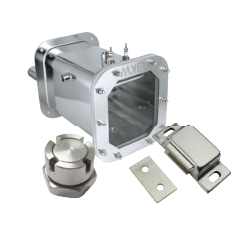
This is where industry standards are defined. Top-tier environmental chambers utilize specialized hardware from manufacturers like Kunlong. Engineered from premium 304/316 Stainless Steel and alloys, these structural components are rated to withstand temperature extremes of -70℃ to 260℃ and routinely pass rigorous 1000-hour Salt Spray Tests. Upgrading to this level of heavy-duty hinge and compression latch is the only way to lock down your testing environment.
Multi-Tier Silicone Door Gaskets
The hardware provides the crushing pressure, but the gasket provides the seal. Chamber gaskets must utilize extreme-temperature silicone or fiberglass rope composites. For ultra-low temp applications, perfectly compressed dual-layer sealing profiles are mandatory to create an insulating dead-air space.
For Environmental Chamber OEMs: Stop Bleeding Warranty Margins on Substandard Hardware
If you are an R&D engineer, procurement manager, or OEM reading this, consider the scenario above. Your end-users are online, searching for ways to fix equipment that failed prematurely because a standard latch couldn’t handle the thermal load.
Every time a environmental chamber loses its seal in the field, it consumes your warranty margins and damages your brand reputation. A piece of equipment worth hundreds of thousands of dollars should never be brought to its knees by a commercial-grade fastener.
Building a zero-failure environmental chamberr starts at the structural level. Relying on specialized industrial hardware isn’t an added cost; it is an insurance policy against catastrophic aftermarket failures, exorbitant field service dispatches, and lost client trust.
Accelerating Environmental Chamber R&D and Production: Your Strategic Supply Partner
KUNLONG Hardware is the stealth backbone behind the world’s most reliable testing equipment. We don’t just supply parts; we engineer structural integrity.
We eliminate supply chain bottlenecks with an annual production capacity of 100 million units. Whether you need standard parts immediately or custom-engineered solutions for a new environmental chamber chassis, our infrastructure guarantees speed to market:
- Rapid Prototyping: 3D design concepts in 7 days, custom molds in 45 days.
- Unmatched Inventory: 3,000+ standard models in stock, dispatched within 7 days.
- Zero Defect Tolerance: 99.9995% precision with a 20,000+ cycle guarantee.
Stop the Warranty Bleed
Download free 3D CAD models and integrate the Kunlong standard into your next-gen builds.