


The operator is the most valuable and the most vulnerable point in the production chain in the machinery age, where precision and speed are the hallmarks of industrial excellence. The honesty of the manufacturing floor is not gauged by the output figures but by its adherence to human safety. Machine guarding is not a regulatory burden as many people tend to think, but rather the silent agreement between the machine and the operator, the demarcation point between productivity and protection. It is the principle of engineering ethics that is used in mechanical design. This authoritative guide goes beyond the simple definitions to offer a detailed outline of how to choose, install, and defend the various forms of machine guards required to achieve actual operational and legal compliance.
Core Concept: What is Machine Guarding?
Machine guarding is the designed process of surrounding dangerous sections of machinery with physical barriers or active safety devices to avoid contact with body parts or to contain hazards such as flying debris, chips, or sparks. Its final aim is two-fold: to safeguard the operator and other employees around him, and to guarantee the stability of the machinery itself in its operation.
The necessity of guarding is due to the natural dangers produced by three types of mechanical action:
The Point of Operation, which is the area where the machine performs its work upon the material being processed—cutting, shaping, boring, punching, or forming. This is the most complicated area that requires the most complicated guarding solutions because it requires interaction with the operators.
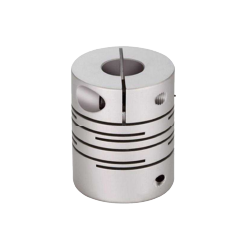
The Power Transmission Apparatus is all the parts that transfer energy in the machine, including flywheels, pulleys, belts, connecting rods, couplings, cams, gears, and shafts. These movements are usually repetitive and should be completely enclosed because they usually do not need the operator to be touched when they are in operation.
Other Hazardous Motions, including rotary motion (both exposed parts and revolving collars), reciprocating motion (back and forth action), and transverse motion (straight-line, continuous movement).
Engineering controls are the highest in the Hierarchy of Controls, which is a well-known system of reducing or removing the exposure to hazards. In engineering controls, the most common and the most effective way of personnel protection is known as guarding. A guard, properly designed and installed, is a permanent solution, requiring no regular action or decision on the part of the operator to ensure safety. The guard represents the creation of safety into the machine, as opposed to administrative procedures or personal protective equipment (PPE). The success of machine guarding is actually achieved when the barrier is so natural and unchangeable to the operator that it is like the floor under their feet.
The Four Primary Types of Physical Guards
As the fundamental hazards that need to be guarded against have been established, the next thing to do is to think of the physical barriers that have been established to contain them. These are the primary barriers against mechanical hazards, and their selection depends on the level of accessibility required by the machine.
Physical guards are the robust, physical barriers that are integrated into the equipment to protect by a physical barrier. The most significant aspect is to select the right physical guard since the strategy adopted must be in line with the production process and eliminate the risk.
Fixed Guards
Fixed guards, which are in theory the stone walls of machine safety, are characterized by their immobility. They are fastened elements (such as bolts, screws, or welding) that need tools to be removed. These are the easiest and most popular form of guard where there is no need of operational access and maximum protection with minimum maintenance is provided..
- Application: Best suited for areas where access is never or very rarely required during normal operation, such as covering gear trains, belts, pulleys, or peripheral power transmission components.
- Limitation: If removed for maintenance, lockout/tagout (LOTO) procedures must be strictly followed.

Interlocked Guards
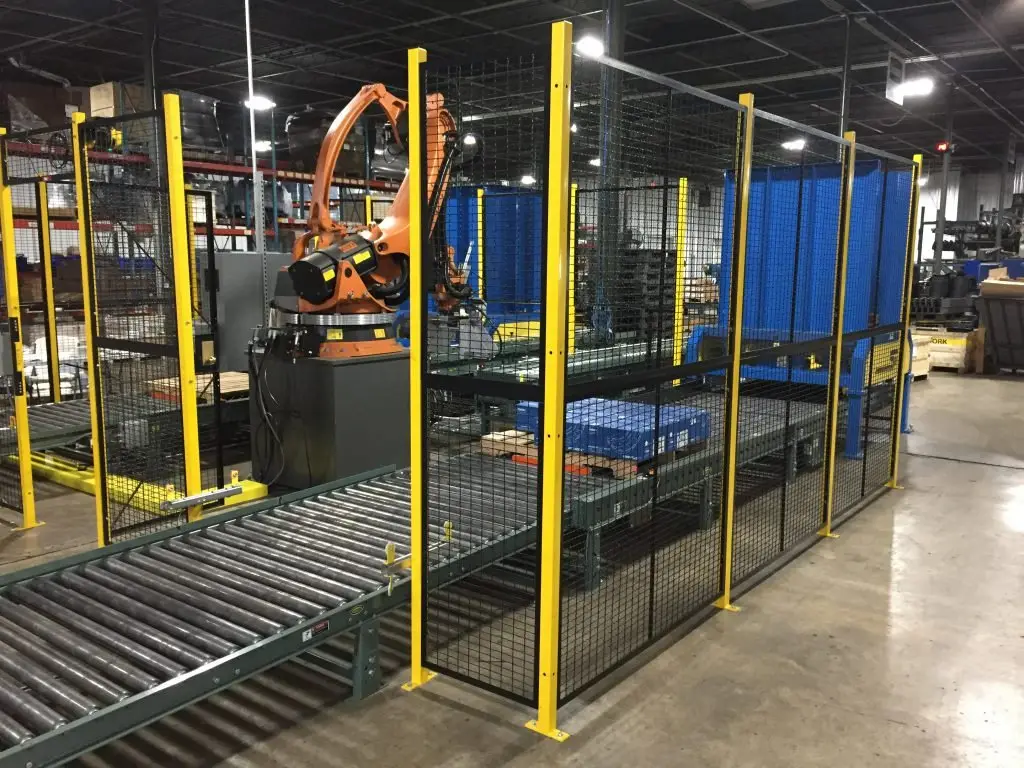
The interlocked guard is a movable barrier (like a door, gate, or hinged panel) connected to the machine’s control system. Once the guard is opened or removed, the control system will automatically turn off the power of the machine and will not allow the cycle to restart until the guard is closed and locked. This synchronisation is crucial.
- Application: Ideal for machines requiring frequent operator access for loading/unloading, maintenance, or minor adjustments.
- Key Consideration: The entire system’s reliability hinges on both the electronic switch (the sensor) and the integrity of the physical gate mechanism (the hardware itself).

Adjustable Guards
Adjustable guards provide a shield that can be manually re-adjusted to suit the stock (material) of different sizes or production processes. These guards provide flexibility in their operation, but there is a caveat to this flexibility.
- Application: Commonly used on machinery like band saws or milling machines, where the size of the stock changes frequently.
- Limitation: Requires conscious and correct adjustment by the operator, making its safety reliant on human behavior. This makes it vulnerable to installation errors (failing to position the guard with the material) or intentional evasion (disabling the adjustment system of the production speed).

Self-Adjusting Guards
Self-adjusting guards are automatic, and it is only the size of the stock or material entering the danger area that determines whether they will open or not. Once the stock passes, the guard automatically returns to its rest position, closing off the danger area entirely.
- Application: Frequently seen on equipment like table saws, where the guard moves up as the material is pushed through.
- Advantage: It is automatic, and the operator does not need to key anything into the cycle, which minimizes the chances of human error that is inherent in adjustable guards.

The following table is a summary of the major trade-offs of the four major physical guards:
| Guard Type | Access Requirement | Operator Interaction | Protection Level | Best Use Case |
| Fixed | None/Tool Required | None | Maximum | Power Transmission components (Gears, Belts) |
| Interlocked | Frequent/Required | Required to open/close | High (stops motion) | Loading/Unloading Stations, Robotic Cells |
| Adjustable | Required for setup | Manual Adjustment | Moderate (Relies heavily on operator setting) | Milling/Drilling where stock varies |
| Self-Adjusting | None | None (Passive) | Variable (Adapts to stock) | Circular Saws, cutting operations |
Safety Devices: Beyond Physical Barriers
Even though physical guards offer high levels of permanent security, there are operational requirements that cannot permit the use of physical guards. When the process demands open access, safeguarding pivots to active control measures.
Safety devices function as electronic sentinels in the workstation. They do not physically isolate hazards but depend on sensors, controls, or physical restraints to monitor the danger zone and immediately stop the machine cycle before contact occurs. They represent a vital extension of safeguarding philosophy.
Presence-Sensing Devices
These devices scan the danger zone regardless of the presence of an object or a person. In case the sensing field is broken, the machine will not start or will be stopped. The machine braking system (stopping time) rate must be set to the location of these devices.
- Light Curtains: A series of photoelectric beams creates a safety field. Interrupting any beam triggers the machine shutdown. This is ideal for machines that require open access during non-hazardous phases, such as large presses.
- Safety Mats: Pressure-sensitive pads are tied around the machine. The machine is switched off when an operator steps on the mat.
- Area Scanners: Use laser or radar technology to define a three-dimensional protected zone, popular in dynamic environments like robotic cells or assembly lines.
Operator Control Devices
These machines require certain operator interventions to make sure that hands are in a safe position during the dangerous cycle. They remove the possibility of an operator putting a limb in the danger zone by mistake after the cycle has started.
- Two-Hand Control (TWC): Requires the simultaneous and continuous activation of two widely spaced controls. This guarantees both hands remain outside the danger zone throughout the hazardous cycle.
- Safety Trip Controls: These are intended to be activated immediately the machine is touched. They make use of such elements as trip wires, safety body bars, or pressure-sensitive devices to trigger an emergency shutdown.
Mechanical Restraint and Sensing Devices
These systems either draw the hands of the operator away or restrict their reach, which directly addresses the human factor of risk.
- Pullback Devices: Mechanically pulled away at the point of operation when the machine cycle starts, attached to the hands/wrists of the operator by cables. While effective, they are sometimes resisted by operators due to discomfort or restriction.
- Restraint Devices: Hold the operator’s hands at a fixed, safe distance from the hazard zone, preventing them from extending into moving parts altogether.
OSHA and Legal Compliance Requirements

Having the entire range of physical guards and active safety devices in mind, the most important task is to make sure that any chosen solution is in compliance with the required legal framework. The non-negotiable requirement of machine safety is compliance.
The Occupational Safety and Health Administration (OSHA) standard 29 CFR 1910.212 serves as the bedrock for general machine guarding requirements in the United States. Nonetheless, compliance is a multinational and multifaceted issue, which requires compliance with certain design requirements that are determined by different regional and consensus standards.
Legal compliance, however, does not merely involve the installation of a barrier, but it also requires compliance with certain design requirements. The selected guard (or device) must comply with the following six legal requirements that are mandatory before any selection or implementation takes place:
- Prevent Contact. The guard should be such that the operator should not insert any part of his body into the danger zone during the operating cycle.
- Be Securely Affixed and Tamper-Proof: Tools should be demanded to be removed by guards to avoid easy circumvention, because a guard who can be easily overcome is a guard in the eyes of the law, no guard at all.
- Protect from Falling Objects: The guard should make sure that there are no tools or stock that can fall accidentally into the moving parts and create secondary hazards.
- Create No New Hazards: The guard itself must not introduce new risks, such as sharp edges, pinch points, or shear points, to the operator.
- Allow for Lubrication and Maintenance: Where feasible, guards should be made in such a way that they can be used to lubricate the machines required without the need to remove them, which reduces downtime and exposure to hazards.
- Allow Visibility: Where possible, the guard should allow the operator a clear view of the operation, often necessitating the use of transparent polycarbonate or wire mesh.
Consensus and Global Standards
While OSHA defines minimum safety requirements, engineers and safety managers must often consult technical, consensus-based standards that provide detailed design specifications, especially for specific machine types or international markets. These standards often dictate the required Performance Level (PL) or Safety Integrity Level (SIL) for safety components like interlock switches and light curtains. The Performance Level (PL) concept, derived from ISO 13849, categorizes the ability of a control system to perform its safety function under foreseeable conditions.
| Standard Body | Standard ID | Focus Area | Relevance to Guarding |
| ANSI (US Consensus) | B11 Series | Specific Machine Tool Safety | Provides detailed requirements for specific machinery (e.g., presses, grinders) where OSHA is general. |
| ISO (International) | ISO 13849-1 | Safety-Related Parts of Control Systems | Defines the Performance Level (PL) required for the control circuit (e.g., PL c, d, or e), which dictates the quality of safety devices. |
| EU / CEN (European) | EN ISO 14120 | General Requirements for Guards | Specifies detailed design and construction rules for fixed and movable guards, crucial for CE marking and export to Europe. |
Selecting the appropriate guard requires a combination of the physical barrier and electronic parts that are certified to the necessary PL of the hazard. The inability to comply with any of these layers of standards makes the whole safeguarding system non-compliant and puts the organization at high risk of regulatory liability.
Choosing the Right Guard System.
Working within the legal framework mandated and stipulated by OSHA and consensus standards, the final task is to make the right decision regarding a particular machine. The selection process must be systematic, moving from risk assessment to final implementation.
The selection process is not guesswork; it is an architectural blueprint for safety, requiring a disciplined, structured approach known as risk assessment. Choosing the correct guard system means precisely matching the protection method to the hazard’s severity, the required frequency of human interaction, and the nature of the material being processed.
The selection process must systematically evaluate the following factors using the comprehensive options presented as follows:
Risk Assessment and Hazard Identification
First, identify all potential hazards (pinch points, rotating parts, flying debris) and assess the risk level (Severity & Probability). This assessment dictates the necessary performance level (PL) of the safety solution—a low-risk application may tolerate an adjustable guard, while a high-risk application demands an interlocked guard paired with a light curtain.
Operator Access Frequency
This is the most important decision point. The required frequency of operator interaction dictates the fundamental guard type:
- No Access / Very Low Frequency (e.g., Quarterly Maintenance). Fixed Guard. This is the easiest and safest alternative in cases where interaction is not necessary.
- Frequent Access (e.g., Every Cycle). Interlocked Guard or Presence-Sensing Device (Light Curtain). This requires solutions that are both safe and fast to access.
Material Handling and Dimensional Variability
- Stock Size is Constant. Any suitable guard type that meets the access requirements.
- Stock Size Varies. Adjustable Guard (if manual adjustment is acceptable) or Self-Adjusting Guard (if the material itself can control the barrier).
By applying this three-step framework, engineers transition from merely purchasing a guard to intelligently designing a complete safeguarding system that eliminates the risk of human error.
Guard Construction and Structural Components
The decision to use a fixed, interlocked, or adjustable system provides a blueprint for protection.The integrity of the physical construction and structural elements of the guard is the next measure that determines the effectiveness of that blueprint in the long term.
Once the type of guard is selected, the quality of its construction is considered. A guard’s effectiveness is directly proportional to its structural integrity. Materials like steel, aluminum extrusion, wire mesh, and high-impact polycarbonate are chosen based on the required durability and visibility. One such material is polycarbonate, which is very impact-resistant and at the same time lets the machine be seen.
However, the most suitable materials might fail in case the structural components are not sufficient. Among the errors that are committed is the production of a safety gate with heavy-gauge material and ineffective supporting hardware. The mass of the gate, the opening and closing of the gate with time, can cause the movement of the framework or the hinges to sag. This critical structural failure can lead to the misalignment of the safety switch, turning the robust interlocked guard into a dangerous liability. The safety interlock, which is the machine’s electronic brain, may fail to engage due to this physical misalignment. This structural vulnerability is a pinched nerve in the safety system, a small hardware issue that incapacitates the entire safety function.
Selecting Critical Hardware: Hinges, Latches, and Locks
The moving parts of an interlocked or adjustable guard are the key to its long-term durability. As it has been determined, structural failure, even minor sagging, results in safety failure directly because the interlock switch cannot be engaged. The physical hardware is therefore as critical as the electronic sensor itself; it must maintain the guard’s precise position under sustained stress, vibration, and thousands of opening/closing cycles.
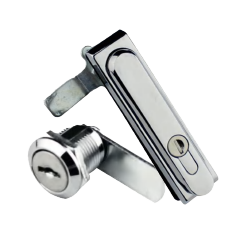
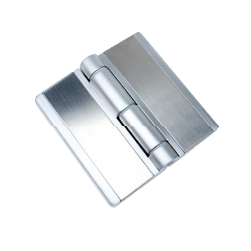
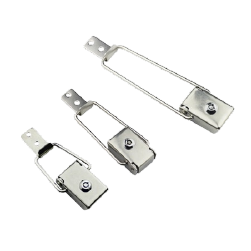
Poor or non-industrial-grade hinges will always bend or sink, and the door will fall out of position. Inexpensive latches and handles are not as precise as needed to fit into tight tolerances, which is crucial to the activation point of the safety switch. This leads directly to the system being temporarily bypassed or permanently damaged by operators trying to force a misaligned gate shut.
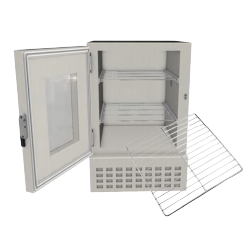
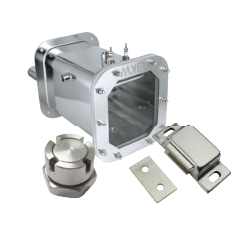
This is where KUNLONG excels. As a specialist in industrial structure parts, KUNLONG provides heavy-duty, precision-engineered hardware—including robust hinges, handles, industrial locks, and reliable latches—that are designed to withstand the high-cycle demands of industrial machinery. KUNLONG ensures high precision in the production of products using an extensive lean supply chain and stringent quality control, including a 15-point finished product inspection, and some tolerances are controlled to 0.0005mm in CNC machining. This focus on durability and accuracy is the key to minimizing structural shift.
Manufacturers that desire hardware that can address the actual requirements of safety compliance need to locate components that can address long-term alignment. Through their focus on high-precision manufacturing and stringent quality control, KUNLONG provides components that help manufacturers ensure the physical integrity of their safety gates. This level of reliability allows for the consistent function of the interlock mechanism, directly supporting regulatory compliance and optimizing machine uptime. Visit us at [https://www.kunlonghardware.com/] for structural reliability.
ROI Analysis: Guarding Costs vs. Injury Costs
After meeting the technical requirements of safety (selection and construction), attention is directed to the financial justification of the project. To demonstrate the commercial worth of a strong guarding system, it is necessary to compare the costs with the huge financial risk of an accident.
The debate on machine guarding is often presented in terms of capital expenditure alone, and decision-makers tend to prefer the cheapest initial cost (e.g., a simple fixed guard). But this shortsighted perspective does not realize that the costs associated with injuries are an iceberg; the costs of medical care and compensation are only the tip of the iceberg, the costs of lost productivity, regulatory fines, and morale damage are the hidden costs. The perceived cost of a strong safety system is in fact the cost of risk mitigation- the most important insurance that can be taken.
To analyze the Return on Investment (ROI) of guarding, it is necessary to compare various protection schemes with the cost of inaction, with the following key returns:
- Reduced Downtime: Interlocked guards allow fast, safe access, minimizing time needed for maintenance or jam clearing compared to dismantling a bolted fixed guard.
- Compliance Assurance: Eschewing harsh OSHA fines and regulatory fines, which can soon run into the hundreds of thousands of dollars.
- Lower Insurance Premiums: The willingness to show that the company is concerned with safety can have a positive impact on the workers’ compensation and liability insurance rates.
- Operational Excellence: Durable components and reliable safety systems ensure that unexpected component failure, which leads to a machine shutdown, is prevented.
The following table contrasts the financial impact of two common guarding choices over a five-year period (assuming a $100/hour lost production rate and one major maintenance event per month):
| Cost Factor | Low-Cost Fixed Guard | High-Efficiency Interlocked Guard |
| Initial Cost (CAPEX) | $1,500 | $12,000 |
| Annual Maintenance Access Time (Assuming 4hrs/event) | 48 events * 4hrs/event = 192 hrs | 48 events * 0.5hrs/event = 24 hrs |
| Annual Lost Production Cost | 192 hrs * $100/hr = $19,200 | 24 hrs * $100/hr = $2,400 |
| 5-Year Total Cost (CAPEX + Production Loss) | $97,500 | $24,000 |
Note: This simplified model excludes potential fines and injury costs.
A well-developed, full-fledged safety system is insignificant in terms of cost in comparison to the cost of one serious workplace accident. The ROI is not shown in the profit margins, but in the saving of human life and the ensured survival of the business. The safe choice is unequivocally the profitable choice.
Conclusion
Finally, a safe, compliant and efficient industrial operation is based on effective machine guarding. With the mastery of the basic types, Fixed, Interlocked, Adjustable, and Self-Adjusting, and the addition of the required safety devices, you are no longer just in compliance with OSHA, but you are on your way to operational excellence.
It is important to remember that the interlocked safety system that you have is only as reliable as its weakest link. It may be the exact operation of a safety switch, or the strength of a robust hinge or latch, but quality hardware is the unspoken enforcer of safety standards. The hardware decision is the decision between certain uptime and uncertain risk.
We hope that you will take this guide as the beginning of a thorough risk assessment in your facility. When you need long-lasting, industrial-level hardware solutions that guarantee the physical integrity and alignment of your safety gates, you should select a specialist who is concerned with accuracy and long-term functionality. Manufacturers such as KUNLONG provide the high-tolerance, specialized components required in this critical area to ensure guaranteed system integrity. With quality hardware, you invest in reliability, secure your people, and secure your bottom line.