


A hinge may seem like a simple part, but in the industrial world, it plays an essential role in every hinged structure, including toolboxes. The standard butt hinge is not adequate when it comes to large weights, high cycle rates, or high security needs. Here, the heavy-duty piano hinge, or continuous hinge, comes into play and replaces the risk of structural failure with long-lasting reliability. This guide will help you understand how to select, locate, and install the correct continuous hinge for demanding industrial applications.
What Is a Heavy-Duty Piano Hinge?

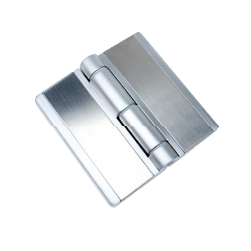
The principle of the piano hinge is the distribution of load, and was so called because it resembles the long hinge of a piano lid. Instead of placing the total weight of the door on two or three small hinge points, the continuous hinge is made to run the full vertical length and varying widths of the door or panel.
The heavy-duty form of the stainless steel piano hinge is simply a single piece of metal (or in other instances, two pieces that are interlocked with a common pin) that ensures that the load is evenly distributed across all the inches of the mating surface of the structure. Although the term “piano hinge” is widely used, there are heavy-duty types that are technically known as continuous geared hinges. These have superior durability and movement.
Heavy-duty continuous hinges are suitable for a wide range of applications where consistent support, frequent use, or high security is crucial. These include:
- Commercial entry doors in busy buildings.
- Industrial storage lockers.
- Access panels on large machinery.
- Transportation equipment (such as truck bodies and rail cars).
- IT or electrical cabinet enclosures.
The Continuous Hinge Advantage: Eliminating Sag and Enhancing Security
- Eliminating Sag: Heavy doors, especially those used in high-traffic or extreme conditions (e.g., cold storage or large electrical cabinets), will sag over time as the weight of the door puts a strain on the traditional butt hinges. The continuous hinge provides a full load-bearing surface, which acts as a steel spine to counter these forces effectively. This is needed to keep the complicated mechanical components in the cabinets in the correct location.
- Enhanced Security: When a continuous hinge is installed with through-bolts, it offers strong protection against prying. They form a continuous, smooth line between the door and the frame, eliminating the gaps that are common weak points in security systems. For high-security enclosures or industrial safes, this continuous barrier is essential.
- Smooth, Stable Operation: Continuous hinges reduce friction by spreading it across a long pin or interlocking parts. This helps in ensuring a stable and smooth running of the door, which in turn prolongs the life of the entire door and hinge system.
How to Specify Your Hinge: Critical Selection Factors
When specifying heavy-duty hardware, the devil is in the details. A hinge that does not conform to technical specifications is not merely an inconvenience; it is a place of possible disastrous failure of a complete system.
Material Showdown: Steel, Stainless Steel, Aluminum
The choice of base material is the most critical decision, dictating a hinge’s ultimate strength, weight, and environmental resistance. Here’s a Material Comparison table.
| Material | Key Advantages | Primary Industrial Uses | Corrosion Handling |
| Steel (Cold Rolled) | Highest tensile strength, cost-effective, excellent weldability. | Heavy-duty machinery, fabricated equipment, indoor industrial doors. | Requires coating (zinc plating, paint) for corrosion resistance. |
| Aluminum | Lightweight, naturally corrosion-resistant, non-magnetic. | Transportation (truck bodies, trailers), access panels, clean environments. | Excellent against atmospheric corrosion; risks galvanic corrosion with other metals. |
| Stainless Steel 304 | Very high strength, superior resistance to most indoor/outdoor environments. | Food processing, pharmaceutical, standard corrosive environments. | Standard-bearer for general industrial corrosion. |
| Stainless Steel 316 | Highest corrosion resistance, particularly against chlorides and salts. | Marine environments, chemical processing, high-salt outdoor applications. | Marine grade—necessary for severe corrosive exposure. |
Heavy-Duty Metrics: Gauge, Pin Diameter & Knuckle Length
A hinge’s capacity to support heavy doors and withstand high-frequency use is determined by several physical specifications. The primary metrics that directly define load capacity are Gauge and Pin Diameter.
- Gauge (Thickness): This metric defines the thickness of the hinge’s metal leaves. The counterintuitive thing is that the lower the gauge, the thicker the metal. Heavy-duty applications usually require hinges with a range of 11 to 14 gauge, but special applications can be lower.
- Rule of Thumb: The heavier the door, the lower the gauge. Always compare the manufacturer’s load charts to the door weight for correct specification.
- Pin Diameter: The pin is the axial pivot of the hinge and takes the bulk of the rotational stress and friction. The bigger the pin diameter, the greater the cross-sectional area of the pin, and the greater the shear strength and bending load resistance. This material minimizes wear and tear on the pin and knuckles, significantly extending the hinge’s functional life. In extreme duty, these pins may have special bearings (e.g., brass or nylon) to handle friction and remove metal-on-metal abrasion.
Gauge, Pin & Load Capacity Comparison (Representative)
| Gauge (Thickness) | Approx. Thickness (in.) | Typical Pin Diameter (in.) | Est. Max Load Capacity (Steel Hinge, lbs) | Typical Application |
| 16 Gauge | ≈0.059 | ≈1/8 to 3/16 | 200 – 300 lbs | Standard Industrial Cabinets, Light Access Panels |
| 14 Gauge | ≈ 0.074 | ≈ 3/16 to 1/4 | 300 – 450 lbs | Medium-Heavy Doors, Truck Bodies, Electrical Enclosures |
| 11 Gauge | ≈ 0.120 | ≈x 1/4 to 3/8 | 450 – 600 lbs | Heavy Industrial Doors, High-Security Safes, Test Chambers |
| 7 Gauge (Extreme Duty) | ≈ 0.179 | ≈3/8 and up | 600 lbs + | Oversized Doors, Vaults, Extreme Cryogenic/Thermal Ovens |
Key takeaway: Moving from a 16-gauge to an 11-gauge hinge significantly doubles the thickness of the supporting metal, which is directly paired with a larger pin diameter. This synergistic increase in material mass and pivot strength is the fundamental engineering principle that allows continuous hinges to support weights well over 600 lbs and endure millions of cycles.
Additional Design Considerations
Beyond the raw load metrics, these factors are crucial for performance and proper specification:
- Knuckle Length: Knuckles are the interlocking segments of the hinge leaves that wrap around the pin. Longer knuckles mean each load-bearing unit is larger, which better distributes single-point pressure. For applications subject to high side loads or requiring extreme precision, longer, uniform knuckle lengths ensure smooth operation and accurate alignment across the entire hinge span.
- Overall Length (Customization): A primary feature of a “continuous” piano hinge is that its length is not a fixed specification. They are typically manufactured in long, standard strips (e.g., 6 or 8 feet) and are designed to be cut to the precise length required by the application. This customization is what allows the hinge to run the full vertical length of a door, ensuring the load is evenly distributed.
Fabrication Requirements & Precision
The choice between a pre-drilled and a “no-hole” hinge is a fundamental fabrication decision that impacts both speed and long-term security.
Regarding installation choices, pre-drilled hinges offer a fast and straightforward bolt-on solution, making them ideal for standard industrial doors and enclosures. In contrast, no-hole (weld-on) hinges provide the maximum level of security and structural integration. This method eliminates mechanical fasteners, allowing the hinge to be welded directly to heavy steel frames to create a monolithic unit, which is essential for high-security applications or custom, heavy-duty fabrications.
A continuous hinge’s reliability is entirely dependent on the precision of its manufacturing. Under heavy loads, even minuscule deviations can lead to binding, accelerated wear, and premature failure.
The real worth of industrial hardware is in the careful control of manufacturing. Such industry leaders as KUNLONG, e.g., pledge to dimensional tolerances of 0.0005 mm. This level of exactitude is the foundation for perfect alignment, consistent lifecycle performance, and superior material strength. This is also supported by the sourcing of stable and quality-assured suppliers and strict QC checks, which are confirmed by complete SGS and RoHS material reports.
Certification and Application Necessity
For industrial and commercial applications, hinge selection is a regulatory requirement. Components must achieve specified certification levels to guarantee both operational success and life-safety compliance.
| Required Compliance & Standard | Governing Body/Examples | Application Necessity |
| Fire Safety and Life Containment | UL (Underwriters Laboratories); NFPA (National Fire Protection Association) | Mandatory for commercial fire doors, egress doors, and fire barrier assemblies. Hinges must be proven to withstand thermal exposure and maintain structural integrity. |
| Environmental Safety & Material Restriction | RoHS (Restriction of Hazardous Substances); REACH | Critical for medical equipment, electronics, and products entering the European market. Ensures materials are free of lead, mercury, and other hazardous substances. |
| Durability and Cycles | ANSI/BHMA (American National Standards Institute / Builders Hardware Manufacturers Association) | Tests durability for high-frequency use (e.g., public entrances). Ensures the hinge meets specific grades for load capacity and cycle life. |
| Corrosion Resistance | ASTM B117 Salt Spray Test | Required for marine, chemical processing, and outdoor high-humidity environments. Certifies that the material and finish meet the required hours of resistance against corrosion. |

Selecting Hinges by Environment: Extreme Requirements
A continuous hinge should be a continuation of the environment it is used in. The choice should be based on the particular issues posed by the application, such as high heat, corrosive agents, or incessant traffic.
High-Traffic Commercial & Public Doors
Endurance is needed in schools, hospitals, or large offices. These doors are abused and cycled. Here, the emphasis is on heavy-duty geared hinges, which are specifically designed to be durable at high frequency (typically millions of cycles) and fire-resistant. Hinges are usually suggested to be made of high-strength stainless steel or fire-rated steel.
Industrial Enclosures & Electrical Cabinets
Such applications are usually sensitive in nature and need a secure and sealed enclosure. Installation flexibility and compatibility of materials (to avoid galvanic corrosion) are the critical factors. No-hole hinges are also common in this area, which gives the cabinet makers the opportunity to design the drilling patterns or use welding to make it a permanent fitting, which will give a perfect seal and will not be tampered with.
Outdoor, Marine, and Corrosive Applications
Environments exposed to saltwater, constant humidity, or chemical vapors are acid tests for any hardware. Hinge selection must prioritize corrosion resistance (e.g., 316-grade stainless steel) and, often, a lightweight profile (e.g., aluminum) for vehicles or marine craft where weight reduction is a premium. Furthermore, anti-vibration features are often necessary to maintain structural integrity under constant motion.
Heavy-Duty DIY & Custom Fabrication Projects
To more advanced builders and fabricators, the main issue is the capability of the hinge to fit into a custom structure. The selection is driven by weldability and ultimate strength. This often dictates the use of thicker gauge steel, weldable aluminum alloys, and “no-hole” fabrication to achieve a monolithic, extremely strong connection.
Test Chambers & Industrial Ovens
This is an extreme usage, with the parts of the structure having to withstand high temperature variations, heavy loading, and full thermal stability. Hardware must withstand temperatures ranging from deep cryogenic lows (down to -70°C) to searing industrial highs (up to 260°C). The weights of doors in this case can easily exceed 100 kg. The selected hinge is not allowed to bend or break under these extreme thermal cycles, and it should be able to keep the chamber in its critical hermetic seal.
KUNLONG Performance Metrics Across Extreme Environments
The selection of the appropriate hinge is essentially a risk reduction exercise, which is measured by performance data. KUNLONG’s commitment to extreme testing and specialized manufacturing allows us to deliver certified performance across all these demanding scenarios:
| Environment/Requirement | KUNLONG Performance Advantage | Specific Data/Capability |
| Corrosion/Marine | Superior corrosion longevity and aesthetic retention. | Salt Spray Testing up to 1000 h (Industry standard is ~300 h); specialized surface treatments (10+ options, compared to typical 3-5). |
| Extreme Temperature | Structural stability and function are guaranteed under drastic thermal shock. | Guaranteed operational range from -70°C up to 260°C for test chambers and industrial ovens. |
| High Security/Traffic | Reliability against abuse and guaranteed operational life. | Product life tested to 24,000 cycles minimum (1-year warranty); hinges designed for high load capacity (over 100 kg per door). |
| Biomedical/Precision | Highest precision finish and stability for sensitive equipment. | Surface finish precision achieves a mirror-like effect (5 polishing steps, compared to typical 3); emphasis on hygienic and anti-corrosion properties (e.g., alcohol resistance). |
| Manufacturing Precision | Eliminating failure caused by manufacturing defects. | Dimensional tolerance control of 0.0005 mm; product yield rate of $99.8\%$. |
For these highly specialized and often safety-critical applications, such as large industrial ovens or deep cryogenic test chambers, off-the-shelf hinges are inadequate. KUNLONG has built a profound background in this field, creating and producing custom-grade professional hinges with special alloys and engineered designs that pass the most rigorous performance validation tests, both in terms of structural integrity and airtightness throughout the entire temperature range.
Installation Essentials: Tools & Critical Techniques
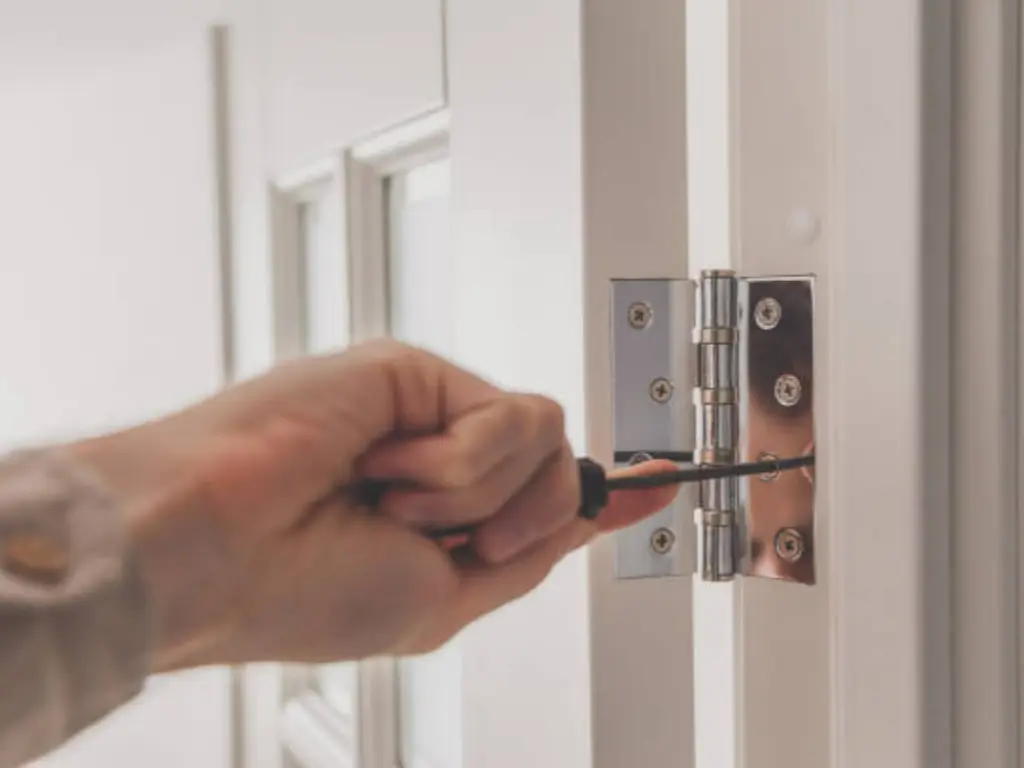
Even the most specified hinge will not work when it is installed improperly or not maintained properly. Accuracy in performance during the execution is equally significant as accuracy in production. A successful installation demands the right tools (such as safety goggles, a metal-cutting saw or angle grinder, C-clamps, a high-precision level, a center punch, and a drill) and a focus on three critical techniques: precise cutting, perfect alignment, and accurate drilling.
How to Cut the Hinge
Continuous hinges are often purchased in bulk standard lengths and must be custom-cut on-site. The challenge is to do this safely and precisely without damaging the component. To avoid bending, tearing, or deforming the thin metal leaves, the best method is to make a “sandwich.” Clamp the hinge firmly between two pieces of sacrificial material (e.g., wood or scrap metal). This method provides the necessary rigidity, which guarantees a clean, straight cut that does not affect the functionality of the hinge or its appearance. A fine-toothed metal blade is suggested for the cut itself.
The Alignment Principle
In continuous hinges, the rule of alignment is absolute: the hinge should be square and plum (vertical straight) to the door and the frame. A slight shift of several millimeters can be very destructive. It causes unequal pressure on the pin and knuckles, which greatly increases wear, friction, and the possibility of binding, dramatically shortening the hinge’s anticipated life. To avoid this, precision tools such as a laser level or a machinist’s level should be used in the layout and marking stages to ensure absolute horizontal and vertical accuracy.
Precision Drilling (If Using No-Hole Type)
For no-hole hinges, your precision in alignment must be matched by your precision in drilling.
- Mark and Punch: With the hinge clamped in its perfectly aligned position, mark your drill locations. Before drilling, use a center punch to make a small dimple at each mark. This is essential, as it prevents the drill bit from “wandering” on the smooth metal surface and ensures accuracy.
- Drilling: Use a drill press for the highest-accuracy, perpendicular holes. If using a hand drill, take care to keep it perfectly vertical.
Maintenance: Lubrication and Corrosion
Even strong, continuous hinges need regular care. They are not entirely maintenance-free, particularly in dusty areas or where they are frequently used. Proper lubrication is the beginning of a good maintenance plan. You should apply the correct type of oil. Do not use standard oil, as it attracts dirt and dust. This forms a coarse paste that easily erodes the hinge components. Instead, use a dry oil (like graphite) or a good silicone oil. This cuts down on rubbing without pulling in dirt. In addition, chemical damage should be dealt with through maintenance. Galvanic corrosion is the primary threat. This occurs when two dissimilar metals come into contact when wet, and this metal killer can easily destroy an expensive hinge.
To prevent this problem, regular checks are vital. Make sure different metals do not touch each other directly (for example, an aluminum hinge on a steel frame). The most appropriate solution is screws and hinges of the same or similar material. In case other metals have to be employed, examine the protective barrier. This sealant or plastic washer should be solid. It should not allow the parts to come into contact with each other. This is a precautionary measure that is necessary to ensure that the hinge lasts as long as possible.
Cost vs. Value: The Long-Term ROI
A heavy-duty continuous hinge is usually significantly more costly than a standard one, and it is worth knowing why. This higher “sticker price” is driven by substantial, tangible factors: a heavy-duty 11-gauge (≈3.0mm) hinge, for example, uses 2.5 times more raw steel than a standard 18-gauge (≈1.2mm) hinge. This material should then be shaped with a high level of manufacturing accuracy so that dozens of separate knuckles are perfectly aligned over a long distance- a task that demands advanced equipment. Lastly, the sheer weight of the component itself raises the cost of handling, storage, and logistics. This increased initial cost, however, is exactly the reason why it should be considered in the context of its long-term economic value.
TCO Case Study: A 5-Year Comparison
When purchasing hardware, the Total Cost of Ownership (TCO) should be considered, and it is a combination of the purchase price, maintenance, and replacement costs over the time of operation. The following is a TCO check of a large industrial door over five years. (Usage: 50 cycles per day, 91,250 cycles per year).
| Cost Factor | Standard Butt Hinge | Heavy-Duty Continuous Hinge |
| Initial Purchase Cost | $200 (3 hinges) | $600 (1 hinge) |
| Preventative Maintenance (5 Yrs) | Quarterly lubrication/adjustment (20 services). Labor Cost: $1,500 | Annual inspection (5 services). Labor Cost: $400 |
| Replacement/Repair Cost (5 Yrs) | Requires replacement/major repair every 1.5 years due to twist/sag. Cost: $1,800 | Expected 0 replacements. Cost: $0 |
| Downtime Cost (5 Yrs) | 3 major repairs, 4 hours downtime each, assumed $80/hr loss. Cost: $960 | 0 unexpected downtime events. Cost: $0 |
| 5-Year Total Cost of Ownership (TCO) | $4,460 | $1,000 |
The higher price for a better hinge is an investment in your equipment. It is not just a cost. The continuous hinge is 200 percent more expensive at the beginning. Nevertheless, it resulted in a 77 percent reduction in the overall cost in five years. A good hinge stops doors from sagging. It stops the need for many repairs. It makes sure your system works all the time.
KUNLONG specializes in making this TCO concept a reality. We know that the real price is not the initial price, but the huge losses of unplanned downtime, which is why all KUNLONG parts are designed to be highly precise and have a long service life. This focus on reliability translates directly to more machine uptime for your operation. Moreover, we enhance these savings with our One-Stop Sourcing Solution that manages costs by removing the risk and the hidden costs of dealing with multiple suppliers. KUNLONG offers you a Single Purchase Order, a Unified Quality Standard, and Consolidated Shipping, making your whole supply chain easier. All our solutions are available, and you can begin to make your buying process easier today at https://www.kunlonghardware.com/.
Conclusion: Your Way to Durability
One of the most important components that make structures strong and reliable over time is the heavy-duty piano hinge. It provides hardness and maintains stability. The selection of the appropriate hinge is not a mere purchase. This option assists in reducing risks in the future and increases the lifespan of equipment. This guide examined the most significant factors in the choice of a hinge. These are technical specifications such as the material and its thickness. They also discuss the circumstances in which the hinge is applied, as well as the necessity of proper installation and maintenance. Investment in quality is worth a lot in the long run. This is demonstrated by the total cost of ownership. A quality hinge prevents sagging doors, prevents expensive repairs and eliminates expensive downtime.
A qualified industrial partner like KUNLONG is committed to meeting these needs. We help in converting these needs into a stable and sustainable product. This keeps your heavy structure in place and gives you that long-term value.