


Discover the hidden mechanical failures causing your freezer to ice over, and learn the permanent structural fixes that prevent thousands of dollars in ruined inventory and compliance fines.
The High Cost of Ignoring Walk-In Freezer Ice Build-Up
Ice accumulation inside a commercial walk-in freezer is not merely an operational annoyance—it is a glaring symptom of systemic failure that silently drains your budget and jeopardizes your compliance.
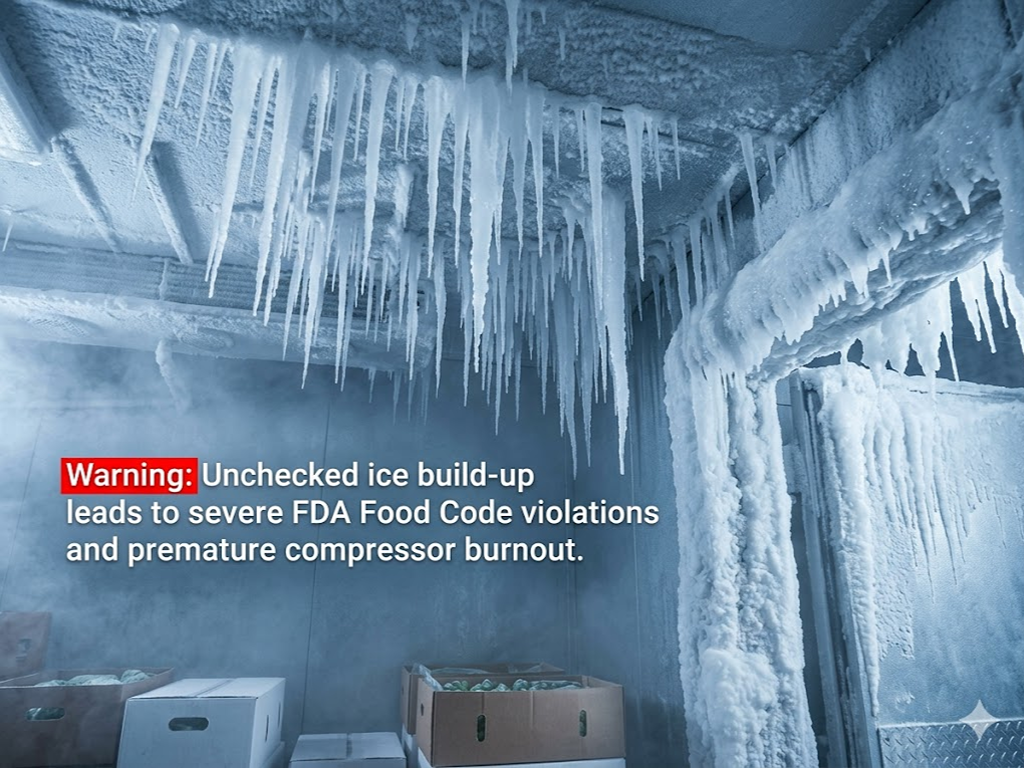
When frost builds up, it acts as a highly effective insulator. According to ASHRAE industry baselines, a mere 1/8-inch of frost on your evaporator coils can plummet your system’s Coefficient of Performance (COP) by up to 20%. To compensate, your compressor is forced to run continuously, leading to liquid slugging and premature motor burnout—a replacement that typically costs between $3,000 and $8,000.
Beyond the electric bill, there is a severe regulatory threat. The FDA Food Code strictly regulates temperature maintenance and cross-contamination. If a health inspector discovers icicles on the ceiling dripping condensation onto uncovered ingredients, you will likely face a Critical Violation, heavy fines, or an immediate Red Tag shutdown. Treating ice build-up as a casual maintenance task is a gamble no facility manager can afford.
Location-Based Diagnostic Map: Where Is the Ice Accumulating?
Effective troubleshooting begins with a visual inspection. The location of the ice tells a distinct mechanical story. Use this diagnostic map to isolate the root cause before calling in expensive external technicians.
Ice Around the Door, Threshold, and Floor
When ice forms primarily around the door frame, hinges, or the immediate floor area, the diagnosis is almost always warm air infiltration. Try the “Dollar Bill Test”: close the freezer door on a crisp dollar bill. If you can pull the bill out with zero resistance, your seal has failed.
| Observation (Ice Location) | Direct Physical Cause | Affected Component |
|---|---|---|
| Along the rubber door gasket | Warm air meeting cold surface | Torn/brittle gaskets, burned perimeter heater |
| Pools of solid ice on the floor | Condensation dripping and freezing | Door sweep, misaligned hinges |
| Near the hinges/latches | Metal fatigue causing the door to sag | Heavy-duty hinges, safety latches |
Frost on Evaporator Coils, Fans, and Ceiling
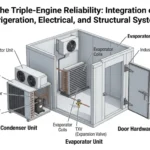
If the ice is concentrated high up—resembling a systemic snowball on the evaporator coils or forming stalactites on the ceiling—the issue is vastly different. This indicates Systemic Freezing. The internal micro-climate has stalled, usually due to a failed defrost cycle. The trapped moisture has nowhere to go and sublimates directly onto the coldest surfaces in the room.
Airflow and Humidity Control: The Physics of Condensation
Worn Gaskets vs. Sagging Hinges: The Root Cause of Leaks
When facility managers spot ice around the door, their first instinct is often to order replacement rubber gaskets. However, replacing the gasket without addressing the underlying mechanical stress is a temporary band-aid. The true root cause of persistent door leaks is often hardware fatigue.
Commercial freezer doors weigh hundreds of pounds. After thousands of opening and closing cycles, standard-grade hinges begin to sag. Even a subtle 0.5mm structural sag creates an uneven load on the gasket, breaking the hermetic seal and allowing humid air to infiltrate and instantly crystallize into ice.
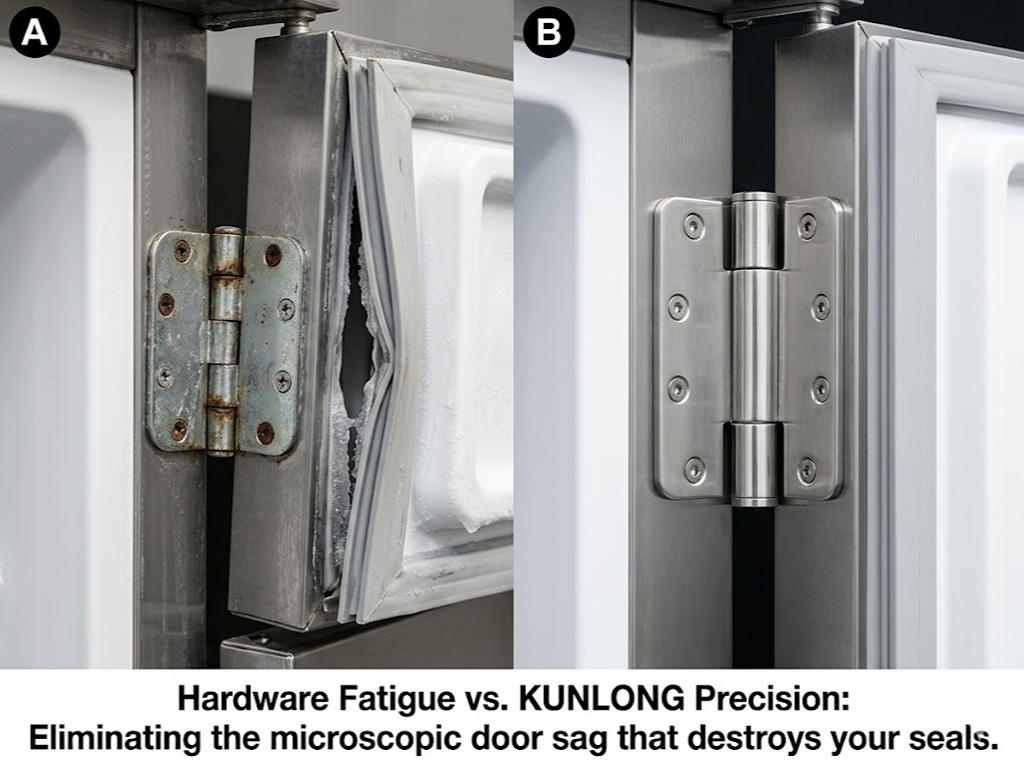
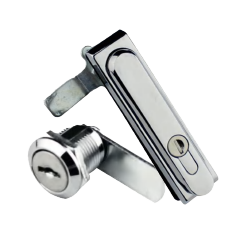
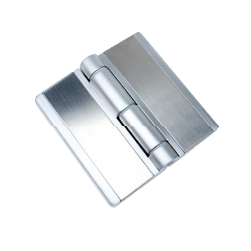
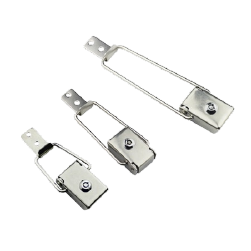
The Structural Fix: Top-tier cold storage manufacturers prevent this by integrating industrial heavy-duty hinges and safety latches from day one. To withstand the relentless thermal stress of walk-in environments, hardware must maintain structural integrity at temperatures as low as -40°C and be certified for over 100,000 high-load operational cycles.
As a global leader in intelligent industrial enclosure hardware, KUNLONG engineers hinges and locks that guarantee a 0.0005mm precision fit, entirely eliminating the door sag that leads to ice build-up.
Request Free 3D CAD Models for Your EquipmentHigh-Traffic Infiltration and Strip Curtains
Human error heavily influences air infiltration. Leaving a walk-in freezer door open for just five minutes in a hot commercial kitchen is the equivalent of dumping buckets of water directly onto your freezer floor—that invisible humidity will freeze. Ensure that PVC strip curtains have adequate overlap and train staff never to tie them back during deliveries.
Mechanical Failures in the Defrost Cycle
Think of the defrost cycle as your freezer’s immune system. If it fails, ice acts like a virus, multiplying until it chokes the system entirely. Most commercial units run a timed defrost cycle. If the Time Clock (defrost timer) gets stuck in refrigeration mode, or if the Defrost Heaters burn out, frost will permanently encase the coils.
Equally critical is the drainage system. When the coils defrost, the water must exit the freezer. If the Drain Line Heater fails, or if the external P-Trap is improperly configured, the freezing water creates an ice plug. The next time the system defrosts, the water has nowhere to drain and cascades directly onto the freezer floor, creating a hazardous ice rink.
Structural Integrity, Pressure Relief, and Hardware Stress
Long-term ice accumulation can destroy the physical structure of your cold room. If moisture penetrates a compromised vapor barrier in your polyurethane insulation panels, it freezes and expands, causing the panels to delaminate and bulge.
More commonly, severe ice build-up affects the Heated Pressure Relief Port. When warm air enters a freezer and rapidly cools, it contracts, creating a massive vacuum effect. The pressure relief port equalizes this pressure. If this port freezes over, the freezer door is sucked shut with tremendous force.
In a panic, employees will violently yank the door handles. Standard zinc-alloy handles will snap or bend under this extreme negative pressure and sub-zero stress, destroying the door’s integrity.
Engineering Standard: Export-grade cold chain equipment requires hardware that outlasts panic pulls and harsh sanitation chemicals. KUNLONG’s 304/316 stainless steel handles and locks undergo rigorous 1000-hour salt spray testing and feature specialized anti-corrosion treatments. Upgrading to industrial-grade stainless hardware prevents handle fractures, ensuring your freezer remains sealed and ice-free.
Safe Defrosting and Immediate Triage Protocols
DANGER: Never Use Mechanical Force
Never use ice picks, screwdrivers, or hammers to chip ice away from the evaporator. The aluminum or copper refrigerant coils are incredibly thin. A single puncture will cause highly pressurized toxic refrigerant to leak, instantly turning a minor defrosting job into a $5,000 system replacement.
Controlled Defrosting SOP: To safely remove severe ice, transfer all perishable inventory to backup storage. Shut off the power to the cooling unit completely. Open the door and use external floor fans to force ambient room air across the ice. For faster results, a gentle warm water spray can be used on non-electrical areas, but never use a high-temperature heat gun, as it will melt the plastic casings and wiring.
Preventative Maintenance SOP for Facility Managers
The most cost-effective maintenance is the maintenance you never have to perform. Treat your walk-in freezer like a commercial vehicle—it requires daily monitoring and bi-annual deep inspections.
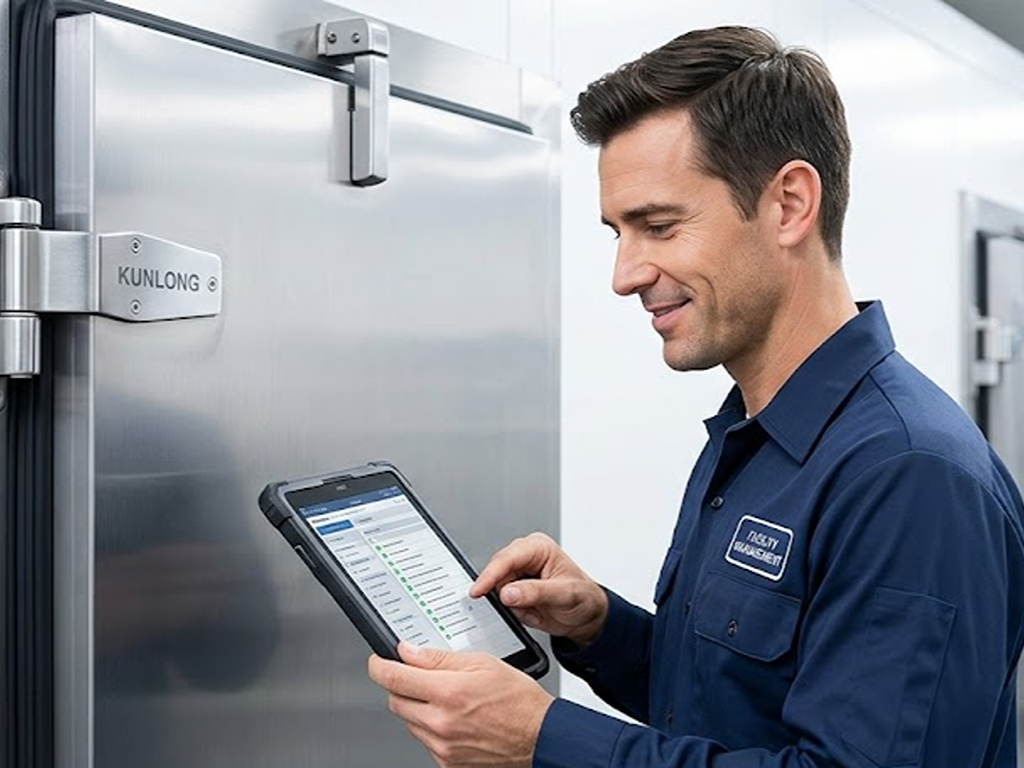
- Daily: Monitor digital thermostats for unexplained temperature fluctuations.
- Weekly: Clean the door gaskets with warm, soapy water to prevent mold and stickiness.
- Weekly: Check the door sweeps for tears and test the hinges/latches for smooth operation without sagging.
- Bi-Annually: Hire a certified HVAC/R technician to clean condenser coils, calibrate the defrost timer, and verify refrigerant subcooling/superheat levels.
Conclusion: Stop Treating the Symptom, Fix the Source
Endlessly scraping ice and replacing torn rubber gaskets every few months is merely treating the symptom. To permanently eradicate walk-in freezer ice build-up, you must secure the physical perimeter and ensure flawless mechanical operation.
Don’t let inferior door hardware be the weak link that inflates your energy bills and triggers health code violations. Upgrading to precision-engineered hinges and locks ensures a perfect, airtight seal that lasts for decades.
Upgrade Your Cold Chain Equipment with KUNLONG
With nearly 20 years of expertise and 108 patents, KUNLONG provides comprehensive hardware solutions for biological, medical, and industrial cold storage manufacturers globally.
- ✓ Over 3,000 standard models in stock, shipping within 7 days.
- ✓ Free 3D CAD drawings to accelerate your engineering design.
- ✓ 100% Quality inspection & 20,000-cycle durability guarantee.