


The Real Cost of Thermal Management Failure
In a food packaging plant in the Midwest, production lines ground to a halt. The control enclosures had hit 150°F internally hot enough to trip every safety cutoff. By the time maintenance crews diagnosed the problem and restarted the line, the incident had cost $3,600 in lost gross profit and $17,250 in restart expenses. And this was not an isolated event. It happened repeatedly until a thermal audit revealed the root cause.
The problem was not that the cooling equipment was undersized. The problem was that the enclosure itself was leaking degraded gaskets, misaligned hinges, and latches that no longer applied uniform pressure across the seal face. The air conditioner was fighting a battle it could not win.
Engineers have long relied on a rule of thumb rooted in the Arrhenius equation: every 10°C increase in operating temperature roughly halves the expected lifetime of electronic components (Electronics Cooling, 2017). This single rule drives billion-dollar decisions across industries from environmental test chambers to 5G telecom cabinets. Yet the conversation around thermal management has become remarkably narrow. Search for guidance and you will find exhaustive comparisons of filter fans versus air conditioners versus heat exchangers, all published by cooling equipment manufacturers. What you will not find is any discussion of the physical hardware that determines whether those cooling technologies actually work.
This article takes a different approach. Before you choose a cooling solution, you need to understand why the hardware that keeps your enclosure sealed its gaskets, hinges, and latches is the true foundation of thermal management.
How Heat Behaves Inside an Enclosure
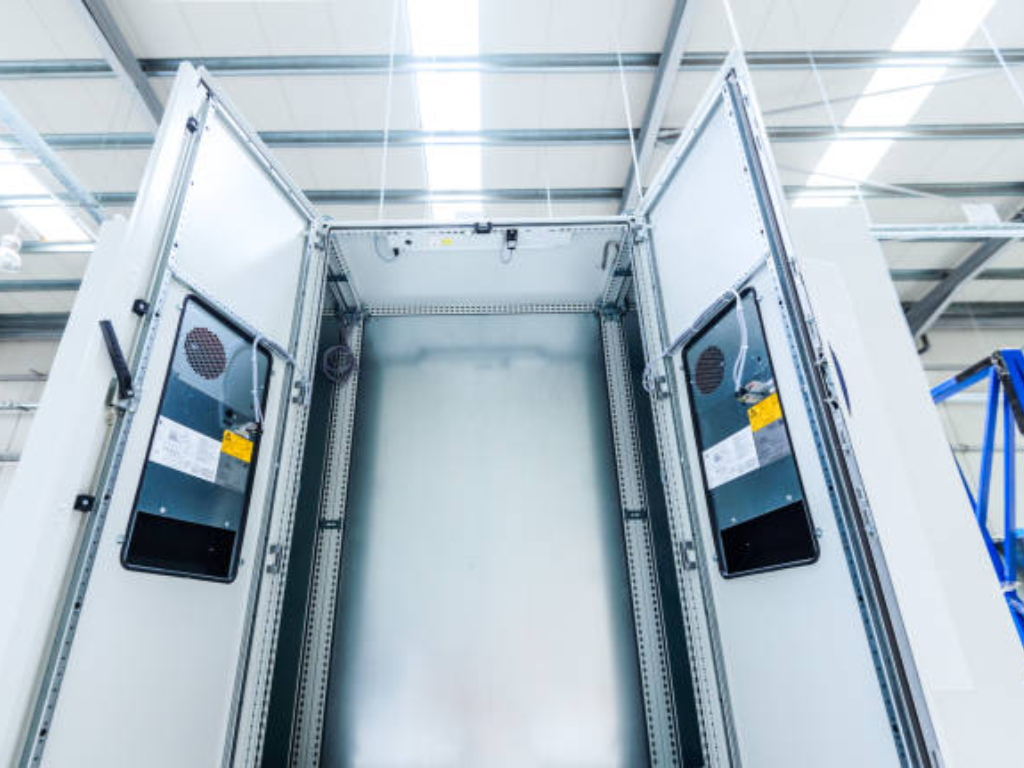
To understand why hardware matters, you first need to understand what you are fighting. Heat inside an enclosure comes from multiple sources, and not all of them are obvious.
| Heat Source | Typical Contribution | Mitigation Approach |
|---|---|---|
| Internal electronics (PSUs, VFDs, PLCs) | 60 80% of total heat load | Sum component wattage from spec sheets |
| Ambient air temperature | Variable by location and season | Passive venting or active cooling |
| Solar radiation on outdoor enclosures | +10°C to +30°C above ambient | Light-colored paint, sun shields, shade structures |
| Adjacent equipment (ovens, motors, furnaces) | Highly variable | Thermal barriers, physical separation |
Once heat enters the enclosure, it moves through three mechanisms. Conduction transfers heat through the metal walls and mounting plates which is why the enclosure material matters enormously. Convection circulates hot air internally, creating temperature stratification where components near the top run significantly hotter than those at the bottom. Radiation transfers heat from hot surfaces to cooler ones, including from the enclosure exterior inward when exposed to sunlight.
The enclosure material sets the baseline for how efficiently heat can escape. Aluminum dissipates heat roughly 3.4 times better than plastic its heat transmission coefficient is approximately 12 W/m²K versus just 3.5 W/m²K for plastic enclosures. Painted steel sits in the middle at 5.5 W/m²K, while stainless steel, for all its corrosion resistance, manages only 3.7 W/m²K (Omega Engineering, 2024). Put a stainless steel enclosure in direct sun without active cooling and you have essentially built a heat trap.
Every 10°C increase in operating temperature roughly halves component life. This single rule drives billion-dollar enclosure design decisions.
For a quick estimate of whether passive cooling alone is sufficient, industry practice uses the formula T = 4.08 × (Q / A) + 1.1, where Q is total internal heat generation in watts and A is the external surface area in square feet (AutomationDirect, 2023). If the calculated temperature rise pushes internal conditions beyond component ratings, active cooling becomes necessary.
But here is the point that the formula does not capture: all of this thermal engineering assumes the enclosure is sealed. If the door does not close evenly, if the gasket has taken a permanent set, or if the latch no longer pulls the door tight against the seal face the math means nothing.
The Hardware Foundation Why Your Enclosure's Physical Integrity Determines Cooling Success
Before you evaluate any cooling technology, ask yourself three questions. Does the gasket compress uniformly around the entire door perimeter when closed? Are the hinges holding the door in precise alignment, or has the door begun to sag? Does the latch mechanism apply consistent clamping force across the full seal face?
If you cannot answer yes to all three, your thermal management system has a leak and no cooling unit can compensate for that.
Gaskets and Seals The First Line of Defense
A gasket is not a static component. It is a dynamic engineering material that must maintain elastic recovery across thousands of open-close cycles while exposed to whatever temperature extremes the enclosure experiences. When it fails, it usually does so quietly.
The primary failure mode is compression set the permanent deformation that remains after a material has been compressed for an extended period and then released. Silicone rubber, the most common high-performance gasket material, exhibits a compression set of just 5-10% at room temperature and maintains reasonable recovery even at 200°C. Standard nitrile rubber, by comparison, shows 15-30% compression set at room temperature and degrades rapidly above 100°C (Jehbco Silicones, 2023). The practical consequence: a nitrile gasket door that stays closed for a year may no longer seal properly when opened and reclosed, because the material has lost its spring.
Temperature accelerates this process dramatically. Testing shows that silicone rubber exposed to 200°C for 1,000 hours can experience a hardness shift of up to +15 Shore A enough to change the designed compression ratio from 25% to below 15%, at which point the seal is no longer reliable in maintaining the enclosure's rated protection level.
Then there is the installation factor. A gasket is only as good as the groove it sits in. Uneven groove depth, inconsistent adhesive application, or corners cut too tight or too loose all create localized leak paths. In forced-air cooling systems, these leaks draw in unfiltered ambient air carrying dust, humidity, and in coastal or industrial environments, corrosive salt or chemical aerosols directly onto the electronics the cooling system is supposed to protect.
Hinges and Latches How Mechanical Hardware Maintains Seal Integrity
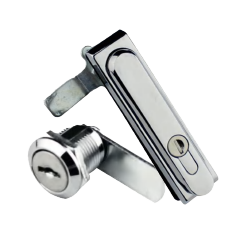
A gasket cannot seal itself. It relies on hinges to keep the door in precise alignment with the seal face, and on latches to generate the clamping force that compresses the gasket to its designed percentage. When either component underperforms, the seal becomes uneven and an uneven seal is functionally equivalent to a hole.
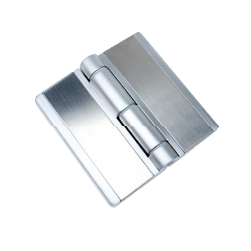
Consider the typical industrial enclosure door. In environmental test chambers and industrial ovens, a single door can weigh over 100 kg. That weight hangs on the hinges every minute the door is open, and it bears down on the seal face every minute the door is closed. Over time, standard hinges develop microscopic play fractions of a millimeter that translate into millimeters of door sag at the far corner. A door that sags by just 2 mm at the latch side can reduce gasket compression by half across the top third of the seal.
This is why hinge specification matters. Continuous hinges (piano hinges) distribute door weight across the entire height, eliminating the point loading that causes sag in two-hinge or three-hinge designs. In applications with door weights exceeding 50 kg or where thermal cycling is expected, continuous hinges are not an upgrade they are a requirement.
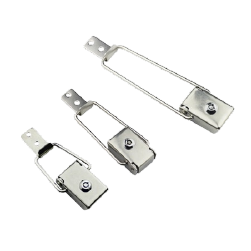
On the latch side, the difference between a single-point latch and a multi-point latch is the difference between clamping one corner of the door and clamping the entire edge. Multi-point latch systems typically three-point designs with rods connecting the central latch mechanism to top and bottom cam points can improve seal face pressure uniformity by approximately 60% compared to single-point designs. For an enclosure door sealing against internal temperatures of 200°C or external temperatures of -70°C, that difference determines whether the cooling system works as designed or works overtime to compensate for leakage.
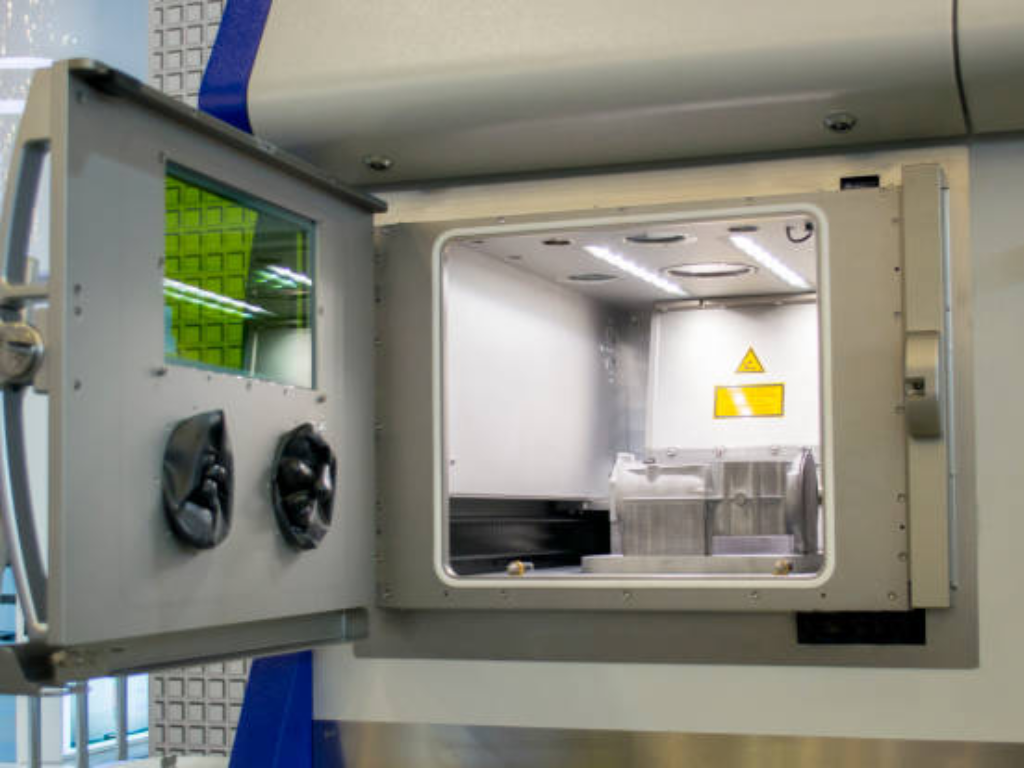
Material Selection When Stainless Steel Isn't Enough
Choosing the right enclosure material means balancing three properties that pull in different directions: thermal conductivity, corrosion resistance, and thermal expansion.
Stainless steel SUS304 gives you excellent corrosion resistance and mechanical strength. But its thermal conductivity is only about 16 W/m·K roughly one-tenth that of aluminum at 167 W/m·K (MakeItFrom, 2024). A stainless steel enclosure refuses to transfer heat in either direction: it traps internal heat when components are running, and it does a poor job of keeping external heat out in hot environments.
Aluminum solves the conductivity problem but creates a thermal expansion problem. The coefficient of thermal expansion (CTE) for aluminum 6061 is approximately 23.6 × 10⁻⁶/°C, compared to 17.2 × 10⁻⁶/°C for SUS304 (Amesweb, 2024). Across a 200°C temperature swing entirely realistic for an environmental test chamber cycling between -70°C and +130°C a one-meter aluminum door frame will expand and contract about 1.3 mm more than an equivalent stainless steel frame. If the gasket cannot accommodate that differential movement, the seal opens at low temperatures precisely when the heating system needs to maintain internal warmth.
Thermal Expansion Coefficient Comparison
This is not an argument for one material over another. It is an argument for treating material selection as an integral part of thermal management design. The gasket material, the hinge precision, the latch clamping force, and the enclosure material must be specified as a system not as four separate line items on a bill of materials.
Experienced enclosure hardware manufacturers design for this system-level interaction. They pre-compensate for thermal expansion in hinge placement, specify gasket materials with compression set ratings matched to the application's temperature range, and recommend latch configurations based on door dimensions and sealing requirements not just on what is in stock.
Cooling Technologies at a Glance
Once you have confirmed that your enclosure hardware can maintain a proper seal, cooling technology selection becomes the next not the first decision. Here is a practical overview.
| Technology | Mechanism | Best For | Limitations | NEMA Compatibility | Relative Cost |
|---|---|---|---|---|---|
| Filtered Fans | Open-loop forced air | Clean indoor environments, ambient < desired internal temp | Cannot cool below ambient; draws in contaminants; breaks NEMA 4/4X seal rating | NEMA 1, 12 | $ |
| Air-to-Air Heat Exchangers | Closed-loop, two separate air streams | Sealed enclosures in dusty/humid environments, T e 10°C | Cannot cool below ambient | NEMA 4, 4X, 12 | $$ |
| Enclosure Air Conditioners | Vapor-compression refrigeration | High heat loads, sub-ambient cooling required, humid environments | Highest cost and power consumption; mechanical complexity | NEMA 4, 4X, 12 | $$$ |
| Thermoelectric Coolers | Peltier effect, solid-state | Small enclosures (30-800W), precise temperature control | Limited capacity; lower efficiency than compressor systems | NEMA 12, 4 | $$ |
| Vortex Coolers | Compressed air expansion | Spot cooling, hazardous areas, no electricity at enclosure | Requires 5-25 SCFM compressed air at 80-100 PSI | NEMA 4, 4X | $$ |
| Passive Cooling | Natural convection, heat sinks, reflective coatings | Low heat loads, remote sites, noise-sensitive areas | Lowest capacity; ambient temperature ceiling | All ratings | $ |
The critical constraint linking cooling technology to enclosure hardware is the NEMA/IP rating. A NEMA 4 or 4X enclosure is sealed against water and dust ingress which means it cannot use open-loop cooling like filtered fans without destroying its own protection rating. The cooling technology must match the enclosure's seal level. And the enclosure's seal level is only as good as the hardware maintaining it.
The cooling technology must match the enclosure's seal level. A NEMA 4/4X enclosure with filtered fans is a contradiction the fans destroy the protection rating they're supposed to serve.
When Temperatures Go Extreme Hardware Performance at the Edge
Standard enclosure hardware is rated for moderate conditions. Push it into the temperature extremes common in industrial ovens, environmental test chambers, cold storage facilities, and outdoor installations, and components that work flawlessly at room temperature can fail in ways that take months to become obvious.
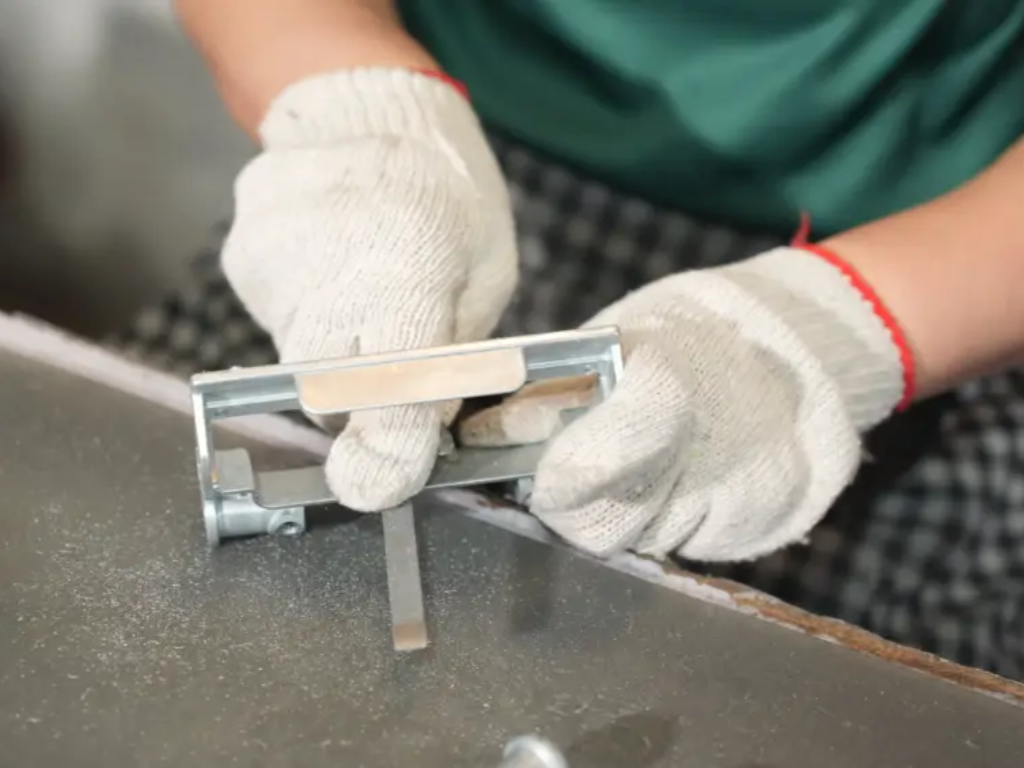
High-Temperature Environments
Inside an industrial oven or environmental test chamber, ambient temperatures regularly reach 200°C to 350°C and can spike to 600°C in specialized equipment. At these temperatures, the immediate concern is not that metal parts will melt (SUS304 stainless steel does not begin melting until approximately 1,400°C). The concern is that seals age at an accelerated rate, metals creep under sustained load, and thermal expansion shifts every mating surface.
Silicone gaskets, while the best available option for high-temperature sealing, are not immune. After 1,000 hours at 200°C, a silicone gasket can harden by 15 points on the Shore A scale. The designed 25% compression may degrade to an actual 15% or less. Below roughly 10-15% compression, most gasket profiles lose reliable sealing contact particularly at corners and around latch points where the geometry resists uniform compression.
Below 10 15% compression, most gasket profiles lose reliable sealing contact particularly at corners and around latch points where the geometry resists uniform compression.
Meanwhile, the metal hardware faces its own challenges. A hinge pin subjected to 200°C for extended periods undergoes thermal creep a slow, permanent deformation under constant load. A door that was perfectly aligned when installed may, after months of high-temperature operation, show measurable sag simply because the hinge material flowed microscopically under the combination of heat and weight.
Sub-Zero Applications
At the other end of the spectrum, cold storage facilities, cryogenic test equipment, and outdoor installations in northern climates push hardware to temperatures where materials undergo fundamental changes in mechanical behavior.
The critical threshold is the glass transition temperature (Tg) below which an elastomeric material transitions from flexible and rubbery to rigid and glass-like. Silicone rubber, with a Tg of approximately -120°C, remains flexible at temperatures that turn most other elastomers brittle. Nitrile rubber (NBR), by contrast, has a Tg of approximately -30°C to -40°C. At -70°C a common test chamber specification a nitrile gasket is no longer a gasket. It is a rigid plastic ring that cannot conform to the seal face.
Glass Transition Temperature (Tg) Elastomer Flexibility Range
When a door is opened in a -70°C environment and then reclosed, a nitrile gasket that has stiffened below its Tg will not recover its designed shape. It leaves a gap. The heating system activates to bring the enclosure back to operating temperature, but it now must fight not only the ambient cold but also a continuous influx of frigid air through the failed seal. The result is uneven internal temperatures, condensation forming on cold spots, and a heating system that runs far more than its design calculations predicted.
Thermal Cycling The Silent Killer
Between the extremes lies the most insidious threat to enclosure integrity: thermal cycling. Every startup and shutdown, every day-night cycle, every seasonal shift imposes a temperature change. And because different materials expand and contract at different rates, every cycle produces microscopic relative movement at every interface.
The seal face is the most vulnerable. A gasket compressed against a metal surface undergoes a tiny shear displacement with each temperature change the metal expands more or less than the gasket material, sliding the two surfaces against each other. Over thousands of cycles, this micro-fretting wears the gasket surface and relaxes the initial compression. A seal that tested perfectly at installation may, after 5,000 thermal cycles, be operating at 60% of its designed sealing force.
Thermal cycling is the #1 acceleration factor for seal life reduction.
This is why cycle life ratings matter. When a hinge is rated for 20,000 open-close cycles at room temperature, that number can drop to 3,000-5,000 effective cycles under combined thermal and mechanical loading. The degradation is not linear and it is not always visible until a thermal audit reveals that the cooling system is working harder than it should be, or a salt spray test reveals corrosion paths tracing directly to failed seal zones.
For applications with wide temperature swings, specify hardware that has been tested to the full temperature range not just the steady-state operating temperature. Thermal cycling performance is a separate qualification from high-temperature or low-temperature performance, and standard product datasheets rarely capture it.
Building a Thermal Management System That Lasts
Most thermal management projects do not fail because the cooling equipment was undersized. They fail because the hardware and the cooling system were specified independently, by different teams, at different stages of the design process and nobody verified that they work together.
A Hardware-First Selection Framework
The following four-step sequence inverts the conventional approach. Start with the hardware, then match the cooling to the hardware's sealing capability.
Step 1: Assess your enclosure hardware. Verify that gasket material covers your full operating temperature range. Check hinge type and load rating against actual door weight including any future equipment additions. Confirm latch configuration provides uniform seal compression. If the door is over one meter in any dimension, multi-point latching should be the default.
Step 2: Calculate your heat load. Sum the power dissipation of all internal components. Add external heat sources solar radiation on outdoor enclosures, proximity to ovens or furnaces, ambient temperature extremes at the installation site. This gives you the total wattage your thermal management system must handle.
Step 3: Match cooling technology to your seal level. If the enclosure is NEMA 4/4X sealed and must remain so, your options are closed-loop: air-to-air heat exchangers or enclosure air conditioners. If the environment is clean and the NEMA rating permits ventilation, filtered fans offer the lowest cost and complexity. Use the comparison table in the previous section as a decision aid.
Step 4: Verify hardware performance at operating extremes. Before finalizing the design, confirm that every hardware component gasket, hinge, latch can maintain its specified performance across the full temperature range the enclosure will experience in service. This step is the one most often skipped, and the one that most often explains why a thermal management system that looked perfect on paper underperforms in the field.
Maintenance That Preserves Thermal Integrity
Enclosure cooling maintenance is well-documented: clean or replace filters monthly, inspect condenser coils quarterly, verify thermostat setpoints annually. But there is an equally important maintenance checklist for the hardware side and it is almost universally neglected.
Every quarter, inspect door gaskets for compression set, surface cracking, and uniform contact. Run a dollar-bill test: close the door on a strip of paper at multiple points around the perimeter and check for consistent resistance when pulling it out. Check hinges for play, binding, or corrosion a hinge that squeaks is a hinge that is wearing. Verify latch engagement force: if it has become noticeably easier or harder to close the door, something has shifted.
Close the door on a strip of paper at multiple points around the perimeter. If resistance varies, your gasket compression is uneven and your seal is leaking.
Annually, conduct a full thermal audit. Use an infrared camera to scan the enclosure exterior while the system is running at normal load. Hot spots near door edges, hinge lines, or latch points indicate seal leaks and a seal leak means the cooling system is compensating for a problem it was never designed to solve. The fix is usually a gasket replacement or hinge realignment, not a bigger air conditioner.
Most enclosure gaskets have a service life of three to five years under normal conditions yet many facilities have never replaced a gasket. If your cooling system seems to be losing effectiveness despite regular maintenance, the gasket is the first place to look. If your cooling system is losing effectiveness, start there.
References
- Electronics Cooling. “Does a 10°C Increase in Temperature Really Reduce the Life of Electronics by Half?” 2017. https://www.electronics-cooling.com/2017/08/10c-increase-temperature-really-reduce-life-electronics-half/
- Omega Engineering. “Enclosure Heater Sizing & Heat Transmission Coefficients.” 2024. https://www.omegaengineering.cn/pptst_eng/CR027_Series.html
- AutomationDirect. “How to Select and Size Enclosure Thermal Management Systems.” 2023. https://library.automationdirect.com/select-size-enclosure-thermal-management-systems/
- Jehbco Silicones. “Silicone vs HNBR Compression Set and Temperature Performance Comparison.” 2023. https://jehbco.com.au/silicone-hnbr/
- MakeItFrom. “AISI 304 Stainless Steel vs. 6061 Aluminum Thermal Properties Comparison.” 2024. https://www.makeitfrom.com/compare/AISI-304-S30400-Stainless-Steel/6061-AlMg1SiCu-3.3214-H20-A96061-Aluminum
- Amesweb. “Thermal Expansion Coefficient (CTE) of Metals Aluminum, Steel, Stainless.” 2024. https://amesweb.info/Materials/Linear-Thermal-Expansion-Coefficient-Metals.aspx
- Bud Industries. “How Enclosure Design Impacts Heat Dissipation & Thermal Management.” 2026. https://www.budind.com/blog/2026/01/how-enclosure-design-impacts-heat-dissipation-thermal-management/
- Rittal. “Industry Trends Impacting Sustainable Enclosure Cooling in 2025.” 2025. https://www.rittal.com/us-en_US/Company/Rittal-Stories/Trends-Impacting-Sustainable-Industrial-Enclosure-Cooling-in-2025