


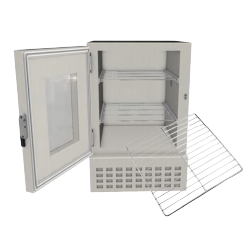
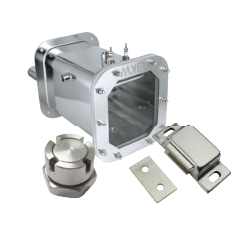
Two options. One number apart. IP65 or IP66.
On a spec sheet, the difference is a single digit. In the field — on a coastal installation battered by salt spray, under a pressure washer on a food-processing floor, inside a factory where conductive dust hangs thick in the air — that one digit separates a decade of reliable service from a failed unit in year two.
This guide goes beyond the parameter table. It covers what the tests actually measure, what real-world failure data reveals, what choosing wrong really costs, and why installation matters more than the rating itself.
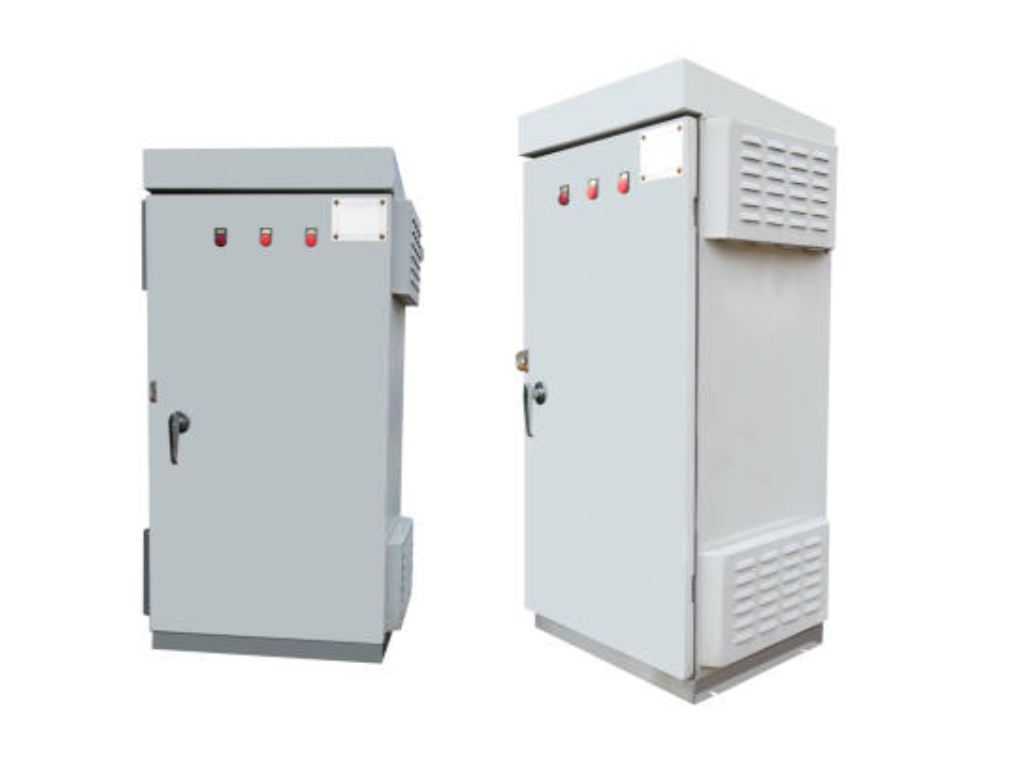
What IP65 and IP66 Actually Mean
IP stands for Ingress Protection, defined by the international standard IEC 60529. The rating uses two digits:
- First digit (0-6): Protection against solid objects and dust
- Second digit (0-9): Protection against water and moisture
Both IP65 and IP66 carry a first digit of 6 the highest level of dust protection. A “6” means the enclosure is dust-tight: no dust can enter under the test conditions, period. This is the same for both ratings. If dust ingress is your primary concern, the two are identical.
The difference lives entirely in the second digit:
| Dimension | IP65 | IP66 |
|---|---|---|
| Dust Protection | Level 6 Dust-tight | Level 6 Dust-tight |
| Water Protection | Level 5 Water jets | Level 6 Powerful water jets |
A “5” protects against water projected from a nozzle. A “6” protects against powerful water projected from a larger nozzle at much higher pressure.
If you remember nothing else: IP65 and IP66 are equally dust-tight. The gap is exclusively about how much water they can take.
IP65 vs IP66 – The Technical Gap That Actually Matters
The difference between IP65 and IP66 comes down to one number: 100 vs 12.5 liters per minute. That’s an 8× gap in water volume and a 3.3× gap in water pressure. This isn’t “slightly better.” It’s a different weight class.
Water Pressure and Flow Rate The 8× Gap
Here is what IEC 60529 actually specifies for each test:
| Test Parameter | IP65 (IPX5) | IP66 (IPX6) |
|---|---|---|
| Nozzle Diameter | 6.3 mm | 12.5 mm |
| Water Flow Rate | 12.5 L/min | 100 L/min |
| Water Pressure | 30 kPa (~4.4 psi) | 100 kPa (~15 psi) |
| Test Distance | 3 meters | 3 meters |
| Test Duration | e 15 minutes | e 3 minutes |
What do these numbers mean in practice?
- 12.5 L/min at 30 kPa: Roughly the output of a garden hose on its lowest setting. This simulates moderate rain, splashing, or gentle wash-down.
- 100 L/min at 100 kPa: A firehose-level stream. One hundred liters per minute fills a standard bathtub in under two minutes. This simulates driving rain, storm-force water impact, and industrial hose-downs.
The IP66 test uses a nozzle with twice the diameter and pushes eight times the water volume through it at more than triple the pressure. The test duration is shorter (3 minutes vs. 15), but the intensity gap is enormous.
What the Test Doesn’t Tell You – Lab vs. Real World
IEC 60529 testing happens in a clean, controlled laboratory not your installation site. Three gaps separate the test bench from reality:
- The dust test uses talcum powder non-conductive. In real industrial environments, dust is often conductive. Graphite dust, metal powder, carbon fiber residue none of these are represented in the IP6X test. A real-world case from the Model Engineer forum describes a graphite machining facility where IP66 enclosures still experienced ingress from “talcum-powder-fine graphite dust” that shorted VFDs. The standard simply wasn’t designed for this.
- The water test uses clean, room-temperature fresh water. It does not test for salt spray (corrosion + accelerated seal aging), chemical solutions (seal material degradation), or hot water/steam (thermal expansion of seals + pressure differential). If your equipment faces any of these, an IP66 rating alone is not a guarantee.
- The test is performed under ideal assembly. The enclosure is mounted perfectly flat, all gaskets are seated correctly, and cable glands are precisely matched to cable diameter. In the field, none of these are guaranteed and we’ll come back to why this matters.
When IP65 Falls Short – Warning Signs
Ask yourself these four questions:
- Is your equipment fully exposed, with no roof, canopy, or overhang? IP65 can handle rain falling on it. It is less reliable against wind-driven rain hitting from the side at storm speeds.
- Does your maintenance routine include a pressure washer? Even a consumer-grade pressure washer outputs 1,000 2,000 psi roughly 100× the IP65 test pressure. If anyone with a hose might clean near your equipment, IP65 is the wrong rating.
- Are you within 5 km of the coast? Salt-laden air accelerates elastomer seal aging. IP65 seals, with thinner design margins, degrade faster. What passes the IPX5 test on day one may fail it by year three.
- Do you operate in a tropical climate? High humidity + high heat = aggressive thermal cycling. Daily temperature swings create internal pressure differentials that pull moisture past marginal seals a phenomenon known as the “breathing effect.”
If you answered yes to any of these, IP65 is a risk. IP66 is the safer floor.
Real-World Reliability – What Field Data Reveals
Numbers don’t lie. In real outdoor conditions, IP65 fails nearly twice as often as IP66.
The Taiwan Coastal Study – 3-Year Data from 4,200 Fixtures
One of the few publicly available field reliability studies tracked 4,200 outdoor LED luminaires installed across Taiwan’s northern coastal region over three years. This is a punishing environment: high humidity, salt spray, seasonal typhoons, and sustained heavy rainfall.
The results (Zenodo, 2025):
| Rating | Annual Failure Rate | 3-Year Cumulative Failure |
|---|---|---|
| IP65 | 14.7% | ~38% of units had at least one failure |
| IP66 | 7.9% | ~22% of units had at least one failure |
The IP65 failure rate was nearly double that of IP66. Put in business terms: for every 100 IP65 fixtures installed, roughly 44 experienced a water-related failure within three years. For IP66 fixtures, that number dropped to about 24.
This is not a marginal difference. It is the gap between a maintenance headache and a reliable installation.
Why the Gap Exists – The Physics Behind the Failure Rate
Why does IP65 fail so much more often? Three mechanisms explain the gap:
1. Water pressure margin is too thin. The IP65 test pressure (30 kPa) represents moderate rainfall. But in a typhoon or severe storm, wind-driven rain can exceed this threshold. Once the water pressure at the enclosure surface crosses 30 kPa, an IP65 seal is operating beyond its tested limit. IP66’s 100 kPa rating provides a much wider safety margin.
2. Seal aging is non-linear – and IP65 runs out of margin faster. Every elastomer gasket loses compression over time. UV exposure, thermal cycling, and salt spray accelerate this. An IP65 gasket might start with a 30% compression ratio just enough to pass the test. After two years of outdoor exposure, that drops to 20%, and at some point, a gap opens. An IP66 gasket, designed with larger contact pressure, takes longer to reach the failure threshold.
3. IP65 is less forgiving of installation imperfections. A slightly misaligned cover, a cable gland torqued to “good enough,” a mounting surface that isn’t perfectly flat these small deviations may not compromise an IP66 seal. Under IP65’s thinner margins, they often do.
The Hidden Cost of Choosing Wrong
The conversation about IP ratings usually stops at the technical spec. But if you’re responsible for procurement or project specification, there’s another dimension: total cost of ownership.
IP65 equipment has a lower sticker price. That’s where the savings end.
Let’s run a 5-year TCO comparison for a typical outdoor installation say, an industrial junction box or LED fixture in a moderately harsh environment (coastal or high-rainfall area).
The math is straightforward: the $20 saved per unit on IP65 becomes a $10,000+ liability over five years. And that’s before accounting for unplanned downtime, which in many industrial settings costs far more than the hardware itself.
What drives this is the compounding effect of a higher annual failure rate. A 14.7% annual failure rate doesn’t mean 14.7% of your units fail each year independently many of the replacement units also fail, and the total bill escalates.
Now, a fair caveat: this calculation assumes a harsh environment. For a mild climate with protected mounting, the failure rate gap narrows, and IP65 may well be the rational economic choice. The key is to match the TCO calculation to your environment not someone else’s.
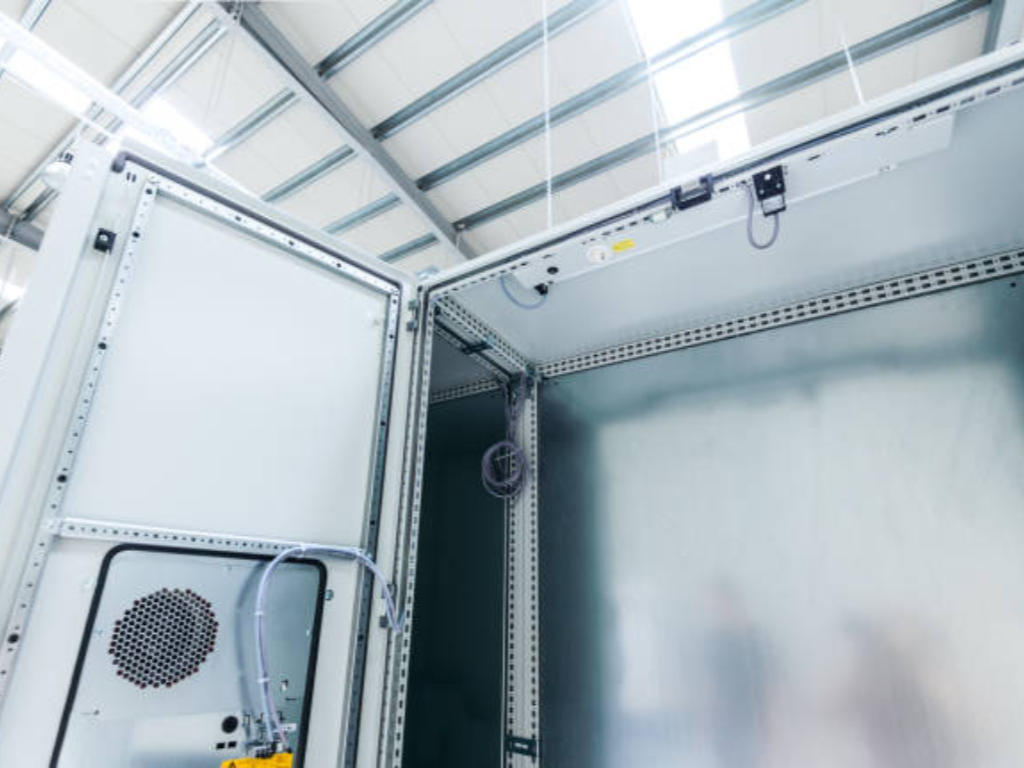
How to Choose – A Decision Framework for Engineers
Choosing between IP65 and IP66 isn’t about picking the “better” rating. It’s about matching the rating to three variables: your environment, your maintenance routine, and your budget tolerance. Here is a four-step process to get it right.
Step 1 – Audit Your Environment
Start with the most important variable: where will the equipment actually live?
| Environment | Recommended Rating | Rationale |
|---|---|---|
| Indoor, climate-controlled | IP54 IP65 | Minimal water exposure; dust protection matters more |
| Semi-outdoor (under canopy/awning) | IP65 | Protected from direct rain; occasional splash risk only |
| Full outdoor, temperate climate | IP65 minimum | Normal rainfall within IP65’s tolerance |
| Full outdoor, tropical climate | IP66 | High humidity + heavy rainfall + faster seal aging |
| Full outdoor, coastal (<5 km from shore) | IP66 minimum | Salt spray accelerates seal degradation |
| Food/beverage processing floor | IP66 minimum | Daily washdown with high-pressure hoses |
| Car wash tunnel / heavy washdown zone | IP69K | High-pressure hot water jetting beyond IP66 scope |
If your environment crosses multiple categories, default to the higher rating.
Step 2 – Factor in Your Cleaning and Maintenance Routine
This is the variable most engineers overlook. Ask yourself one question: will this equipment ever be near a hose or pressure washer?
A typical industrial pressure washer outputs at 1,000 2,000 psi. That’s roughly 100 times the IP65 test pressure and 10 20 times the IP66 test pressure. Even IP66 is not designed to survive a direct blast from a pressure washer at close range.
The practical implication: if your maintenance crew uses pressure washers, either (a) spec IP66 as the absolute minimum with strict cleaning protocols (minimum 3-meter distance, no direct nozzle aim at seals), or (b) step up to IP69K for equipment that will take direct hits.
Hidden trap: IP66 is not IP67. If your washdown routine leaves standing water that the equipment sits in, IP66 offers zero protection against submersion. You need a dual-rated IP66/IP67 enclosure which must be explicitly specified, because IPX6 and IPX7 are tested completely differently (water jet vs. immersion) and one does not imply the other.
Step 3 – Run the Numbers
Use this simplified decision formula:
(IP66 unit price - IP65 unit price) < (IP65 unit price × Environment Risk Factor × Planned Service Years × 0.15)This formula provides a quick filter. When the result is borderline, default to the full TCO model from the previous section.
Step 4 – How to Verify a Manufacturer’s IP Claims
A spec sheet that says “IP66” is not the same as an enclosure that actually performs at IP66 in the field. Here is a four-point verification checklist before you commit to a supplier:
1. Third-party test reports not self-declaration.
Ask for an IP test report from an ISO/IEC 17025 accredited laboratory. In the EU, look for UKAS, DAkkS, or COFRAC. In Asia, CNAS or NABL. In North America, A2LA or NVLAP.
2. In-house tooling and mold control.
IP ratings depend on precise dimensional tolerances a 0.2 mm gap at a seal interface is all it takes for water to enter. Manufacturers with their own mold shop and CNC capability can control these tolerances.
3. Seal material traceability.
Not all EPDM or silicone is the same. Brand-name seal materials have documented compression set resistance. A supplier who can tell you the seal material grade takes IP performance seriously.
4. Batch testing, not just type approval.
Many manufacturers obtain an IP66 type-approval certificate for their initial design sample and never test again. Consistent IP performance requires ongoing batch-level testing.
Installation – The Factor That Matters More Than the Rating
Most IP rating guides won’t tell you this: a poorly installed IP66 enclosure can fail faster than a properly installed IP65 one.
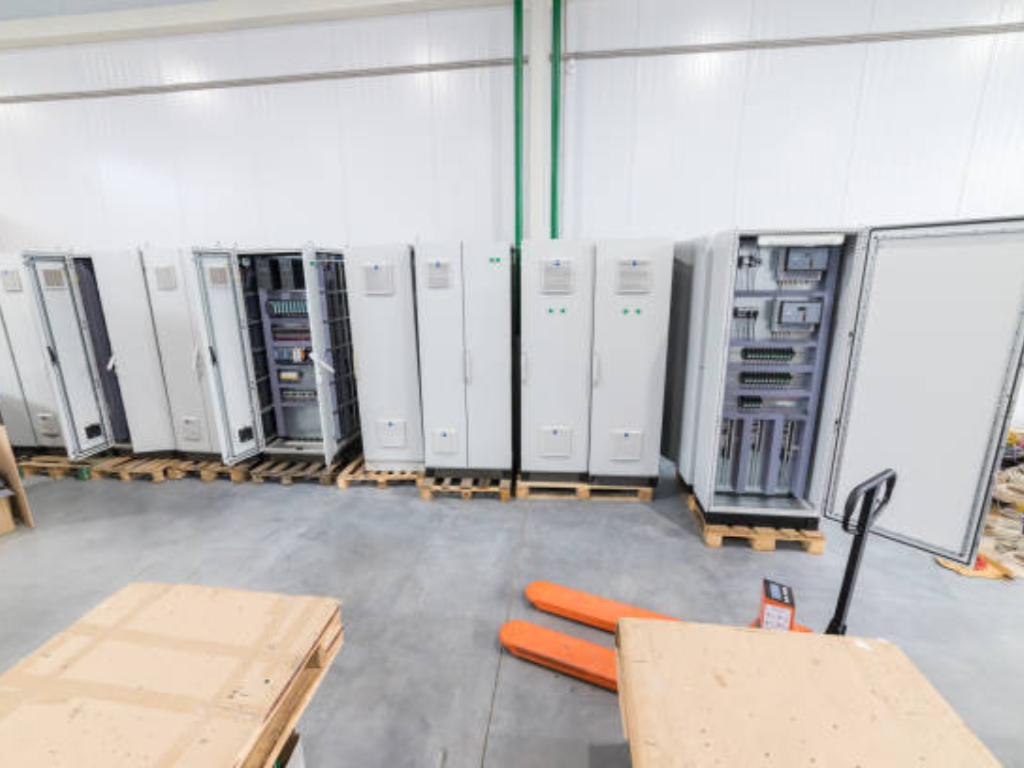
The IP test is conducted under ideal laboratory conditions: perfectly flat mounting surfaces, precisely matched cable entries, gaskets seated by trained technicians. Your installation site has none of these guarantees. Here are 6 common failure modes that defeat even IP66 enclosures, and how to prevent each one:
1. Cable Gland Mismatch
A cable gland rated IP65 paired with an IP66 enclosure creates a weak point. Worse, a gland with the wrong diameter for the cable creates an annular gap that wicks water by capillary action. Fix: Spec cable glands with an IP rating equal to or higher than the enclosure. Verify gland-to-cable diameter match within ±1 mm.
2. Gasket Roll-Out During Assembly
The most insidious failure: the gasket looks seated to a visual check, but a 2 mm section has rolled or folded during cover installation. Fix: Use enclosures with gasket-retention grooves. Train assembly staff to run a feeler gauge check after cover installation.
3. Uneven Mounting Surface
Mounting an enclosure on an uneven wall or pole bracket flexes the housing. A 1° twist may not be visible, but it’s enough to open a 0.1 mm gap at one corner of the seal. Fix: Always use the manufacturer’s mounting brackets. Verify mounting surface flatness with a straightedge.
4. The Thermal Breathing Effect
Every 24-hour temperature cycle creates a miniature pressure cycle inside the enclosure. As it cools at night, internal pressure drops, pulling humid air past seals. Fix: For equipment in high-humidity environments, specify enclosures with breather vents that equalize pressure without letting water in.
5. Unused Cable Entries Left Open
An IP66 enclosure with an unplugged M20 knockout is no longer IP66 it’s an open invitation. Fix: Every unused entry must be sealed with a blanking plug of equal or higher IP rating.
6. Hardware Yield (When Latches and Hinges Fail the Gasket)
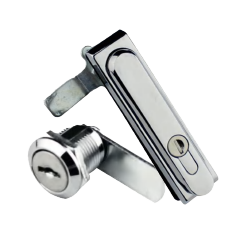
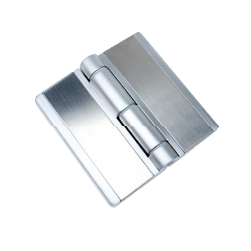
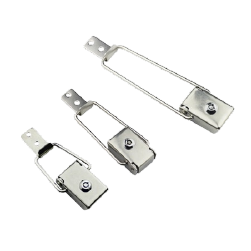
An IP66 enclosure is only as good as the hardware keeping it tightly closed. Over time, standard zinc-alloy hinges sag under heavy doors, and generic latches lose their cam tension. When this happens, the critical compression on the gasket becomes uneven. Under the IPX6 test (or a real-world storm), high-pressure water easily forces its way through these micro-gaps. A quick visual inspection rarely catches this gradual loss of mechanical tension.
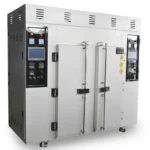
Fix: Do not treat enclosure latches and hinges as an afterthought. Specify industrial-grade hardware engineered specifically to maintain uniform compression. For instance, Kunlong Hardware designs specialized structural parts for demanding IP-rated applications (like environmental test chambers). Utilizing high-grade 304/316 stainless steel with a precise 0.0005mm manufacturing tolerance, their hardware eliminates door sag entirely. Backed by 1,000+ hours of salt spray testing and a certified 20,000-cycle lifespan, it ensures the enclosure door maintains perfect IP66 gasket integrity from day one to year ten.
Common IP Rating Myths – Don’t Let These Cost You
Myth 1: “IP66 means it’s waterproof – I can submerge it.”
False. IP66 protects against powerful water jets, not immersion. Submersion protection starts at IP67. If your equipment may sit in standing water, you need an IP66/IP67 dual rating.
Myth 2: “IP66 automatically includes IP65.”
Not necessarily. IPX5 and IPX6 use different nozzle diameters (6.3 mm vs 12.5 mm) and test conditions. Look for equipment explicitly rated IP65/IP66.
Myth 3: “Higher IP rating is always better.”
Higher IP ratings typically mean thicker walls and poorer heat dissipation. Match the rating to the actual threat.
Myth 4: “IP6X dust-tight means it protects against all dust.”
The IEC 60529 dust test uses non-conductive talcum powder. Conductive dusts (graphite, metal powder) can defeat even dust-tight enclosures over time. Consider positive-pressure purging for extreme conductive dust environments.
The Short Version
If you’ve read this far, here is the decision in one paragraph:
IP65 and IP66 are equally dust-tight. The gap is water pressure: IP66 handles 8× the water volume at 3.3× the pressure. Choose IP65 for protected outdoor or mild environments where the cost difference matters. Choose IP66 for full outdoor exposure, coastal sites, washdown zones, or anywhere you’d rather pay once than replace repeatedly. And whichever rating you choose, invest at least as much effort in correct installation and reliable hardware because a standard sagging hinge can defeat a $500 IP66 enclosure.
Designing a Reliable IP-Rated Enclosure? Get the Hardware Right.
Don’t let a standard yielding latch compromise your environmental seals. With 20 years of dedicated expertise in industrial structural parts, Kunlong Hardware provides the unyielding hinges, locks, and latches that your IP-rated enclosures depend on. We offer 3,000+ standard products ready to ship in 7 days, and custom hardware solutions engineered from concept to production in just 45 days.
ISO9001 Certified | 1000h Salt Spray Tested | 20,000-Cycle Lifespan
References
- IEC (International Electrotechnical Commission). “IEC 60529:1989+AMD1:1999+AMD2:2013 CSV Degrees of protection provided by enclosures (IP Code).” 2013. https://webstore.iec.ch/en/publication/2452
- Zenodo. “6-year outdoor IP65/IP66 LED fixture reliability study, Taiwan coastal.” 2025. https://zenodo.org/records/17145001
- Model Engineer & Workshop Magazine Forum. “METAL DUST & VFDs.” https://www.model-engineer.co.uk/forums/topic/metal-dust-vfds/
- L-com. “IP65, IP66, and IP67 Ratings for Water Protection: So, What’s the Difference?” https://www.l-com.com/resources/blog/ip65-ip66-and-ip67-ratings-for-water-protection-so-whats-the-difference
- BUD Industries. “IP Ratings Explained: The Mysteries of IP65, IP66, and IP67.” https://www.budind.com/blog/2014/02/the-mysteries-of-ip65-ip66-and-ip67-rated-enclosures-explained/
- IEC TC 70. “Degrees of protection provided by enclosures.” https://www.iec.ch/dyn/www/f?p=103:30:0::::FSP_ORG_ID:1256