


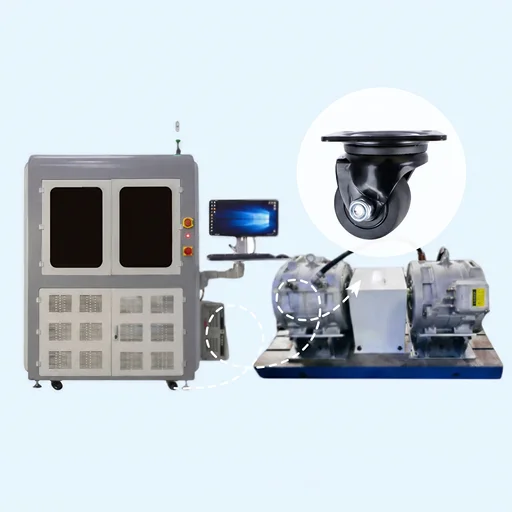
Have you ever encountered issues such as difficult movement, excessive noise, or floor scratches when using equipment? A small castor can often determine the lifespan and safety of your equipment. Today, Kunlong Industrial will guide you through understanding castor selection from a technical perspective, helping you eliminate jerky movements and potential safety hazards.
Insufficient scenario:
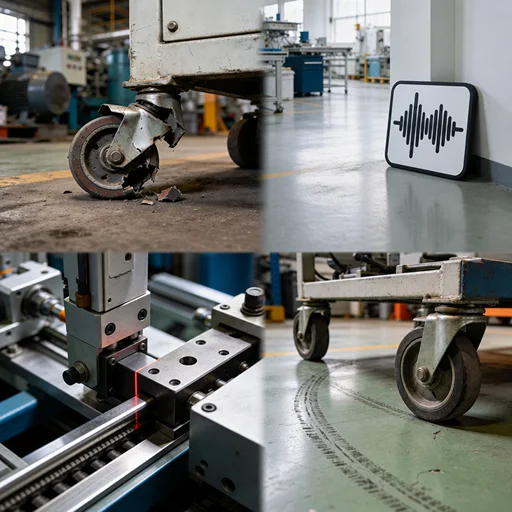
1.Insufficient load capacity, structural failure
Condition: Deformed castor brackets, damaged wheels, loose equipment, and even potential safety accidents.
Kunlong Casters: Load capacity is the red line—sufficient safety margin must be maintained.
2.Excessive noise and environmental interference
Condition:The noise inside the cleanroom is loud and disturbing, interfering with precision instruments and personnel concentration.
Kunlong Casters:Material determines sound insulation performance, requiring strict control of the friction coefficient.
3.Ground damage, high maintenance costs
Condition:Hard wheels scratch expensive epoxy flooring, resulting in high repair costs.
Kunlong Casters:Soft contact protects the floor and reduces overall costs.
4.Poor positioning accuracy and loss of precision control
Condition:A few millimeters of misalignment with the production line caused production to halt.
Kunlong Casters:Precision steering and locking ensure the reliability of automated equipment.
Four Core Factors for Selection
Step 1: Calculate the load capacity
Formula: Total weight ÷ actual number of load-bearing casters × safety factor 1.3–1.5.
Tip: Even with four casters, calculate for three load-bearing points (to compensate for uneven floors).
Step 2: Look at the environment
Smooth floor (epoxy flooring): Choose polyurethane (PU) or soft rubber for quiet operation and scratch resistance.
Rough surfaces (concrete): Choose high-strength nylon (PA) or cast iron for impact resistance and wear resistance.
Step 3: Define Performance
Flexibility: Frequent turns with dual-ball swivel casters
Speed: Manual <4 km/h; AGV requires special dynamic balancing design
Step 4: Select Installation and Braking
Flat type: Heavy-duty machinery, sturdy and impact-resistant.
Screw-type: Suitable for medium and small-sized equipment, quick assembly.
Brake: single brake (temporary stop), double brake (full braking), central control brake (one-touch parking).
product comparison
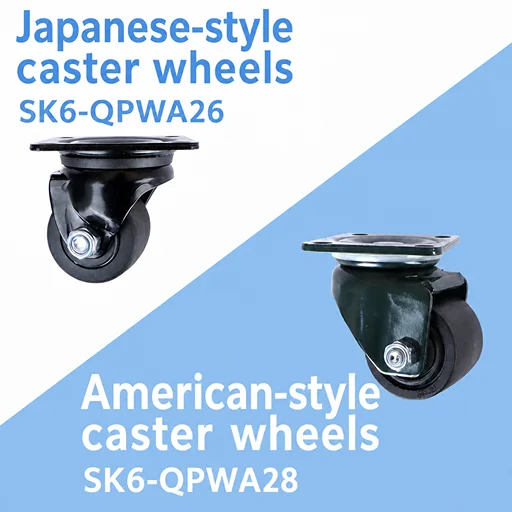
Japanese Casters vs. American Casters
| dimensionality | Japanese precision casters | American heavy-duty casters |
| Core Features | Low resistance, smooth operation, tight tolerances, lightweight | Thick steel plate formed in one piece, impact-resistant with exceptional load-bearing capacity |
| applicable scene | Medical ICU, laboratory, precision instruments, office automation | Heavy-duty machine tools, automotive assembly, intelligent warehousing, AGV |
| Kunlong’s Advantages | Precision dual bearings throughout the system, with minimal starting thrust | Exclusive dual vertical spring suspension protects equipment from bumps and shocks |
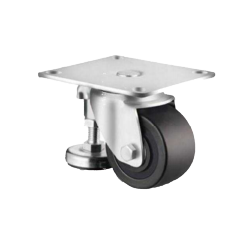
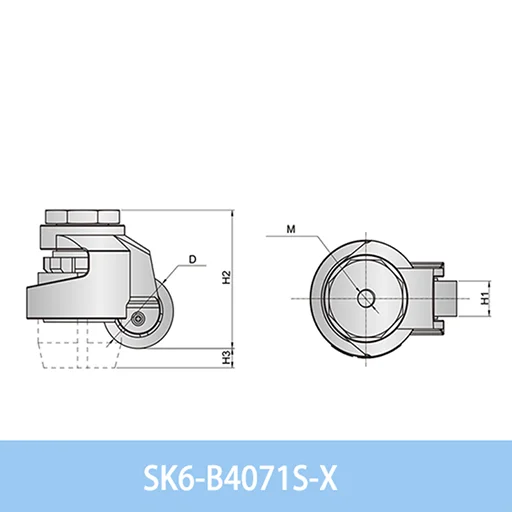
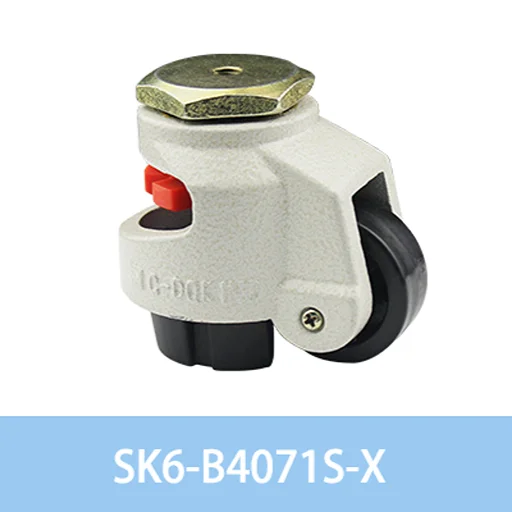
Functional Marvel: Leveling Support Casters (Fuma Wheels)
All-in-one moving and leveling
Principle: Rotate the nut to lower the support foot cup, transferring the load to a rigid support point.
Value: Addresses the pain point of “mobile and flexible but unstable when placed,” suitable for high-precision optical instruments
How to choose materials
Nylon (PA): The wear-resistant king, suitable for outdoor/heavy-duty use, but generates high noise
Polyurethane (PU): The gold standard for indoor use, offering a balanced combination of wear resistance and elasticity without damaging the floor
Rubber: The king of shock absorption, ultra-quiet, ideal for precision instruments
Cast iron: the king of strength, heat-resistant, ideal for metallurgical forging
Choosing Kunlong means choosing professional, efficient, and reliable industrial mobile solutions. We not only deliver outstanding products, but also strive to become your trusted long-term technology partner.
If you have any product questions or technical issues, feel free to contact us through the back-end.