


What an Acoustic Enclosure Actually Is
A compressor kicks on in the corner of a workshop and conversation in the room stops until it cycles down. A generator canopy at a hospital loading dock has to stay under the site noise limit at night. A vacuum pump in a laboratory rattles loud enough that researchers move it into a box and shut the door. Three different machines, three budgets, one shared fix: an acoustic enclosure, a housing built around a noise source to keep its sound from reaching everyone else.
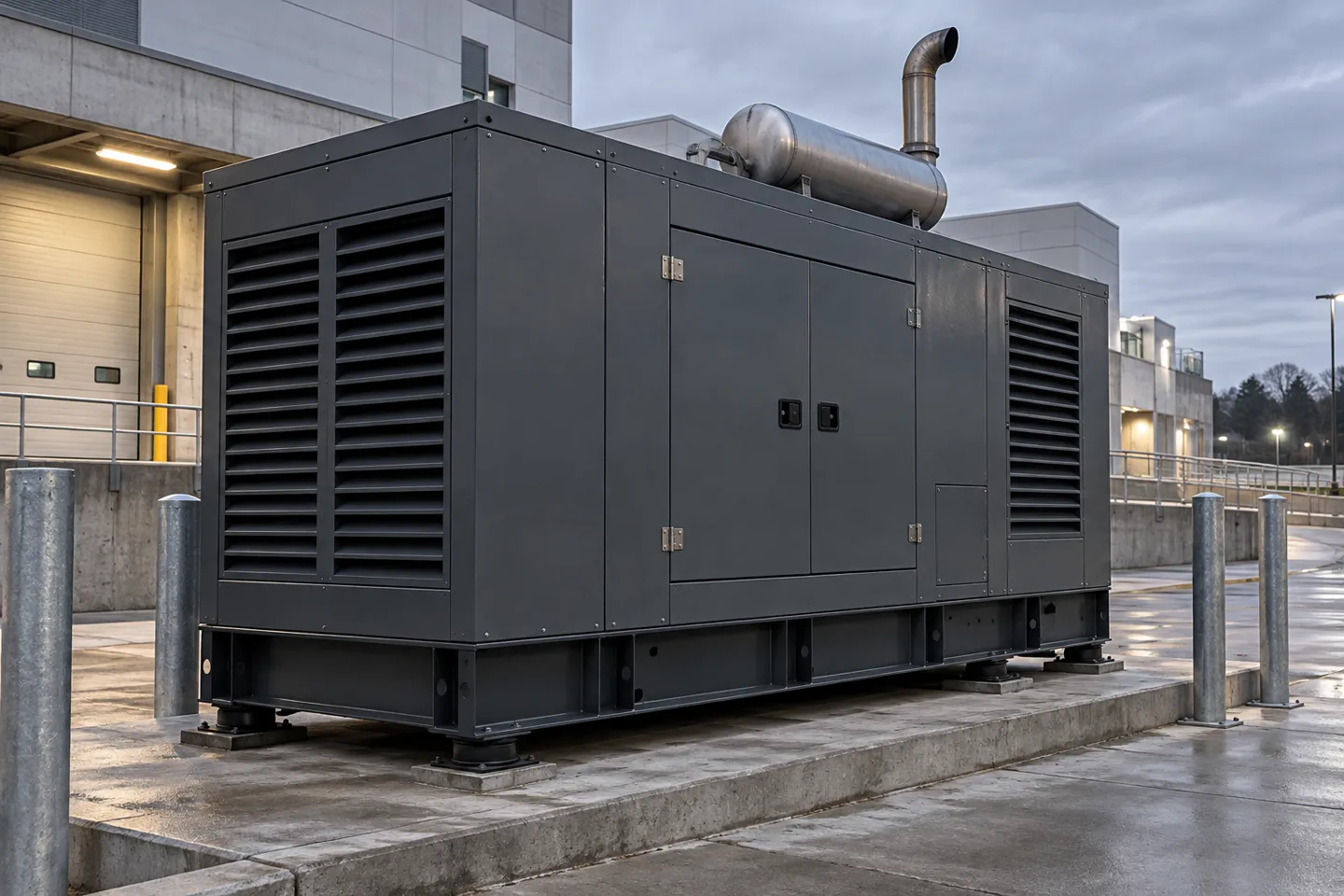
To be clear about the term: this is not a speaker enclosure, which exists to project sound accurately, and not whole-room soundproofing, which treats a space rather than a machine. An acoustic enclosure wraps the equipment itself.
The way it works comes down to four defense lines between the source and your ears:
- Mass blocks the sound with heavy panels.
- Absorption dissipates what bounces around inside.
- Decoupling breaks the vibration path through feet, pipes and mounts.
- Sealing closes the air paths, because sound travels in air and any gap is a road out.
Most of this article walks those four lines in order, because each one fails differently and each one is where a different kind of buyer gets hurt. One expectation to set first: hearing protection rules start at 85 dBA over an eight-hour average, which is the NIOSH recommended exposure limit (CDC/NIOSH, 2024). A well-built enclosure typically buys you 10 to 25 dB(A) of real-world reduction, and a 10 dB drop is roughly perceived as half as loud. Also, do not confuse the two numbers you will see quoted. An STC rating is a laboratory panel score, measured under ASTM E90 and rated under ASTM E413 (Riverbank Acoustics, 2024). Insertion loss is what your actual room gets after doors, penetrations and shortcuts take their cut. Vendors quote the first number; you live with the second.
Types, Applications and the Three Routes
Enclosures sort cleanly by the size of what they wrap, and knowing your tier tells you most of what else you need.
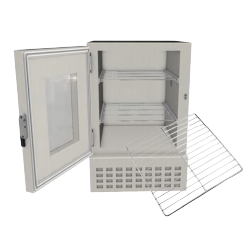
Component-level boxes handle pumps, compressors, shop vacuums and servers, usually built by the equipment owner from sheet material and lining. Machine-level enclosures wrap one complete machine, a CNC mill, a generator set, a test rig, and get engineered as a product with service access designed in. Workstation-scale builds, test cells and in-plant rooms, sit around a process and often have to let people work inside or right at the edge. Forms vary the same way: complete enclosures, partial shields that treat only the loud face, portable units on casters, and modular panel systems that can be rebuilt as the floor layout changes.
Acoustic Enclosure Scales and Forms
| Scale | Typical equipment | Common form |
|---|---|---|
| Component | Pumps, compressors, PCs, shop vacuums | Owner-built or small fabricated box |
| Machine | CNC machines, generators, lab and test equipment | Engineered enclosure with service door |
| Workstation | Test cells, in-plant process noise | Modular or fixed room-style build |
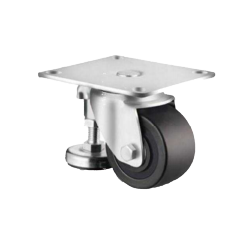
One footnote to the portable form: casters solve relocation, not isolation. A movable enclosure still needs its machine sitting on soft mounts, or the floor becomes a speaker cone.
Who builds it splits into three routes. You can build it yourself, which is the honest answer for a small pump or compressor and a weekend of work. You can buy a turnkey enclosure system from a noise-control specialist when the machine is big, the compliance stakes are real and the engineering is not your trade. Or you build enclosures as your product, which is the route equipment OEMs live on, and for them the enclosure is not a weekend project, it is a warranty. The rest of this article is written to survive that third route, because at OEM scale the failure modes are the same, only the cost of one is higher.
Three routes to a quieter machine
Build it yourself
Small machine, weekend budget.
Buy a turnkey system
Big machine, compliance stakes.
Build enclosures as your product
OEM scale, warranty grade.
Defense Lines 1 and 2: Mass, Absorption and Vibration Decoupling
The first line is the panel itself, and the physics is unforgiving. Mass law says that doubling the mass per unit area of a panel buys about 6 dB more transmission loss (ASA Standards, n.d.). That single rule kills most shopping shortcuts: a thin sheet with a token lining will not block much, and no amount of hopeful foam changes the mass. Absorption has a different job. A porous lining, engineers generally recommend at least an inch of it, soaks up the reverberant energy that would otherwise build up inside the box and re-radiate through every panel (eng-tips, 2019). Foam is the muffler inside the room; mass is the wall. They are not substitutes.
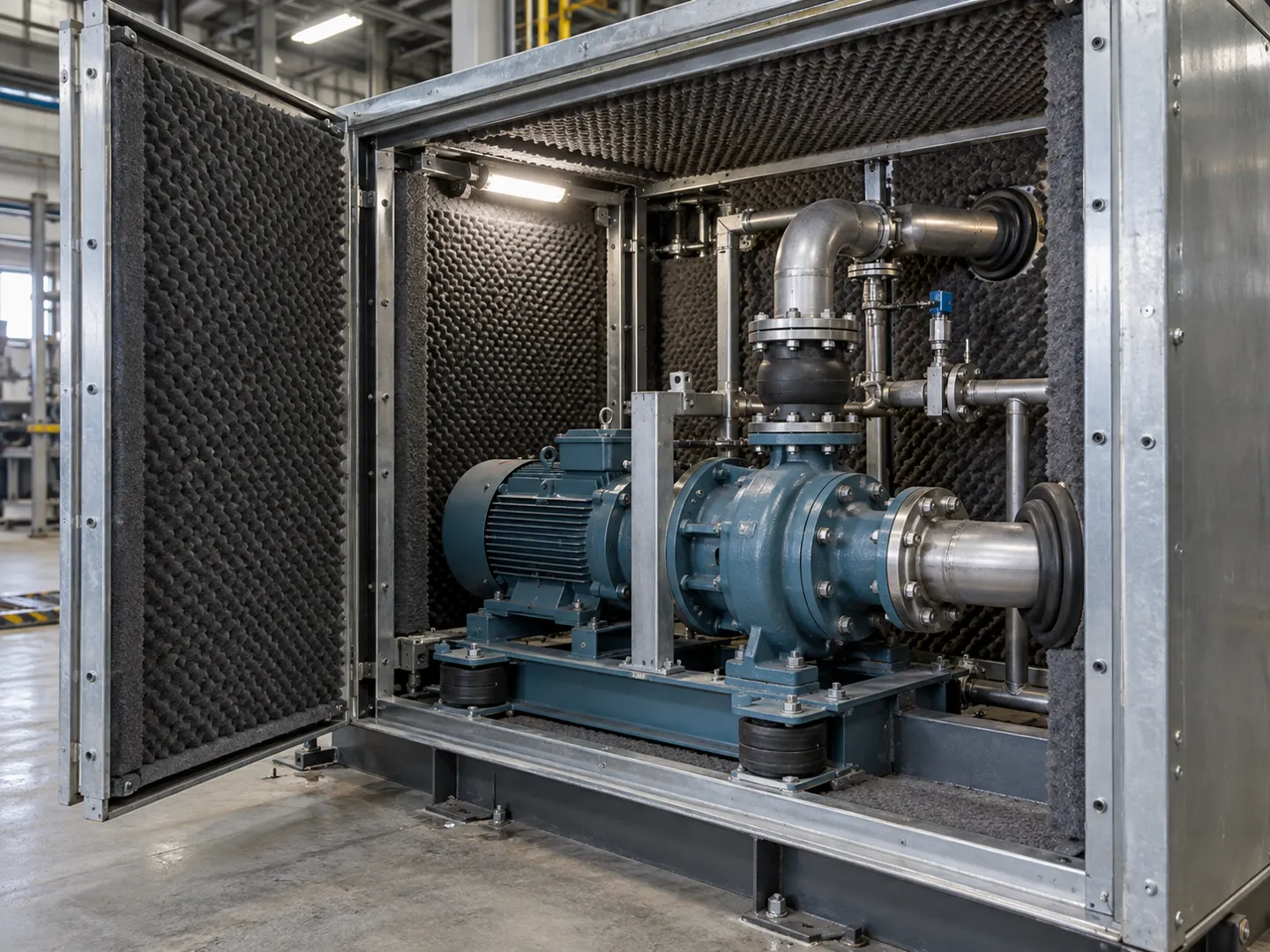
The second line is the one DIY builders miss entirely: structure-borne sound. A pump bolted rigidly to the enclosure floor turns the whole box into a diaphragm, and no lining inside will stop that. Isolation mounts break the path, but only if they are chosen correctly, which is where one of the most instructive failures on record comes from. An engineer mounted a 20-pound pump on four vibration mounts rated at 35 pounds each, reasoning that extra capacity must be safer. The response from a consulting acoustics engineer was blunt. The mounts need to be soft enough to actually deflect under the load, so each mount should be rated near the weight it carries, not five times that. Overspecified mounts sit stiff, transmission stays airborne-equivalent, and the isolation does nothing (eng-tips, 2019). The same logic applies to rigid conduit and hard-plumbed pipework crossing the wall: a stiff bridge is a sound bridge.
Two purchases that regularly waste money
- Egg crates and thin foam as “soundproofing”. Foam absorbs reverberation inside the box; it does not block transmission. Blocking needs mass per the mass law.
- Vibration mounts rated far above the actual load. A mount needs to deflect under the machine’s shared weight. Overspecified mounts are stiff, and stiff mounts do not isolate.
Defense Line 3: Air Sealing, Where Enclosures Are Won and Lost
The 1 Percent Rule
Panels set the ceiling of what an enclosure can achieve. Openings decide whether you get anywhere near it. A consulting engineer’s rule on a compressor enclosure thread puts a number on it: a 1% area opening with direct line of sight will nullify any benefit of the enclosure (eng-tips, 2019). His summary of the whole discipline is three words: air tight is sound tight.
The one percent rule
One percent of open area, with a straight line of sight, is enough to cancel the entire enclosure.
Consulting acoustics engineer, eng-tips thread, 2019
That is the number to carry through every design review. Sound finds the hole the same way water does, and it does not care how thick the walls are.
Five Leak Paths and How to Seal Each One
Every leak in an enclosure falls into one of five paths, and each has a standard fix with a standard way to fail.
Air Leak Paths: Sealing Methods and Failure Boundaries
| Leak path | Why it leaks | Sealing method | Failure boundary |
|---|---|---|---|
| Door seam | Largest moving aperture in the shell; opened daily | Compressible gasket around the full perimeter, held in compression by latches | Gasket compression set: after thousands of cycles it stops rebounding, so check compression recovery and use adjustable-tension hardware to compensate |
| Panel joints | Screwed or clipped seams relax under vibration and thermal cycling | Continuous sealant or gasket tape on every joint | Rework on any panel replacement; seal every reopened joint again |
| Cable and pipe penetrations | Wires and lines need holes; holes are open windows | Grommets and sealed pass-throughs, packed and collapsible where service is frequent | Every later cable added without resealing is a new leak; audit after each service visit |
| Ventilation openings | Cooling air must flow, and a straight duct passes sound both ways | Labyrinth or lined bends with no direct line of sight through the path | Short-circuiting the labyrinth for “more airflow” restores the 1% problem |
| Viewing windows | Glass is thin relative to the wall it interrupts | Double-glazed, decoupled frames set in gaskets | A window mounted rigid to both panels couples them and bypasses the wall |
The pattern in the right-hand column deserves attention. Most seals do not fail at installation, they fail with time and use. Compression set, reopened joints, cables added later: the enclosure you ship is not the enclosure it becomes unless the design assumes maintenance.

Venting Heat Without Leaking Sound
Sealing has a hard limit: the machine inside has to breathe. DIY builders have learned this the expensive way, sealing compressors into boxes that overheated, or that cyclically pressurized and depressurized until the joints walked open. The standard answer is a vent path that air can crawl through but sound cannot see through. A lined labyrinth or a duct with bends gives the air a route with no direct line of sight from inside to outside. Forced ventilation works too, with silencers on the duct. What does not work is the shortcut, a plain hole with a fan in it, which quietly hands back everything the walls achieved. Regulators frame the same trade from the design side. WorkSafe New Zealand tells builders to design the enclosure around the access and visibility points the machine actually needs, rather than cutting them later (WorkSafe NZ, 2019).
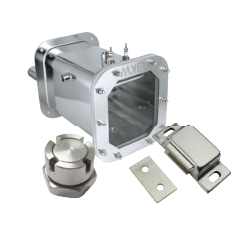
Vent paths, gaskets, latches, hinges: an enclosure is only as good as its hardware, and KUNLONG publishes the ratings to prove it.
Talk to a hardware engineerDefense Line 4: The Door as a Wearable Acoustic Component
Every defense line so far is static. The door is the one that moves, and it moves constantly. It is the largest aperture in the shell, it is operated hundreds to thousands of times a year, and every one of those cycles works on its seals and its alignment. This is why a finished enclosure’s measured insertion loss is a starting point, not a promise. The number that matters over the warranty period is how well the door keeps sealing after a year of hands, carts and shift changes. Treat the door as an acoustic component that wears, and three of its properties become purchasable, specifiable qualities.

Compression and Hold-In
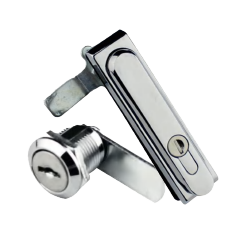
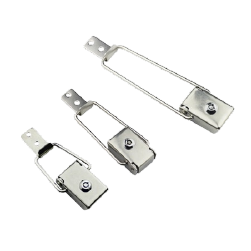
A seal only works under compression, so the hardware’s job is to convert one motion of a hand into a sustained clamping force along the whole door edge. Over-center draw latches do this mechanically: the lever passes over center and locks, holding the gasket compressed without relying on the user’s strength or a spring that relaxes. Adjustable-tension versions matter for a second reason: gaskets compress-set with age, and a latch the maintenance team can re-tension buys years of seal life without replacing the gasket. Compression latches attack the same problem from the handle side, pulling the door inward as they turn so the compression is a function of mechanism, not muscle. On tall doors, a single latch in the middle asks one point of the frame to hold the whole edge. Multi-point rod systems turn one action into compression distributed down the door, which is how full-perimeter sealing survives on a door taller than a person.
Door hardware, by mechanism
Over-center draw latch
One pull locks past center; the gasket stays compressed without muscle.
Damped torque hinge
The door glides to its stop and can wait at any angle.
Compression latch
Pulls the door inward as it turns; compression comes from the mechanism.
Closing and Damping
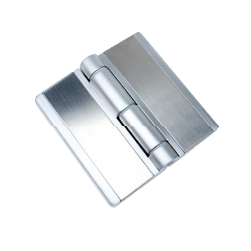
A heavy steel door slammed shut is its own noise event. In a workshop running multiple cycles a day, the door becomes one of the sounds the enclosure was built to remove. Damped torque hinges change the closing behavior: the door glides to its stop instead of hitting it. Friction-type torque hinges can also hold the door open at any position, which maintenance crews appreciate when they need both hands free. A quiet close is not a luxury feature here; it is the difference between the enclosure treating noise and becoming one.
Cycle Life and Load
Doors on working equipment cycle thousands of times a year, and the hardware is rated for it or it is not. Two numbers to demand from any door hardware supplier: a published cycle-life rating for latches, and a load rating with controlled axial clearance for hinges. A hinge that lets the door sag even a few millimeters moves the compression points off the gasket, and a misaligned door leaks along its whole edge. Latch manufacturers do publish these numbers; some toggle and draw latch lines carry a documented 24,000-cycle service life rating, and damped torque hinges are specified with adjustable torque in the 0 to 1 N·m range (draw latches, torque hinges, 2025). If a supplier cannot give you a cycle number or a load number in writing, the absence is the data.
As it happens, this trio of properties is exactly what we engineer door hardware around at KUNLONG. Our over-center draw and toggle latches carry that published 24,000-cycle service life. Our torque hinges hold position anywhere in their travel, with damping tuned from 0 to 1 N·m. Our compression latches pull the door in as they lock, so seal compression comes from the mechanism rather than the operator’s arm. We hold 3,000-plus standard and custom SKUs in stock across the industrial hardware catalog, so a door hardware package ships within a week rather than anchoring your build schedule. We also publish the 3D models, so your engineers can drop the parts into the enclosure design before committing.
Door hardware acceptance spec: three numbers to put in the PO
Seal compression
Sustained perimeter compression, re-tensionable as the gasket ages.
Closing damping
Damped or soft close, no slam, hold-anywhere optional.
Cycle life and load
Published cycle rating for latches; hinge load rating with controlled axial clearance.
What This Means for Enclosure Builders
If you build enclosures as a product, the four defense lines read differently than they do for a weekend builder. Your factory’s insertion-loss measurement is a launch specification. Your warranty-period performance is decided by the cheapest, most worked part of the whole shell: the door and its hardware. When a customer calls in year two to say the enclosure “isn’t as quiet as it was,” the first thing to check is not the panels. It is whether the door gasket still has compression, and whether the door still sits square on its hinges.
Two decisions follow. The first is procurement: write door hardware into your acoustic acceptance criteria with the three numbers above, compression, damping and cycle life. Buy it as the acoustic component it is, because a product governed by the 1% rule fails at its smallest opening, and the door is that opening with a handle on it. The second is product strategy: sell accessible maintainability as a feature. Module acoustic enclosure makers list easy access for equipment maintenance as one of the two defining design concerns of the product category, right beside the sound performance itself (MECART, 2022). Safety regulators instruct builders to design enclosures around those access points from the start. A door that seals hard and services easily is a spec sheet line your competitors cannot match at a discount.
Honest boundary: in markets where buyers shop on delivered price and never measure performance after installation, none of this differentiation pays. If your customers do not value life-cycle acoustics, the defensible move is to meet the compliance floor cleanly and compete on cost, and there is no shame in knowing which market you are in.
KUNLONG (Guangdong Shangkun Industrial Technology) makes the locks, latches, hinges and handles that enclosure builders specify as door hardware. The full range, with 3D models and published ratings, is at kunlonghardware.com.
Spec door hardware with published ratings
Draw latches, torque hinges and compression latches with published cycle life and load ratings, 3,000-plus SKUs and 3D models for your CAD, shipping within a week.
Get a door hardware quoteReferences
- ASA Standards. “Mass-law sound transmission loss.” n.d. https://asastandards.org/Terms/mass-law-sound-transmission-loss/
- CDC/NIOSH. “Noise-Induced Hearing Loss.” 2024. https://www.cdc.gov/niosh/noise/about/noise.html
- Riverbank Acoustics. “Understanding Sound Transmission Class (STC) Ratings and Testing.” 2024. https://riverbankacoustics.com/news-full-article/understanding-sound-transmission-class-stc-ratings-and-testing-what-is-it-and-what-do-the-results-mean
- eng-tips community. “Noise enclosure tips for a 1/2HP compressor pump.” 2019. https://www.eng-tips.com/threads/noise-enclosure-tips-for-a-1-2hp-compressor-pump.453732/
- WorkSafe New Zealand. “Acoustic enclosures.” 2019. https://www.worksafe.govt.nz/topic-and-industry/noise/managing-noise-risks/acoustic-enclosures/
- MECART. “Acoustic Enclosure and Sound Enclosure.” 2022. https://mecart.com/blog/2022/01/31/acoustic-enclosure-and-sound-enclosure/