


Type “cam lock sizes” into Google and here’s what happens: the first page fills up with 1-inch to 6-inch aluminum couplings for hoses and pipes. Scroll further and you’ll hit flat-pack furniture connectors. Somewhere in between, if you’re lucky, you’ll find a Reddit thread from someone holding a broken cabinet lock. They’re asking the same question you came with: which size do I actually need?
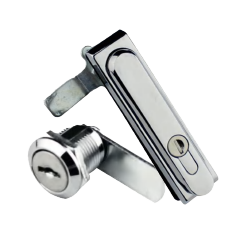
You’re in that third group. This guide covers security cam locks: the key-operated cylinders on cabinet doors, drawers, RV storage hatches, and industrial enclosures. Every number below refers to them, and by the end you’ll know exactly which length to order and which measurements to take before you pay for anything.
Why “Cam Lock” Means Three Different Things (and Which One You’re Looking For)
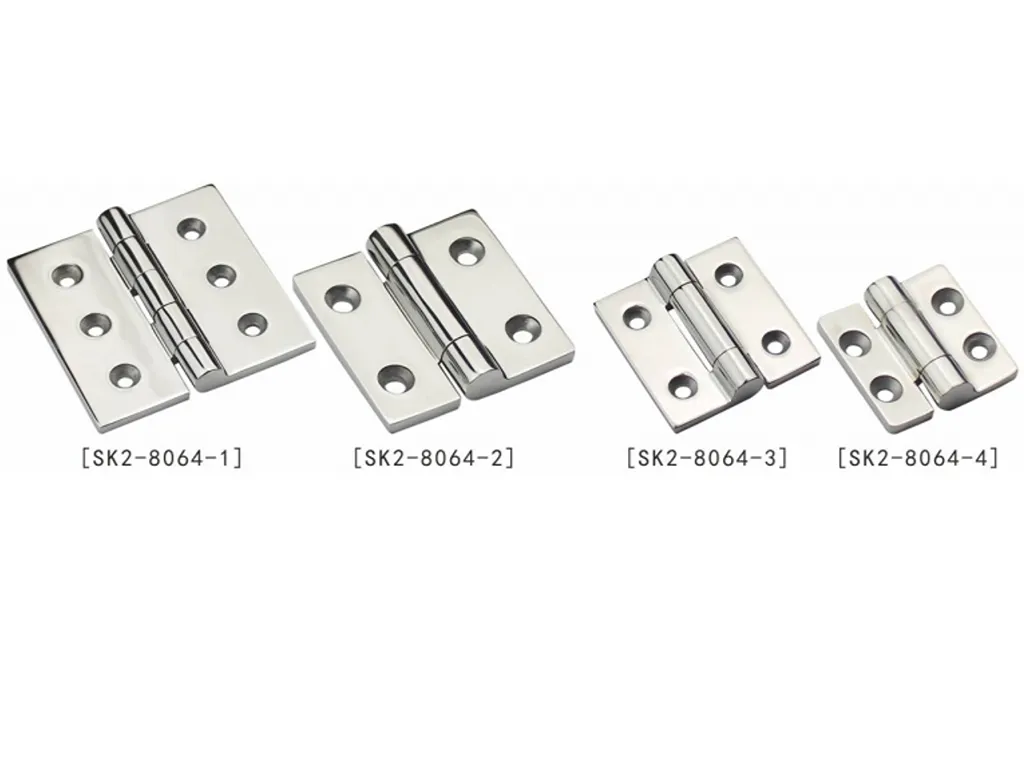
The word is overloaded, and the overload is expensive: three different products share one name, and each uses a completely different size system. Ordering the wrong one isn’t a quality problem. It’s a category problem.
| Product | What It Really Is | How Its Size Is Measured | Where You’ll See It |
|---|---|---|---|
| Security cam lock | Key-operated cylinder with a rotating metal arm | Body (cylinder) length, e.g. 5/8″ to 1-3/8″ | Cabinet doors, drawers, RV compartments, enclosures |
| Camlock fitting | Cam & groove coupling for hoses and pipes | Pipe diameter, e.g. 1/2″ to 6″ | Agriculture, liquid transfer, fire equipment |
| Cam fastener | Eccentric connector for ready-to-assemble furniture | Disc diameter | Flat-pack shelves, wardrobes, desk panels |
If the size range you’re being offered is measured in pipe diameters, you’re on the fittings page. If it’s a small disc turned with a screwdriver, that’s a furniture connector. Security cam locks are the only one of the three whose “size” refers to body length. And their standard range is surprisingly short: four lengths cover the overwhelming majority of installations.
Cam Lock Sizes Chart: Standard Body Lengths, Panel Thickness, and Metric Equivalents
Before you read the chart, you need the three rules that make it readable. Skip them and the numbers will look interchangeable. That is exactly how people order the wrong size.
Rule 1: the size on the box is the body length, not the diameter. A cam lock’s body is the threaded cylinder that passes through the panel. Its “size” is measured from the back of the head flange to the end of the body, not including the cam, the flat arm on the back. This is the number printed on the packaging.
Rule 2: the -1/4″ rule. A lock body needs roughly a quarter-inch of thread beyond the panel for the mounting nut and washer. So the maximum panel thickness a lock fits is about 1/4″ less than its body length. This single relationship is the whole chart.
Rule 3: cam length is a separate dimension. The cam must reach the frame to catch it, and cam length is chosen independently of body length. Right body + wrong cam = a door that still won’t lock.
| Body Length (in) | Body Length (mm, approx.) | Max Panel Thickness | Typical Applications |
|---|---|---|---|
| 5/8″ | ~16 mm | 3/8″ | Mailboxes, filing drawers, thin-panel furniture |
| 7/8″ | ~22 mm | 5/8″ | Office desks, standard cabinets, RV storage doors |
| 1-1/8″ | ~29 mm | 7/8″ | Lockers, vending machines, server racks |
| 1-3/8″ | ~35 mm | 1-1/8″ | Heavy outdoor enclosures, industrial boxes |
These four lengths (5/8″, 7/8″, 1-1/8″, and 1-3/8″) are the industry consensus you’ll find repeated across manufacturers’ catalogs. Here’s the chart in practice: an RV owner on the Forest River forums spent an entire thread trying to pin down whether their storage doors took 5/8″ or 7/8″ locks. The factory parts department eventually confirmed 7/8″, which fits the typical 5/8″ compartment door. That’s the -1/4″ rule doing its quiet work.
Two edge cases worth knowing. First, if your panel falls between sizes, a slightly longer body is usually fine: the extra thread sits behind the panel or gets spaced with a washer. A shorter body is never fine: the nut won’t reach the threads. Second, metric markets often describe locks by nominal metric series (16 mm, 19 mm, 22 mm), but the exact equivalents vary by manufacturer. Treat metric labels as approximate and measure your panel. Do not convert and assume.
If your door is thicker than 1-1/8″, you’re past the standard range. Non-standard lengths for thick doors, insulated panels, and sandwich construction are a custom-order matter. That is exactly why the industrial workflow later in this article exists. (For the industrial-grade parameters that underpin these fits, grip range and housing height, Essentra’s sizing guide is the reference we cite below.)
How to Measure a Cam Lock: Body Length, Cam Length, and Mounting Hole
“Size” is not one number. When you replace an existing lock, you need to record three: body length, cam length, and mounting hole. Missing any one of them is how people end up with a lock that threads in but doesn’t lock, or locks but doesn’t fit the hole. The measurement takes five minutes; the return takes a week.
Measuring the Body (Cylinder) Length
This is the measurement that decides which of the four standard lengths you buy, and it has to be taken from the back of the panel. That is the part you can’t see until you open the door or drawer.
- Remove the old lock. Open the door, and from the back, loosen the mounting nut on the lock body with pliers or a spanner. Slide the lock out toward you.
- Measure from the flange to the end. Put a caliper or ruler against the back face of the head flange, the visible ring on the front, and measure to the end of the threaded body, stopping at the cam. Do not include the cam in this number.
- Round up to the nearest standard. If you read 1″, the closest standard body is 1-1/8″, and that extra 1/8″ is harmless. If you read just under 3/4″, you’re at 7/8″ territory only if your panel is thinner than 5/8″. Otherwise go 1-1/8″.
- Write it down, then confirm against panel thickness. Your panel must be no more than 1/4″ thinner than the body length. If both checks disagree with each other, re-measure the body. It’s the more reliable of the two.
The three classic mistakes: measuring to the tip of the cam (reads long), measuring the front face of the flange instead of its back (reads short), and using panel thickness as a substitute for body length (they’re related, not equal). This is the exact trap from the r/Locksmith thread: a first-time replacement buyer stared at an Amazon listing’s 1″ body and 3/4″ panel numbers and couldn’t tell which number to match. The answer is to match the body length to your measured body, then let the -1/4″ rule check your panel.
Measuring the Cam and Its Offset
The cam is the flat arm that swings behind the frame. If it’s too short, the door closes but never catches. If its offset is wrong, it catches the wrong plane.
- Measure the effective length: from the center of the screw that mounts the cam to the far tip of the arm.
- Identify the shape: a straight cam sits in the same plane as its mounting point; an offset cam steps sideways to reach a frame that isn’t flush with the door surface. Curved and angled variants exist for specific strikes.
- Measure the offset if present: the side-step distance between the mounting plane and the locking face.
If the body fits but the cam doesn’t, you usually don’t need a new lock. Most standard cams attach with a single screw and are replaceable on their own for a fraction of the price. A good replacement cam with the right offset turns a “wrong lock” into a working one in two minutes.
Checking the Mounting Hole and Nut Thread
Number three decides whether the new lock drops into the existing hole or you start drilling.
Most furniture and cabinet cam locks use a 16 mm or 19 mm mounting hole. These two sizes cover the bulk of the market, with 19 mm giving you the widest compatibility when drilling fresh. Check the hole with a caliper before ordering; visually “about the same size” is how people buy locks that wobble. Some industrial and low-profile locks instead use a rectangular hole with flats to stop the body rotating. If your old hole isn’t round, record its exact shape and dimensions.
Mounting nut threads follow the lock body series rather than an independent standard, so when you buy a lock body, the nut that ships with it is the one that fits. If you’re reusing an old nut on a new body, test the thread by hand first. Mixing series is a cheap way to cross-thread a good lock.
Where Cam Lock Sizes Hit Their Limits: The Specs Most Charts Leave Out
Every size chart answers the question the marketplace asks: which length fits which panel. But a manufacturer’s catalog carries a second layer of specs that decides whether the lock works at all. These are the boundaries the chart doesn’t draw, and they are where real selection errors happen.
Start with the dimension no size chart names: spigot height. The spigot is the step between the lock body’s axis and the face the pawl locks against. If the frame sits deeper than the spigot reaches, the lock fits the panel and still misses the frame. Manufacturers publish it per SKU precisely because it can’t be guessed: a waterproof cam lock like SK1-099 ships in exactly one spigot height, while a two-body-spec model like SK1-006-2 pairs its body-length options with a pawl groove that grips the door panel. Check the spigot on the drawing before you check the price.
Then sealing. A plain cam lock closes a door; it does not seal one. If the enclosure has to keep out water or dust, the catalog separates the range: SK1-011 ships with a waterproof gasket and an adjustable pedestal, and SK1-063T-3 adds a back-pressure function on a pure SUS304 body for high-grade power and control boxes. Choosing between them is the difference between a lock that survives rain and one that invites it in.
Material is the boundary between indoor and outdoor, and the catalog prices it honestly: a zinc alloy waterproof lock like SK1-099 lists at US$1.22 – 1.40, while the SUS304 SK1-063T-3 lists at US$5.86 – 6.74. The fivefold step is the cost of corrosion resistance. Zinc is fine for indoor cabinets, but on a coastal enclosure or a washdown line, the cheaper lock is the more expensive decision.
The last boundary is the door’s job, not the lock’s. The same catalogs that define what cam locks can do also mark where they end: when a single door must carry more than roughly 100 kg, when the chamber must be airtight, when duty runs from -70°C to 260°C. At any of those points, stop asking which cam lock size and start asking which lock type. Compression latches and sealing handles exist precisely because cam locks run out. Knowing the boundary is what keeps a cheap part from becoming an expensive failure.
Once these boundaries are on the drawing, the choice inside them becomes systematic. That is what the four-step workflow below is for, and it starts with the gasket, because that is where most enclosure sizing mistakes are made.
Sizing Cam Locks for Industrial Enclosures: A Four-Step Workflow
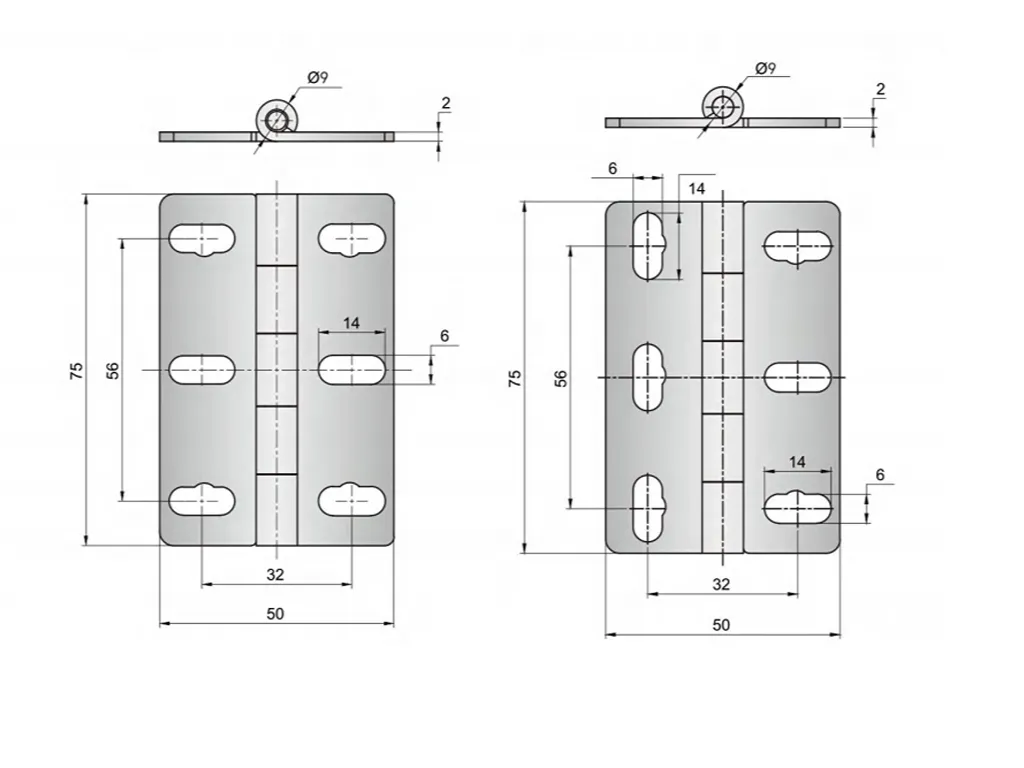
If the previous section is about buying one lock, this one is about choosing a lock series. The difference shows up the first time you punch mounting holes into five hundred doors. Once your stamping tooling matches a lock’s dimensions, every enclosure after that follows the same series; changing it means changing tooling, drawings, and service stock. The failure cost here isn’t a return. It’s a production line.
The workflow converges on four decisions, and each one should be resolved before the first prototype door is drilled.
Step 1 — Panel, Gasket, and Grip Range
Industrial doors are rarely just “panel thickness.” A sealing door adds a gasket, and the gasket adds a compression dimension that consumer guides never mention.
Start with total thickness = panel thickness + the compressed height of the gasket. Then select by grip range, the span of door-to-frame distances the lock can hold, not by body length alone. The lock has to grip in two states: door closed and seal relaxed, and door closed and seal compressed. That’s why industrial catalogs quote grip range as an interval: Essentra’s sizing chart, for example, lists a grip range of 1.063 – 2.835 in with a maximum compression of 0.236 in for one common series (Essentra, 2024).
For gasketed doors that must actually seal (environmental chambers, industrial ovens, anything where air or heat leaking through the seam is a failure), a plain cam lock won’t pull the door tight. This is the job of compression designs: locks with a compression stroke that squeezes the door against the gasket as you close. Write the required compression travel into the drawing. If the lock can’t deliver it, the enclosure leaks no matter how good the gasket is.
Step 2 — Housing Height and Mounting Hole
The spec that goes into your BOM is not “a 7/8″ lock” but its housing height: the depth the body occupies behind the panel. Check it against the space between door and frame, and against any inner lip or recess the door closes against. A housing that’s too tall hits the frame before the door seats.
Then the hole. Circular holes with anti-rotation flats (the body’s two flat sides engaging a matching cutout) are the mainstream; rectangular holes belong to low-profile industrial models. Whatever you choose, prove it before production: punch or laser a sample door, fit the lock, and measure the play. Locks that rattle in their holes on one enclosure out of thirty are usually a stamping tolerance stacking against the lock’s tolerance. Catch it in the sample, not in the field.
Step 3 — Environment, IP Rating, and Material
A lock is a hole in your enclosure’s protection. If the cabinet is IP65 and the lock isn’t, the cabinet effectively isn’t, because water and dust enter through the keyway and the mounting hole. Match the lock’s rating to the enclosure’s, or accept the de-rating in writing.
Material follows environment: zinc alloy is fine indoors; outdoor, coastal, or washdown duty calls for stainless steel, with SUS316 preferred over SUS304 where salt spray is heavy. Industrial buyers in corrosion-prone verticals routinely specify salt-spray endurance in the hundreds of hours, and that expectation extends to every exposed metal part, locks included. Extreme-temperature equipment (-70°C to 260°C ovens) needs locks whose materials and lubricants stay stable across the same range the chamber does.
Step 4 — Keying Strategy for Fleets of Enclosures
The last decision is invisible until it’s catastrophic: a hundred enclosures with a hundred different keys is an operations nightmare, but a hundred enclosures sharing one low-grade key pattern is a security hole. Remember the RV forums’ famous “751 key”: owners discovered that locks from different trailer brands opened each other’s storage doors with the same key.
Three systems exist: keyed alike (one key opens all), keyed different (every lock has its own key), and master key (one key opens everything, while individual keys open subsets). For fleets, the practical answer is usually tiered: keyed alike within a site or access level, keyed different across levels, with a master for service teams. Decide this before ordering, because retrofitting a keying strategy means replacing locks. And specify it in the same document as the housing height.
Why a Lock in the Right Size Can Still Fail: Compatibility Traps and When to Upgrade
Here’s the uncomfortable fact none of the charts above will tell you: cam locks have no industry-standard cam interface. The body lengths are standardized; the interface between the body and the cam, the part that actually locks, is not. A lock in the right size can still refuse to marry the cam you already have.
| Trap | What It Looks Like | How to Avoid It |
|---|---|---|
| Cam mounting interface varies by maker | ESP, Fort, LSDA-style locks take ~11/32″ square cam holes; CCL ~5/16″; Compx National ~9/32″ | Verify the cam interface before ordering a replacement cam, or replace body and cam together |
| Shared key patterns in low-end locks | Two different brands of RV or cabinet locks open with the same key | Ask the supplier for keyed-different options before ordering a batch |
| Indoor material used outdoors | Zinc alloy lock rusts or seizes within a season | Outdoor duty: SUS304 minimum, SUS316 for coastal or washdown |
| Lock rated below the enclosure | IP65 cabinet fitted with an unrated lock | Match lock rating to enclosure rating, or accept de-rating on the drawing |
Those cam-interface measurements come from a locksmith supplier that publishes them precisely because their customers kept ordering the wrong ones. Mr. Lock’s cam dimension notes (Mr. Lock, 2019) are the clearest public documentation of how far apart the de facto standards are.
The traps also define your upgrade path. If you’re replacing a “cheapie wafer lock” (as one poster on a lock-picking forum put it), the upgrade question isn’t “which size” but “which class”. A stainless body buys you outdoor life. A higher-security cylinder (pin or tubular) defends against picking and shared keys. A compression-sealing design keeps the door tight, and keyed-different keying removes the shared-pattern risk. Electronic and smart cam locks exist, but for most cabinets a better mechanical lock outlasts and out-trusts a cheap electronic one.
The quick versions: the four standard body lengths are 5/8″, 7/8″, 1-1/8″, and 1-3/8″. Different sizes exist, and the right one is set by your panel thickness through the -1/4″ rule. You find your size by measuring the old lock’s body length from the flange back. And the mounting nut follows the body series it ships with, so buy body and nut together.
What the Size Confusion Says About the Cam Lock Market
A product category with four standard sizes and no standard interface is a strange market to shop in, and an instructive one to read. Everything this article has walked through, from the -1/4″ rule to the 751 key, is a symptom of the same underlying structure.
Start from the buyers. Nearly every replacement purchase is triggered by a broken lock, and the buyer’s decision order runs: will it fit, can I install it, is it secure. Fit first, security third. That’s why the Forest River thread about 5/8″ vs 7/8″ ran for months while nobody could confirm the answer. It’s why a poster there had to correct newcomers that the numbers “are the length, not the diameter.” And it’s why the man who bought 5/8″ locks for his storage doors found them too short only after the package arrived. It’s also why buyers would rather call the factory than remove a lock and measure it, and why e-commerce listings that can’t state panel fitment cleanly convert their own customers into return shipments.
For anyone selling into this market, those behaviors are the spec sheet. Put the maximum panel thickness first in every product description, with the -1/4″ rule stated plainly. The buyer is screening for fit, and the seller who makes fit legible wins the click. A sizes chart isn’t content marketing; it’s catalog logic. It’s the same table a distributor uses to stock four lengths and two hole sizes and answer every fit question without a phone call. And the shared-key problem is a structural wound: buyers who discover their “secure” lock opens with a stranger’s key don’t complain, they switch suppliers. That makes explicit keyed-different labeling a premium feature rather than a footnote.
Now the supply side. The technical reality (four standard lengths, no standard cam interface, no standard hole) splits the market into two businesses with almost nothing in common. The replacement market is stock-driven small orders: distributors and retailers carry the four lengths in volume and compete on spec transparency and delivery, where a week of stock-out means a lost sale to the next catalog. The industrial market is project-driven mid-batch: OEMs write body length, grip range, housing height, and keying into drawings, then expect samples and repeatable batches. Where a non-standard length or a stepped cam is needed, the order becomes a custom one. At MOQs in the low hundreds, custom dimension work is viable even for small OEMs, and the supplier that responds to a drawing in days rather than weeks captures the project. The failure costs differ too: in replacement, the buyer eats a return; in production, the selector eats a line stoppage. That is exactly why industrial buyers will pay a premium for specs that map cleanly onto drawings.
That is precisely the split the market’s stronger suppliers are organized around. KUNLONG, a cam lock manufacturer based in Dongguan with in-house casting, stamping, and CNC machining, covers the full span. The catalog side carries all four standard body lengths in stainless steel (SUS304/SUS316) and zinc alloy, including IP65 waterproof variants. The project side is a dimension customization service for non-standard body lengths and cam geometries, with an MOQ of 100 pieces and 3D design drawings delivered within seven days.
If you’ve settled on a standard size, it ships within seven days. If your drawing needs something off the chart, the chart is where the conversation starts. Talk to a cam lock engineer with your panel thickness and hole dimensions, and get a series recommendation rather than a guess.
References
- Mr. Lock, Inc. “Cam Lock Cams Dimensions, Mounting Hole Size and Types.” 2019.
https://mrlock.com/blog/cam-lock-special-cams-mounting-hole-dimensions/ - DoubleLock USA. “What Is a Cam Lock? A Complete Guide to Types and Uses.” 2026.
https://doublelockusa.com/blogs/news/cam-lock-guide - Forest River Forums. “5/8 or 7/8 Camco Cam Lock Size.” 2012 – 2013.
https://www.forestriverforums.com/threads/5-8-or-7-8-camco-cam-lock-size.150725/ - r/Locksmith (Reddit). “How to certain what size of cam lock I need?” 2024.
https://www.reddit.com/r/Locksmith/comments/1ebkiy7/how_to_certain_what_size_of_cam_lock_i_need/ - KUNLONG. “Cam Locks.”
https://www.kunlonghardware.com/cam-lock/ - KUNLONG. “Bespoke Services.”
https://www.kunlonghardware.com/bespoke-services/ - KUNLONG. “Contact Us.”
https://www.kunlonghardware.com/contact-us/ - KUNLONG. Homepage.
https://kunlonghardware.com/ - KUNLONG. “Cam Lock SK1-099.”
https://www.kunlonghardware.com/cam-lock-sk1-099/ - KUNLONG. “Cam Lock SK1-063T-3.”
https://www.kunlonghardware.com/cam-lock-sk1-063t-3/ - KUNLONG. “Cam Lock SK1-006-2.”
https://www.kunlonghardware.com/cam-lock-sk1-006-2/ - KUNLONG. “Cam Lock SK1-011.”
https://www.kunlonghardware.com/cam-lock-sk1-011/ - KUNLONG. “Cam Lock (category).”
https://www.kunlonghardware.com/cam-lock/