


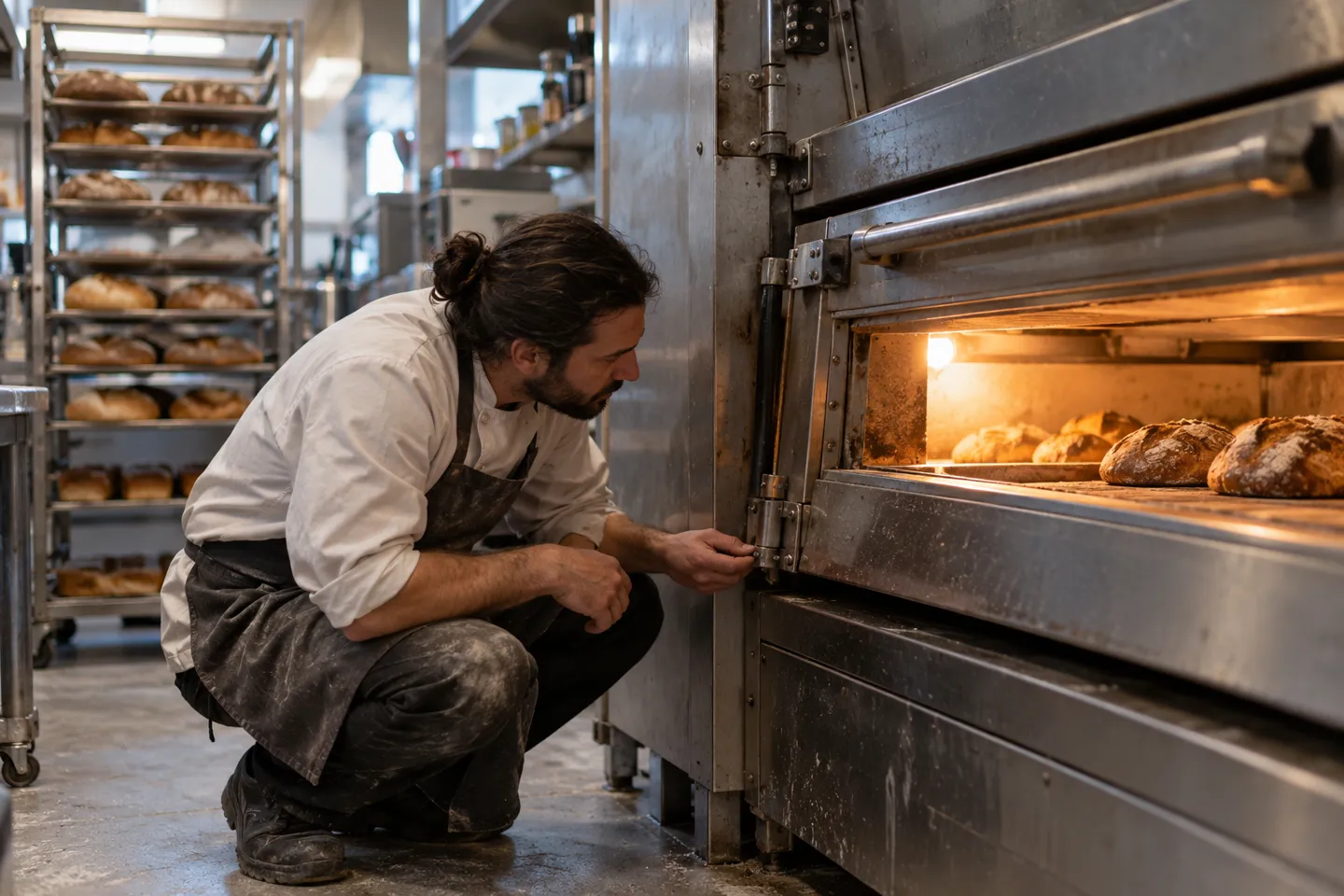
The dinner rush starts in forty minutes and the deck oven door has sagged past its seal. The top deck runs cool, the loaves proof unevenly, and the repair tech cannot come until tomorrow. Nothing about this failure begins with the heating element. It begins with two hinges that have carried a heavy door through thousands of open-and-close cycles.
That story repeats in restaurants, bakeries, and food plants every day, and it is why the parts behind an oven door deserve a closer look than a catalog can give. The chapters below follow that ladder. They cover what the parts are called, why door hardware fails first, how to buy by specification instead of model number, and what to ask a manufacturer when you source direct.
What Actually Counts as a Commercial Oven Part
“Commercial oven” covers two different machines. In foodservice it means deck ovens, convection ovens, pizza ovens, and ranges. In manufacturing it means curing ovens, drying ovens, and environmental test chambers. The catalogs in search results serve the first group. This guide concentrates on what both groups share: the door, because a door is where the two worlds use the same physics and often the same parts.
Every commercial oven, whatever it bakes or cures, is built from six part families:
- Heating parts: elements, burners, infrared boards
- Temperature control: thermostats, probes, sensors
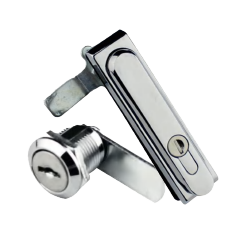
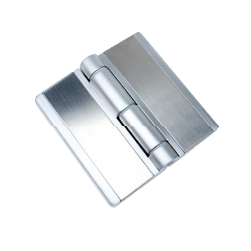
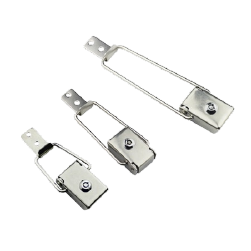
- Door hardware: hinges, handles, latches, catches, and stays
- Sealing: door gaskets and seal cord
- Air and drive: convection motors, fans, drive belts
- Operator controls: knobs, switches, indicator lights
Door hardware splits further into four working roles. Hinges carry the weight. Handles give the operator a safe grip. Latches lock the door and, on sealed ovens, compress the gasket. Catches and holds keep the door where you leave it. Keep those four roles in mind and the rest of this guide reads as one connected system instead of a pile of SKUs.
Before ordering anything, read the nameplate. The model and serial plate sits on the door frame, the back panel, or behind the broiler drawer on most units. A photo of that plate plus a photo of the failed part is the fastest way to get the right replacement the first time.
Before you order
Heating elements, thermostats, and knobs are catalog parts: stocked deep, shipped same day. Door hardware is different. Hinges and latches vary by door weight, opening angle, and seal design, which is exactly why they reward a few minutes of specification work before you spend money.
Door Hinges: Where Replacement Parts Fail First
Ask any technician which part of a commercial oven fails most and the answer is rarely the burner. It is the hinge. It carries the full door weight on every single cycle, it lives next to heat, and it gets cleaned with caustic chemicals. Three things decide how long a hinge survives: its structure, its material, and the way it is loaded.
The Structure Families
Six hinge structures cover nearly every oven door you will meet. Each exists because a door somewhere needed a different combination of swing, clearance, and serviceability.
| Structure | Best fit | Typical opening | Notes |
|---|---|---|---|
| Butt hinge | Standard oven and range doors | 90–180° | The default; cheap and stiff |
| Concealed hinge | Fronts where looks matter | 90–110° | Hidden when closed; lighter duty |
| Detachable hinge | Large oven and chamber doors | Lift-off | Spring-loaded pins let the door come off for service |
| Torque (positioning) hinge | Doors that must stay open | Any stop angle | Friction holds the door without a separate stay |
| Offset hinge | Doors that must clear a protruding seal | 90–180° | Swing axis sits outside the frame |
| Piano hinge | Long horizontal doors and lids | 270° | Runs the full door length; shares load |
The detachable family deserves special mention. On large industrial ovens, spring-loaded detent pins let a technician lift the door off without unscrewing anything, which turns an all-morning job into a ten-minute one.
Material and Finish
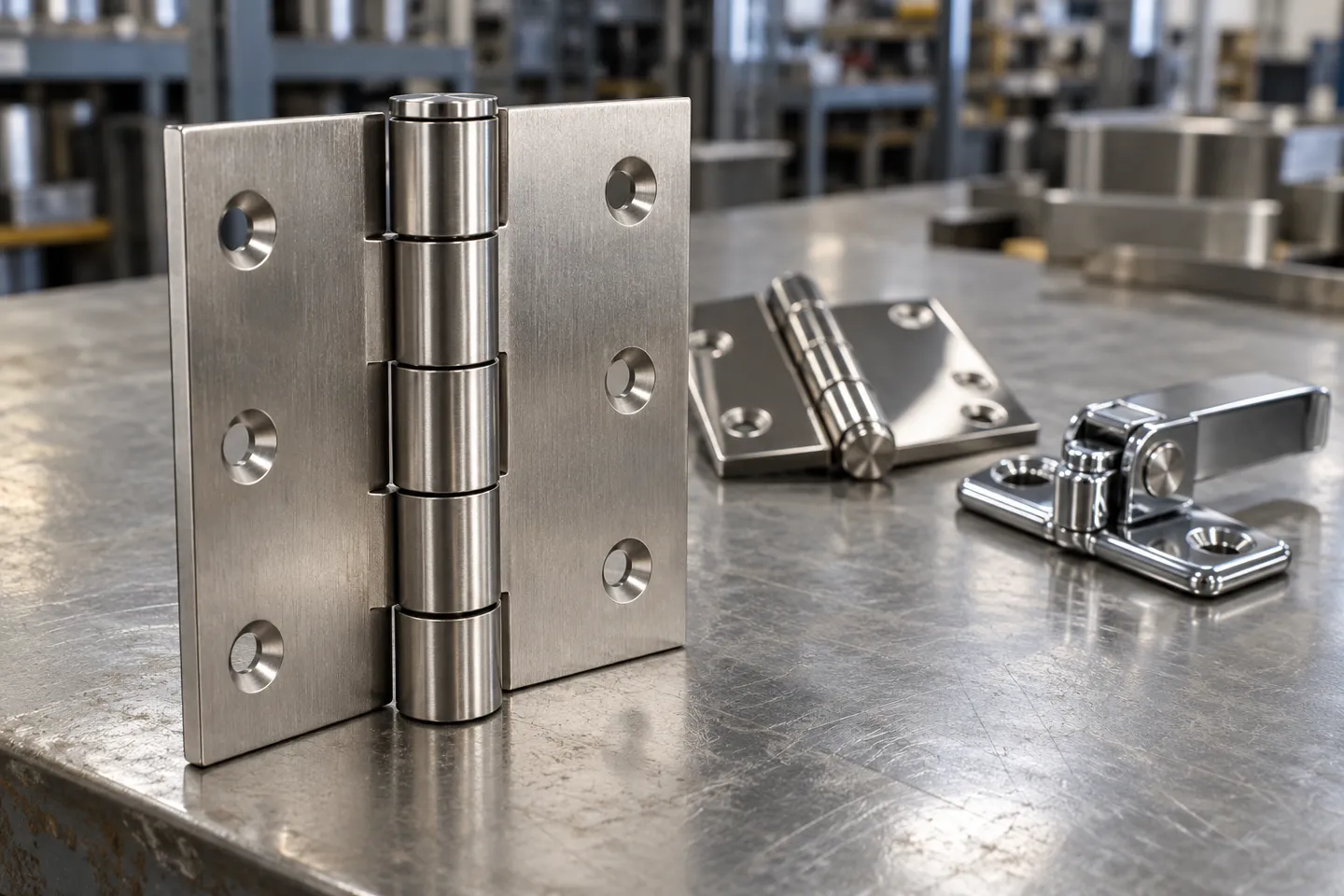
Structure decides how a hinge is loaded. Material decides how long it lasts in your environment. 201 stainless is the economical workhorse you will see on interior-grade hardware. 304 adds corrosion margin and suits most kitchen service. 316 is the spec to demand in humid, salty, or washdown-heavy rooms, where 201 will show rust spotting long before its mechanical life is over. Zinc alloy with bright chrome and painted aluminum appear on handles and latches where appearance matters and loads are moderate. A wire-drawn or polished finish is not only cosmetic: a smooth surface sheds grease and wipes down faster in a kitchen that gets cleaned hourly.
The Failure Chain
Hinge wear is never just about the hinge. The technician sees a “door won’t seal” ticket. The real part is worn three inches away.
The wear-to-leak chain
Real cases back the chain. One appliance technician described leaning on an open door and finding the oven would no longer fully seal afterwards (r/appliancerepair, 2026). Another owner replaced worn hinges for about $55 after only months of heavy use (r/diynz, 2023). Electrolux Professional’s oven manual explains that the upper and lower hinges can be adjusted to improve door closure and seal tightness (
That is the boundary that saves a wasted parts order. Hinges fix sag. They do not fix a deformed door or a hardened gasket. Check both first.
Replacement Basics Worth Knowing
Adjustment comes before replacement. Most commercial oven hinges allow you to loosen the mounting bolts, square the door against the frame, and retighten, which is the first move for a door that drags or sits proud of the seal (Parts Town, n.d.). When replacement is the answer, match three things: hole pattern, door weight rating, and opening angle. A hinge that is right in two of the three will feel right for a month.
Handles and Latches: The Compression Problem
If you maintain a fleet of ovens, you have probably bought a “universal” handle or latch that fit the holes and failed the job. This section explains why that keeps happening, because the answer is the single most useful thing a maintenance buyer can know about door hardware.
Handles on the Hot Side
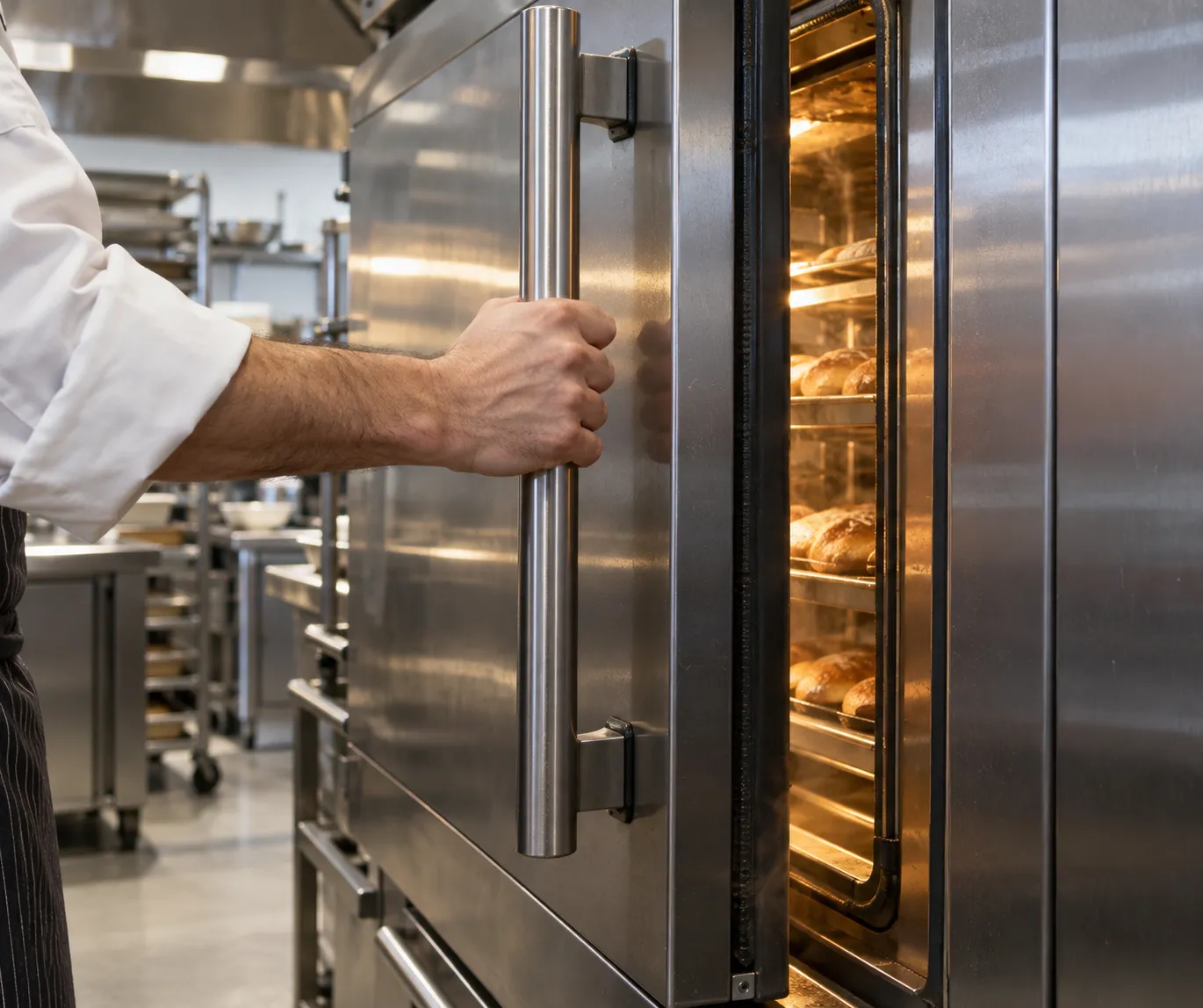
An oven handle is a safety part. Tubular stainless handles keep surface temperature survivable with bare hands. Folding handles clear tight aisles and pass-throughs. Plastic handles, usually ABS, appear on test chambers and industrial oven doors where the skin stays cool; they are the wrong choice above a flame deck or a radiant burner. Grip load matters too: a wide, solid mount spreads the force of lifting a heavy door, while a slim three-screw handle works loose under the same daily abuse. For hygiene-critical rooms, a polished finish is specified precisely because it cleans to the surface without trapping residue in grain or texture.
Locking Styles and What They Actually Do
Not every latch seals a door. This is the distinction underneath most “universal part” complaints.
| Style | Mechanism | Sealing role |
|---|---|---|
| Impact-closing handle latch | Push to close, spring catch engages | Positions the door; light compression only |
| Over-center toggle / draw latch | Lever pulls past center and holds | Actively draws the door tight against the gasket |
| Butterfly latch | Quarter-turn twist lock | Quick locking; minimal compression |
| Adjustable-bolt latch | Screw or cam draws the catch in | Sets and maintains a fixed compression |
An impact-closing latch keeps the door shut. An over-center draw latch keeps the door sealed, because its geometry converts lever motion into a pulling force that grows as the gasket pushes back. That difference in mechanism is why two latches with identical hole patterns can behave completely differently on a sealed cavity.
The Truth About “Universal”
Here is the sentence worth taping inside your parts room.
The parts-room rule
“Universal” is not decided by hole spacing. It is decided by compression stroke.
A latch compresses a gasket over a distance, called the stroke, and quality hardware publishes it. A typical adjustable compression handle offers around 15 mm of stroke with a base that slides about 7 mm each way for installation tolerance. If your door and gasket need more travel than the replacement provides, the door will close and the cavity will leak. Industry guidance says the same thing from the buying side: hinges and latches are not interchangeable simply because their dimensions look similar (SoCold Products, 2026).
One more boundary before you order: a gasket at the end of its life defeats every latch ever made. If the door needed slamming yesterday and leaks today, replace the gasket first, then judge the latch.
From Model Numbers to Specifications
Model-driven buying works until it doesn’t. You read the nameplate, order the OEM number, and wait. It is the right method for a single emergency repair on a known machine. It fails for fleets, refurbishments, and upgrades, where the models are mixed and the OEM part numbers multiply.
Spec-driven buying replaces the part number with four requirements: door weight and hinge rating, temperature range, compression stroke for latches, and cycle life. Those four numbers let one part serve a dozen oven models, and they let a supplier who has never seen your oven quote it correctly.
One spec, a dozen oven models
| Application scenario | What to require | Where it fails past the limit |
|---|---|---|
| High-heat bakery and curing | 304/316 stainless handle and heat-rated latch; chrome-plated zinc only below its rating | Plating discolors and peels; plastic handles creep near radiant heat |
| Low-temperature chambers and freezers | Hardware rated for low-end service, commonly -70°C to 260°C across chamber-grade ranges | Seals and plastics embrittlement; condensation then corrosion at the warm/cold boundary |
| Humid food processing rooms | 316 stainless or verified salt-spray-tested hardware | 201 stainless shows rust spotting; corrosion seizes hinge pins |
| High-frequency commercial kitchens | Documented cycle life; warranty coverage stated in cycles of use, with coverage up to 24,000 cycles at the top of current ranges | Wear-driven door sag returns within months on unrated hinges |
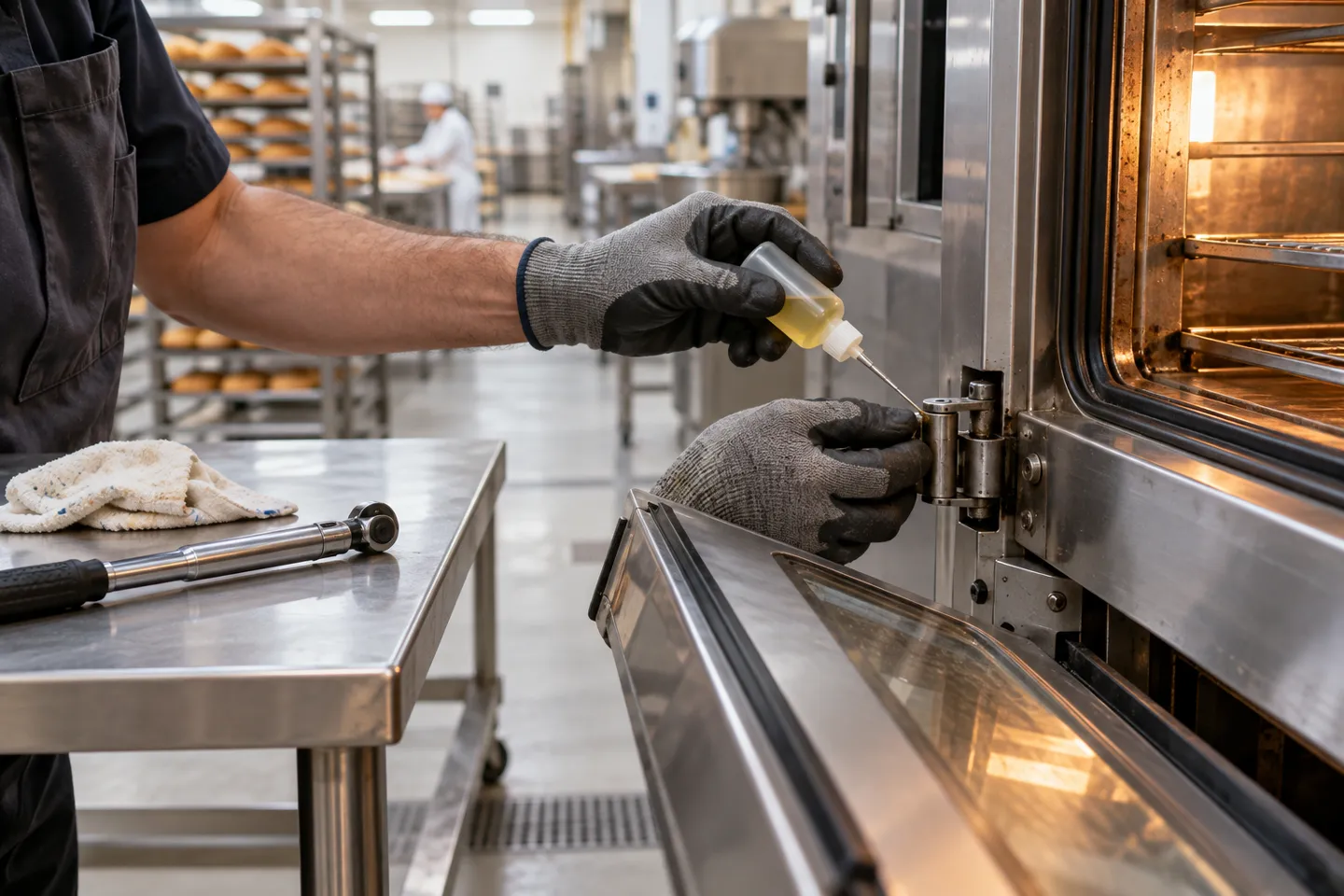
Two stocking habits follow from the matrix. First, split your spares by failure rate: hinges and latches are fast movers that deserve the spec work; knobs and elements are commodity. Second, schedule the checks: preventive maintenance programs for commercial ovens already call out quarterly door hardware lubrication and inspection (oxmaint, 2026), and a five-minute quarterly check beats an emergency order every time.
Retail catalogs and direct manufacturers coexist for a reason. Catalogs win on speed for single parts. Direct sourcing wins on price per unit, customization, and access to better specifications. The next section is about doing that second path properly.
Sourcing Direct: What to Ask a Manufacturer
Going direct changes what you buy, so it should change what you ask. Skip a step and the batch is where you discover the mistake.
The direct-sourcing sequence
Three questions separate a hardware manufacturer from a hardware seller. Does the cycle-life rating and temperature range exist in writing? Is the test regime documented, from salt spray and high/low temperature cycles through torque and load? Can you check the fit yourself with 3D models before a purchase order?
This is the standard we hold our own door-hardware line to at KUNLONG. We publish a free 3D model library (open 3D model library at kunlonghardware.com) so your engineers can verify mounting and swing before anything ships. Standard parts carry documented service-life coverage up to 24,000 cycles of use, and stocked items ship as free samples with freight collected. Send us your door weight, temperature range, and stroke requirement, and you will have an answer within 12 hours, with no minimum order on standard SKUs and 7 to 15 day lead times.
The boundary runs the other way too. A single failed hinge on a Saturday night is a retail catalog purchase, because same-day shipping is exactly what catalogs exist for. Direct sourcing pays when you are buying tens, customizing, or upgrading a specification, not when you are buying one.
Door hardware is a rounding error in the cost of a commercial oven and the first thing your customers will feel when it fails. Specify it like it matters, because it does.
Source Door Hardware Direct
References
- r/appliancerepair. “What happens to the actual hinge when an oven door…” 2026. https://www.reddit.com/r/appliancerepair/comments/1t1qf9y/what_happens_to_the_actual_hinge_when_an_oven/
- r/diynz. “Oven Repair – Hinges.” 2023. https://www.reddit.com/r/diynz/comments/18dxrnh/oven_repair_hinges/
- Oxmaint. “Commercial Oven Maintenance Checklist for Bakeries and Food Processors.” 2026. https://oxmaint.com/industries/food-manufacturing/commercial-oven-maintenance-checklist-bakeries-food-processors