


The run sheet calls for 85 °C and 85% relative humidity, held for 1,000 hours. A technician loads the samples, closes the door, and the sealed box behind it holds one climate for six straight weeks while every reading is logged. That box is a humidity chamber: a controlled volume in which both temperature and relative humidity are held at setpoints so product samples can be tested against damp-heat conditions on purpose instead of by accident.
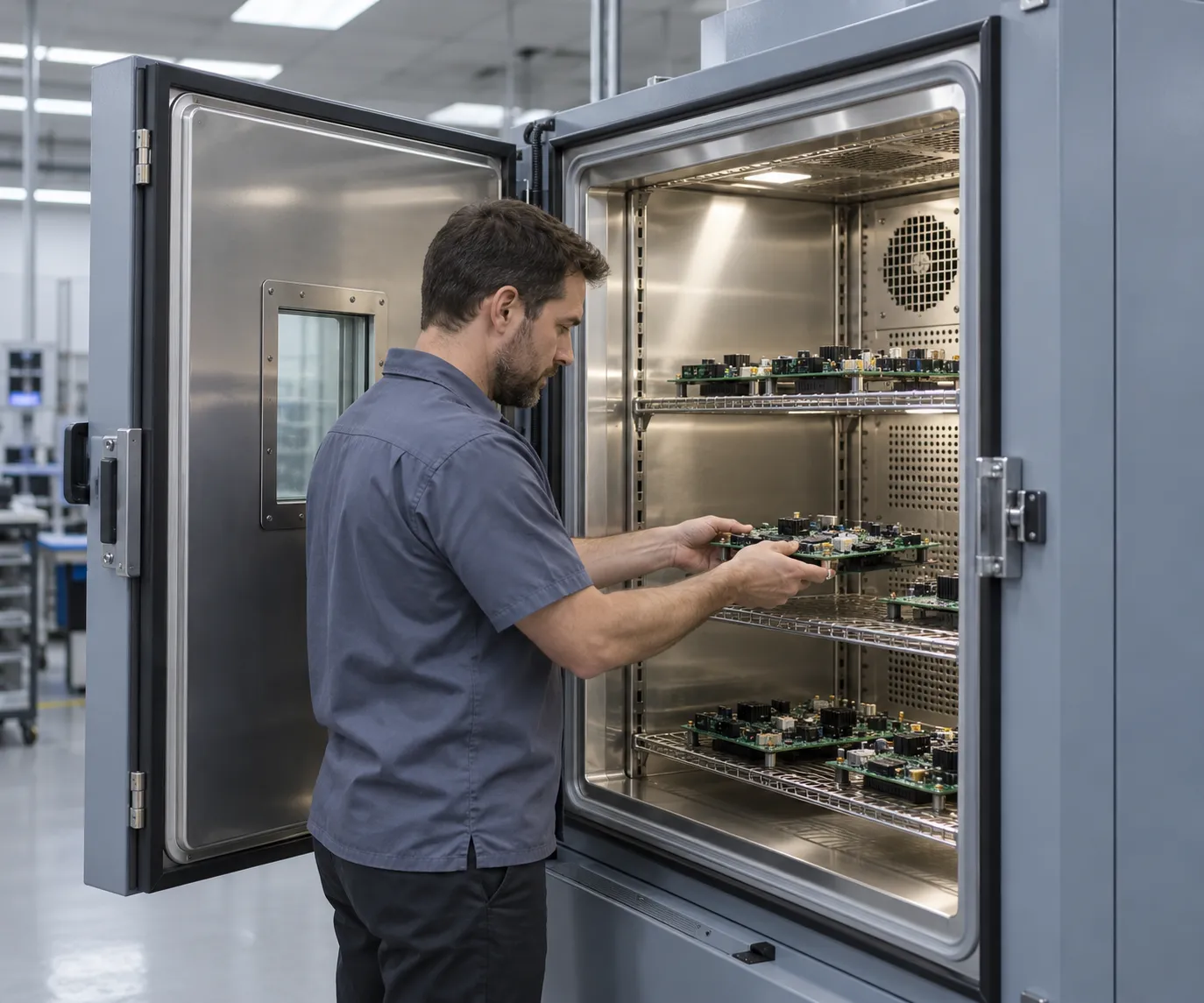
Inside, humidity is usually added by a steam generator or atomizer feeding the workspace. It is removed by giving moisture a deliberately cold surface to condense on, such as an evaporator coil, from which the water drains away (CSZ Industrial). That condensation trick explains the classic low-humidity headache. Any surface colder than the dew point pulls water out of the air, so a chamber asked to run cold and dry at the same time is fighting its own refrigeration. Holding a modest humidity at low temperature is a much harder engineering ask than the wide ranges printed in brochures suggest. Check that before a test plan gets written around one.
A sealed plastic tub with a saturated salt solution will hold a rough humidity for passive storage, and for storing film, tobacco, or instruments that is genuinely good enough. Testing is a different job. The moment a procedure needs a held setpoint, uniformity across the workspace, or a time-stamped record, the tub stops qualifying and the machine starts.
Not the humidity chamber you were looking for? The name also covers plant-grow tents, slide-staining wet boxes, and small storage humidors. This article is about the environmental test chamber: the instrument laboratories and factories use to qualify products against damp-heat conditions.
Types by Scale: Benchtop, Reach-In, and Walk-In
Catalog pages make chamber types look like feature tiers, cheap to expensive. They are really one axis: how big is the boundary? Scale decides what fits inside, where the machine can physically stand, and what installation costs. Capability, meaning how hot, how cold, and how dry the box can go, stacks on top of any scale.
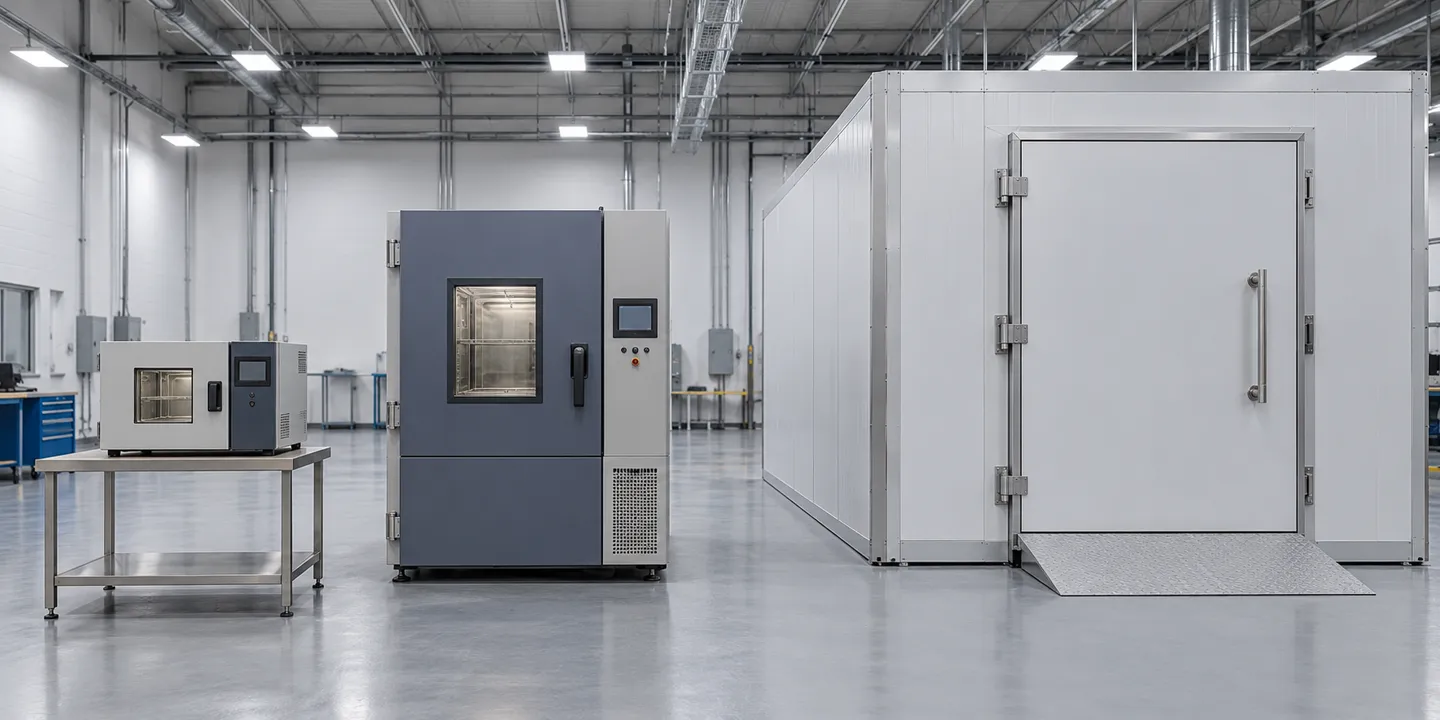
Benchtop: Component-Scale Testing
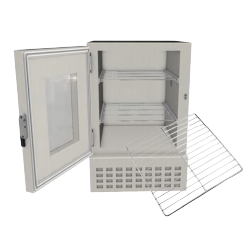
Benchtop units run from a few liters to a few dozen, sit on a bench, and suit PCB assemblies, connectors, sensors, and other component-scale samples. Small volumes react fast, which helps short cycles, but uniformity gets more sensitive as the box shrinks. A bulky sample stuffed into a small chamber blocks airflow and changes the climate you thought you bought, so honest sample measurement matters more here than anywhere else.
Reach-In: The Default Workhorse ⭐
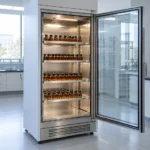
Reach-in chambers are the floor-standing cabinets most people picture, from a few hundred to over a thousand liters. Full assemblies and batches fit, service access is reasonable, and most labs that own one chamber own this kind. The hidden costs are site costs: power feed, a drain for condensate, floor loading, and clearance for a heavy door to swing open. None of that appears on the spec sheet, and all of it appears on the install invoice.
Walk-In: When the Product Outgrows the Box
Walk-in rooms are panelized, assembled on site, and sized in room units rather than liters: whole vehicles, palletized batches, burn-in rooms that people walk into. Insulated-panel walk-ins commonly specify humidity testing up to about 75 °C and 95% RH (ESPEC), lower than reach-in ceilings because the boundary is building construction, not a molded cabinet. Plan for construction time and site work, because the calendar cost is real even when the box price looks competitive.
Capability rides on top of scale. Steady-state damp-heat testing is IEC 60068-2-78, and cyclic damp-heat with condensation is Test Db in IEC 60068-2-30 (IEC, 2025; iTeh Standards, 2025). Pushing below roughly 20% RH, or pairing low humidity with low temperature, generally moves you into desiccant-based designs and a higher price class, because the machine has to dry air past what cooling alone can reach. Choose the scale first, then buy the capability the standard actually demands.
Chamber scales at a glance
| Form | Typical volume | Typical samples | Best for | Not suitable for |
|---|---|---|---|---|
| Benchtop | liters to tens of liters | components, small boards | fast component-level cycles | bulky assemblies, airflow-sensitive uniformity |
| Reach-In | hundreds to 1,000+ liters | assemblies, batch lots | the broad middle of product testing | walk-in products, whole-pallet loads |
| Walk-In | room-scale, panelized | vehicles, pallets, burn-in batches | large products and high throughput | tight budgets, short timelines, high-temp high-dry ceilings |
Buy or Build: A Four-Step Decision Sequence
Between “we need damp-heat data” and a purchase order sits a short decision chain, and each step has a clean exit.
Step one: legalize the test. Match the governing standard and the sample geometry to a workspace size and a capability range, written down before any vendor conversation. One-off qualifications can sometimes be bought from an accredited test lab instead of owning a chamber, and for occasional needs the lab wins on cash. Frequent testing flips the math fast.
Step two: retire the DIY option honestly. Three questions settle it: can it hold a setpoint, does the climate stay uniform across the workspace, and does it keep a record a customer will accept? Failing any one of the three ends the DIY conversation, because test data without those properties is not evidence.
Step three: plan the calendar before the budget. Practitioners report waiting close to a year for big-brand chambers to arrive (r/MechanicalEngineering, 2024). Repair visits without a service contract can sit months out on the same account. Write lead time into the project plan, and buy the service contract when the chamber gates a production line, because the contract is cheaper than the queue.
Step four: read the demand you will be competing against. The overall environmental chamber market is forecast to grow at around 3% a year through 2033 (Grand View Research, 2026), while EV battery testing alone is projected to reach $9.4 billion by 2030 at an 18.4% CAGR (BCC Research, 2025). Demand pressure is concentrating in exactly the labs and plants most likely to be ordering the same machines you are. Order early, in writing.
The four-step decision, end to end
Define the test
Standard, sample size, capability range.
DIY check
Setpoint? Uniformity? Record? Any fail = buy.
Calendar
Lead time and service contract into the project plan.
Demand curve
Order early where battery and EV testing growth is competing for capacity.
When the Numbers Drift: Failure Modes and Upkeep
A humidity reading that will not hold is never just an inconvenience. If drift happened mid-run, every sample in that chamber is suspect, the cheapest outcome is a repeated test, and the expensive one is a customer audit asking what else quietly slipped.
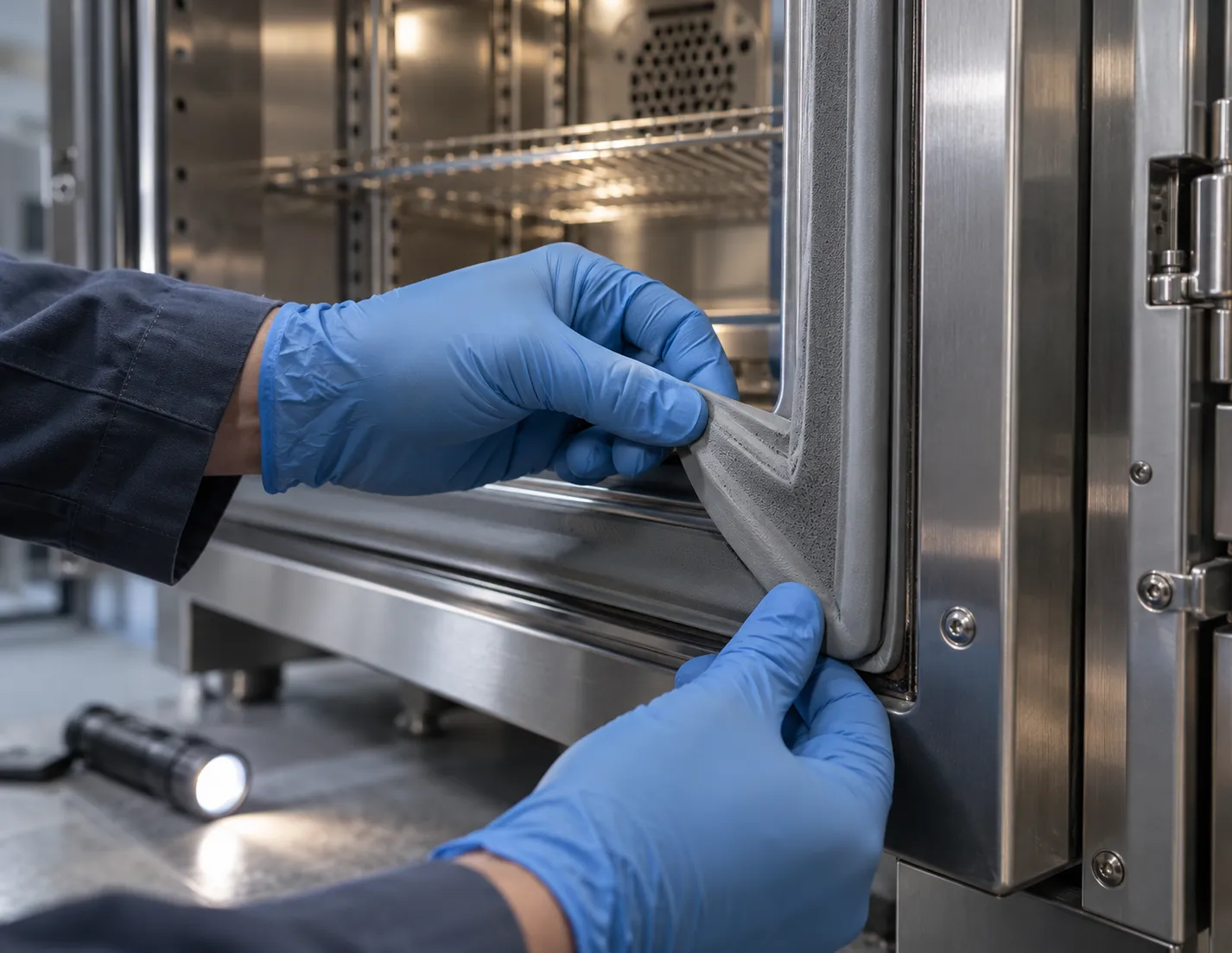
Work the triage in order of likelihood. Door gasket first: a poor door seal shows up on every seasoned fault list for these machines (Komegtek, 2026), and silicone sponge gaskets wear from being squeezed and released on every single opening (Associated Environmental Systems, 2022). Look for flat spots, tears, and permanent compression set. Next comes water: scale in the humidifier or steam cylinder restrains humidity response, which is why purified water is specified. Then the RH sensor, which drifts with age and needs calibration on a schedule rather than on suspicion. Last, check airflow and condensate drains, since a blocked drain can re-humidify the box from its own puddle.
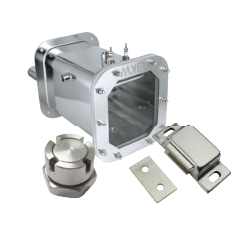
When the triage points at wear parts — gaskets, hinges, latches — Kunlong’s chamber and oven door hardware comes with published ratings, so the replacement can be specified instead of discovered.
Talk to a door-hardware engineerThe money follows the triage. Gaskets, sensors, and water-treatment parts are wear items, so budget them like consumables instead of surprises. A door that drops on one corner or a frame standing out of level is different money: that is alignment and design, and it belongs to the machine, not to the consumables line.
Stay inside user-serviceable bounds: gasket, water path, and sensor per the manual. Refrigerant circuits and main wiring belong to qualified technicians, and pretending otherwise turns a wear part into an incident report.
Five-point drift triage
- Door gasket: flat spots, tears, compression set
- Humidifier water path: scale, purified water in use
- RH sensor: calibration date current
- Condensate drain: clear, no standing water
- Door closes evenly on the latch side without a lift
A drifted humidity reading does not just fail one sample. It invalidates the whole batch inside the chamber, plus the calendar time the batch was occupying.
The Door Is a System: Seals, Hinges, and Latches
Every part of the boundary holds still except one. The door moves on every single test, and it is best treated as one engineered interface rather than a pile of parts; component suppliers themselves list gaskets and hinges together as the pieces that keep a chamber airtight.
The door is one interface, in two numbers
100 kg
what a single chamber door can weigh
100,000
open-close cycles the sealing system is engineered to survive
Source: T3 Test, Environmental Chamber Door Design, 2025
Gasket: The Wearing Boundary
The gasket is a consumable by design, usually silicone sponge, and its whole job is controlled compression. Too little and the boundary leaks; too much and the material takes a permanent set and leaks anyway, which is why both the compression range and the door’s ability to hold it matter. Some manufacturers now build tool-less gasket replacement into the door for exactly this reason (T3 Test, 2025). Ask instead whether your door needs a half-day of disassembly or two minutes when the gasket’s month arrives.
Hinge: Where Door Mass Meets Cycle Life
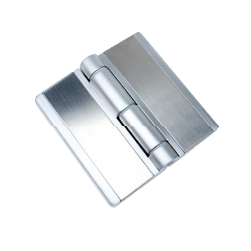
Hinges carry mass times lever arm for the life of the machine. As a hinge wears, the leaf drops a fraction, the latch side presses unevenly, and the leak shows up at one corner first, long before anyone calls it a hinge problem. Material decides how the hinge ages at temperature extremes: solid cast stainless holds its properties across deep-freeze to high-heat service, while zinc-alloy castings need an explicit corrosion and temperature check before they are specified. Cycle testing is now a published number at the door-design level, with hinges tested past 100,000 open-close cycles (T3 Test, 2025).
Latch and Compression: Turning Squish Into Numbers
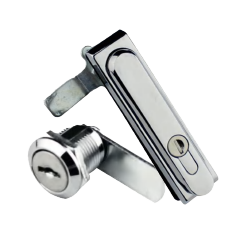
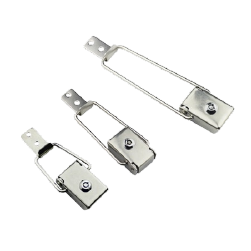
The latch is what turns “closed” into a spec. Compression-style handles pull the door inward by a measurable travel. Public hardware specs list maximum compression travel around 15 mm with adjustable mounting bases near 7 mm, which lets one latch line serve different gasket thicknesses without redesign. Draw latches cover the quick-close case where an external door needs to pull tight and take a padlock. The checkpoint is coordination: the latch’s useful travel and the gasket’s healthy compression range have to overlap, or the door is either under-squeezed or crushing its own seal.
Door Mass and Alignment: The Quiet Variables
Heavy leaves need hardware sized with margin, not matched to the first kilogram rating on a datasheet. Lift-while-opening hinge designs raise the leaf as it swings, unloading the gasket from shear during every opening, which directly slows the wear in the first H3 above. One level check belongs in the install crew’s checklist too: a chamber standing out of level hangs its door off-center and fights its own seal on every cycle.
The door as one interface: parameters and failure boundaries
| Element | Key parameter | How to set it | Failure boundary |
|---|---|---|---|
| Gasket | material, compression range, replaceability | match profile to door and frame; tool-less replacement preferred | under-compressed: leaks; over-compressed: permanent set |
| Hinge | load rating, offset, cycle life, material | size to door mass with margin; cast stainless for extreme temp service | wear drops the leaf, latch side presses unevenly, corner leak |
| Latch | compression travel, adjustment range | travel must overlap gasket’s healthy compression range | insufficient travel leaves the seal under-squeezed |
| Door & frame | leaf mass, lift-on-open, leveling | margin-sized hardware; level the chamber at install | out-of-level frame fights the seal every cycle |
Specifying the Boundary: Notes for Chamber Builders
Buyers read the last section as due diligence. Builders should read it as a mirror, because door-seal faults sit at the top of the industry’s own fault lists and the reference numbers are public. Competing manufacturers already publish door specifications as selling points: hinges cycle-tested past 100,000 openings, gaskets that swap without tools, and continuous gaskets on doors with thermal breaks (CSZ Industrial). A chamber’s seal assembly is a reliability statement and a service-cost promise, and it deserves to be engineered like one.
That translates directly into procurement. Put the interface matrix on the request for quotation: for gaskets, compression range and replacement structure; for hinges, load rating, offset, cycle life, and material for the temperature envelope; for latches, usable travel and gasket-thickness adaptation; for the frame, leveling and alignment. One interface, one requirements list, and suppliers answer with numbers instead of catalogs.
What goes on the RFQ, line by line
| Interface element | Requirement to write in | Why it belongs there |
|---|---|---|
| Gasket | compression range and tool-less replacement structure | the boundary’s one designed consumable |
| Hinge | load rating, offset, cycle life, material for the temperature envelope | mass times lever arm decides how the door ages |
| Latch | usable compression travel and gasket-thickness adaptation | travel must overlap the gasket’s healthy range |
| Frame | leveling and alignment at install | an out-of-level chamber fights its own seal |
There is also a portfolio question. Volume standard models usually win with catalog hardware, where cost and lead time rule. Custom and high-end models are different: the seal assembly is where cycle-life claims, serviceability, and therefore margin live, and those specifications belong in the product brochure next to the temperature range.
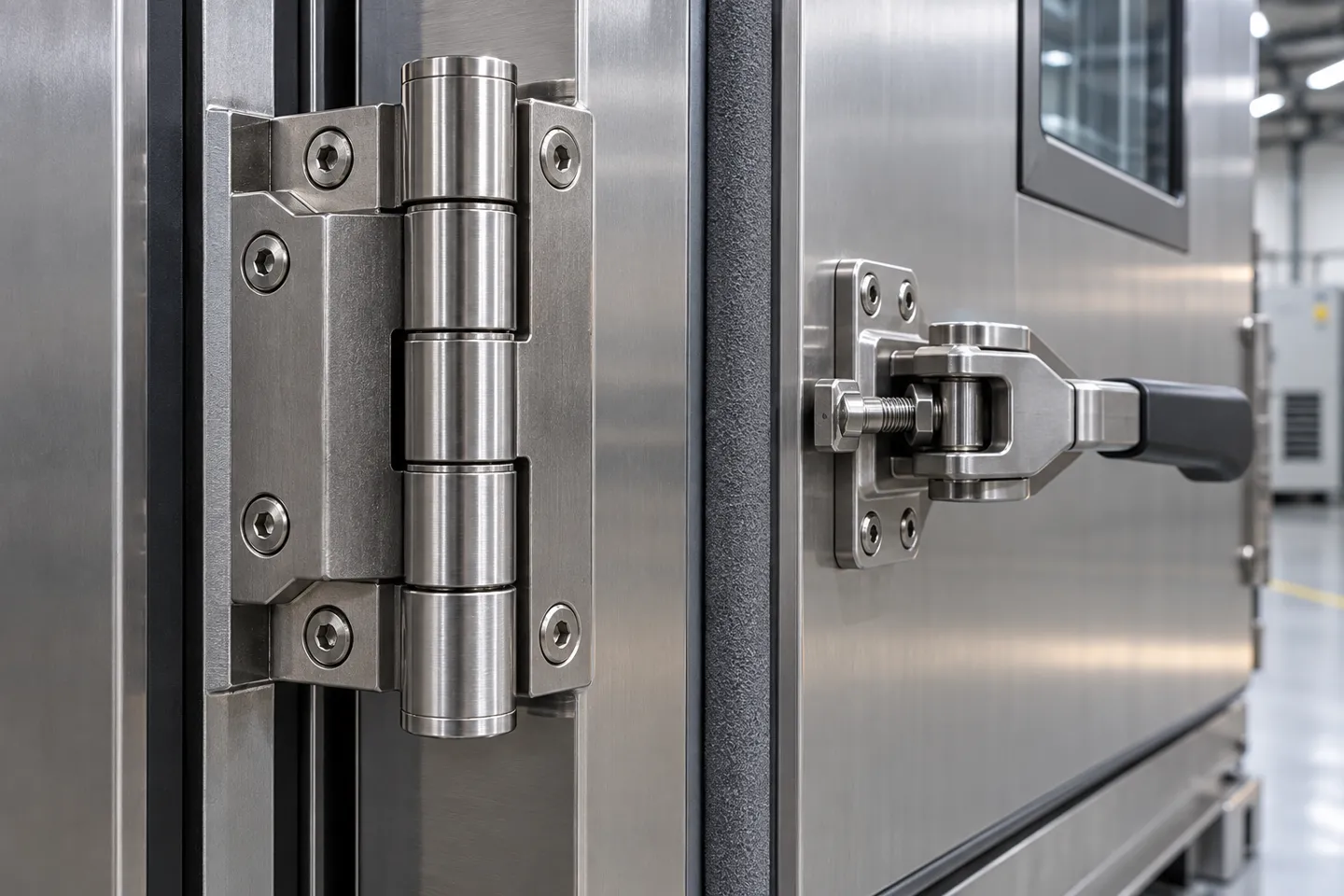
This is the interface we build for at KUNLONG. Our heavy-duty hinge SK2-728 carries walk-in chamber doors on solid SUS304, with a mounting position that adjusts to different gasket thicknesses and a leaf that lifts as it opens; the SK2-8065 refrigerator hinge is solid-cast stainless for oven and test-chamber doors; and the SK1-606R compression handle pulls roughly 15 mm of travel on an adjustable base of about 7 mm. We publish the ratings for our test chamber and industrial oven hardware, rated for at least 250 °C on the high side and below −70 °C on the low, so the interface numbers arrive before the quote does.
Whether you buy chambers or build them, the boundary deserves the same engineering attention as the controller that runs it. Take the matrix above into your next RFQ or your next drift investigation, and the door stops being the part you discover and becomes the part you specified.
Specify the boundary before the quote arrives
Send your door interface matrix — gasket compression, hinge load and cycle life, latch travel — and get rated hardware numbers back for your chamber or oven build.
Start a door-hardware RFQReferences
- CSZ Industrial. “Understanding Humidity in Environmental Test Chambers.” n.d. https://www.cszindustrial.com/Portals/1/PDF/Understanding_Humidity_in_Environmental_Test_Chambers.pdf
- IEC. “IEC 60068-2-78:2025 – Environmental testing – Part 2-78: Tests – Test Cab: Damp heat, steady state.” 2025. https://webstore.iec.ch/en/publication/82357
- iTeh Standards. “SIST EN IEC 60068-2-30:2025 – Damp heat, cyclic.” 2025. https://standards.iteh.ai/catalog/standards/sist/fab83966-31b7-4052-945d-0002e56405d4/sist-en-iec-60068-2-30-2025
- ESPEC North America. “Humidity Testing Chambers.” n.d. https://espec.com/na/products/humidity_test_chambers
- Grand View Research. “Environmental Test Chamber Market Report, 2026–2033.” n.d. https://www.grandviewresearch.com/industry-analysis/environmental-test-chambers-market-report
- BCC Research. “EV Battery Testing Market to Grow at 18.4% CAGR.” 2025. https://www.bccresearch.com/pressroom/fcb/ev-battery-testing-market-to-grow-at-184-cagr
- T3 Test. “Environmental Chamber Door Design | Seals & Viewing Options.” 2025. https://t3test.com/environmental-chamber-door-design-safety-seals-viewing-options/
- Associated Environmental Systems. “Finding Replacement Parts for My Test Chamber.” 2022. https://www.associatedenvironmentalsystems.com/blog/finding-replacement-parts-for-my-test-chamber
- Komegtek. “5 Common Issues with Environmental Test Chambers and How to Solve Them.” 2026. https://www.komegtek.com/knowledgeblog/5-common-issues-with-environmental-test-chambers-and-how-to-solve-them/
- r/MechanicalEngineering. “Environmental test chamber recommendations?” 2024. https://www.reddit.com/r/MechanicalEngineering/comments/1c6p2au/environmental_test_chamber_recommendations/