


What Is a Cam Lock? (And What It Isn’t)
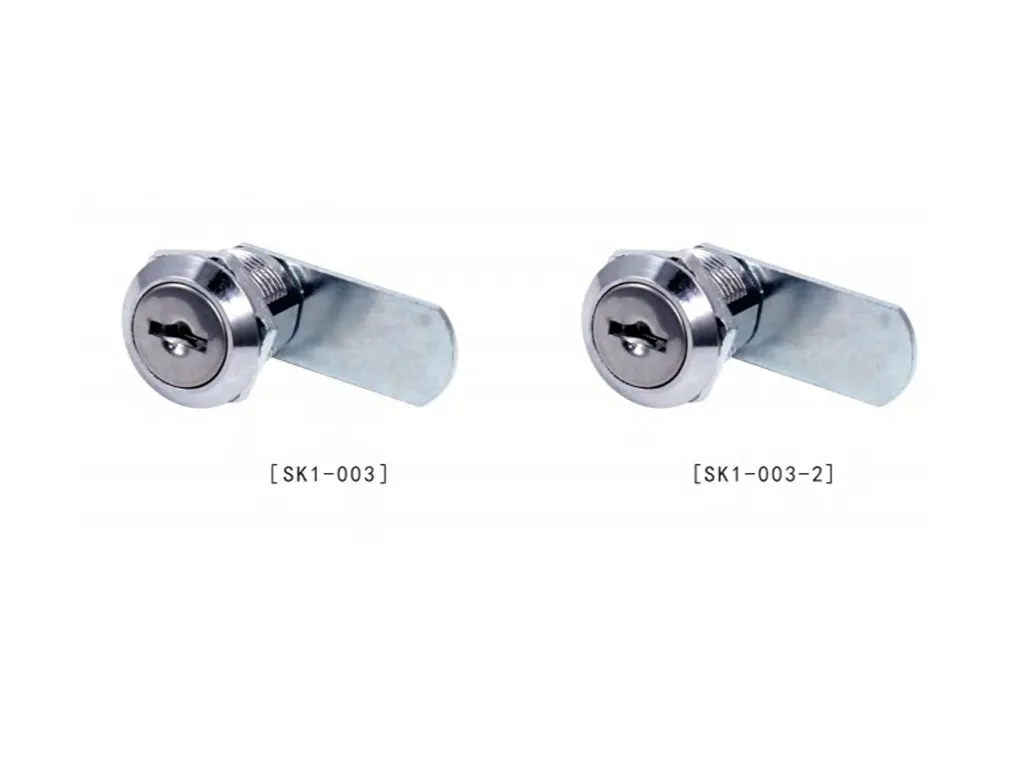
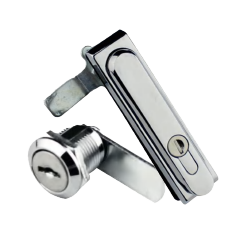
A cam lock is a compact, cylindrical locking device fitted into the door of an industrial enclosure. Behind the panel, a single rotating metal arm, the cam, does all the work: turn the key or knob about 90 degrees and the cam swings behind the door frame, blocking the door from opening. Turn back, and the door opens. That is the entire mechanism: no bolts, no wiring, no motor.
One clarification first, because the same name covers three different products:
Industrial cam lock: the enclosure and cabinet lock this article is about, found on telecom cabinets, distribution boxes, test chamber doors, and control panels.
Furniture cam: the consumer flat-pack assembly connector (the IKEA-style cam-and-dowel fitting). It shares the principle but is a different product family, a fastener rather than a door lock.
Camlock coupling: the quick-connect fitting on hoses and generator cables. Not a lock at all.
One more term: cam latch versus cam lock. Strictly, a cam lock has a keyed cylinder, while a cam latch is operated by hand or tool. In practice the industry uses the two interchangeably, and every cam lock is a type of cam latch.
Where Cam Locks Earn Their Keep: The Application Boundaries
Before any mechanism talk, the boundaries. Industrial lock catalogs bound every cam lock model by its intended application, and those model-level notes are the most reliable guide to what this family of locks is actually for. The table below mirrors that catalog view: each row is a real industrial environment, what it demands from a lock, and the kind of cam lock the catalogs answer it with.
| Industry | What the lock must survive | The catalog answer |
|---|---|---|
| Outdoor telecom & energy cabinets (5G cabinets, EV charging, power distribution) | Dust, rain, frost; access by tool-carrying maintenance crews | IP65 keyed cam lock with disc tumblers, triangle or square tool keys, stainless body, an outdoor shell that accepts add-on dust caps and hasp brackets |
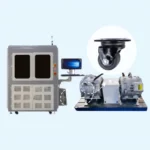
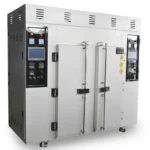
| Test chambers & industrial ovens | Doors over 100 kg, temperature swings from -70 °C to 260 °C, airtight sealing | Press-and-rotate compression cam lock with an anti-vibration retainer, heat-stable body and finish, compression handles on the largest doors |
| Food & pharma equipment | Washdowns, alcohol disinfectants, hygiene audits | SUS316 or SUS304 body and cam with a bright-polished finish, antibacterial treatment, REACH/RoHS compliance |
| Automation, 3C & semiconductor, battery equipment | Cleanroom particles, vibration, thousands of cycles | Mini-chassis cam locks: compact bodies with smooth open-close feedback, spring-returned handles, two keys per lock as standard |
| Cold chain & biomedical | Freezer-range temperatures, low-reflection surfaces | Low-temperature-stable tumblers; medical lines favor bright-polished stainless bodies with satin options |
| Aviation, rail, marine, shielding & storage | Constant vibration, salt air, high cycle counts | Left/right reversible keyed locks on SUS304-standard bodies, vibration-screened variants for equipment that moves |
| General equipment cabinets | Standard panels, fleet-wide key management | Waterproof-sealed keyed locks with rounded pawl tips that snap into the frame for electrical and control boxes; keyed alike across fleets |
Every row in that table is a combination of three choices: a tumbler, a material, and an operating end. The sections that follow unpack each choice, starting with the parts you will actually hold in your hand. One boundary is worth drawing before that, though: where the cam lock family itself ends and its siblings take over.
Cam Lock Anatomy: Every Part, Named
Strip a cam lock to its smallest pieces and you will find five parts. Learn the names now; the failure section later depends on them.
| Part | What it looks like | What it does | How it fails |
|---|---|---|---|
| Lock body (cylinder) | Threaded metal barrel, 16–22 mm in diameter | Houses the plug; threads through the panel hole | Corrosion outdoors; cracked zinc castings from over-tightening |
| Plug and tumblers | Rotating core with pins, wafers, or discs | Blocks rotation until the right key aligns the tumblers | Worn springs, seized wafers, grit in the keyway |
| Mounting nut | Fine-thread ring nut | Clamps the body against the panel | Backs off under vibration without a lock washer |
| Cam (tongue) | Stamped steel plate, 1.2–3 mm thick; straight / offset / cranked | Swings behind the frame when the plug rotates | Bent by forced doors; wrong offset for the frame gap |
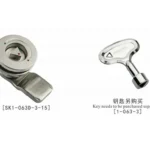
| Key (or operating end) | Flat, tubular, triangle, or square key; or wing knob / T-handle / L-handle | Transfers rotation to the plug | Lost keys with no key code recorded; worn plastic knobs |
Reading front to back: the keyway sits flush with the panel face, the threaded body passes through the mounting hole, the nut threads on from behind, and the cam attaches to the plug’s tailpiece with one small screw. That rear connection, one screw, is where half of all “the key turns but nothing happens” failures begin.
How the Cam Lock Mechanism Works: From Key Turn to Locked Door
One sentence captures the whole mechanism: every cam lock is a rotary-to-linear converter, and one 90-degree turn becomes a lateral swing behind the frame. The cylinder decides who can turn it, the cam decides where the swing lands, and the operating end decides how much effort it takes. The three sections below take that chain one link at a time.
From Key Turn to Cam Swing: The 90-Degree Logic
At rest, in the locked state, the cam sits behind the door frame and the plug is frozen. The tumblers inside are misaligned across the shear line between plug and body, so the plug physically cannot rotate. When the correct key slides in, its cuts lift every pin or wafer until the gaps between them line up exactly along the shear line. The plug is free to turn.
Turn the key 90 degrees and the plug’s tailpiece rotates the cam with it: the cam swings out from behind the frame, clears the keeper, and the door opens. Rotate back and the cam returns. The key only releases at the detent positions, usually 0 and 90 degrees. That is why a key that refuses to come out means the plug never returned to rest: a failed spring or a fouled keyway.
Engagement Geometry: Straight, Offset, and Cranked Cams
Why do some locks grab the frame solidly while others skim past it? Because of the cam’s shape and where the door sits relative to the frame:
- Straight cam — a flat tongue rotating in the same plane as the panel. For doors that sit flush with their frame.
- Offset cam — bent so the tongue lands in a different plane than the cylinder axis. For recessed doors and panels set back from the frame.
- Cranked cam — double-bent to clear a frame flange or gasket channel before dropping into the keeper.
The critical measurement is engagement depth: how far the cam crosses the inner edge of the frame, typically 5–12 mm. Too little and the door opens under a firm pull; too much and the cam scrapes the frame on every cycle. Remember one more number: a door that sags just 1–2 mm shifts the cam’s landing point enough to break engagement. That explains a large share of “the lock is fine but the door won’t stay shut” complaints later in this guide.
Lever-Driven Operation: How Handles Amplify the Turn
On larger doors, like telecom cabinets, equipment enclosures, and vehicle compartments, turning a small key against a heavy door and a stiff gasket gets tiring. That is where lever-type operating ends earn their place, because a lever is a torque multiplier. The same effort applied at the end of a 60 mm T-handle produces several times the rotational force of a key at 20 mm. Wing knobs, T-handles, and L-handles all work on this principle, transmitting rotation to the plug through a square or slotted drive shaft.
Compression styles add a second movement. After the 90-degree turn engages the cam, lifting and pressing the handle drives the latch plate forward another 2–4 mm, squeezing the door against its gasket. That extra stroke keeps vibration from rattling the door open and maintains the seal on outdoor enclosures. Recessed handles fold flat when released, so nothing snags.
Pin, Wafer, or Disc: The Three Tumbler Mechanisms
The difference between the three tumbler families comes down to one question: what blocks the plug from turning?
| Mechanism | What blocks the plug | Security level | Environment tolerance | Typical use | Relative cost |
|---|---|---|---|---|---|
| Pin tumbler | Spring-loaded pins in two stacks | Higher | Moderate — dirt degrades it | File cabinets, cash boxes, tool chests | Higher |
| Wafer tumbler | Flat spring wafers | Basic | Moderate | Office furniture, utility panels, light enclosures | Lowest |
| Disc tumbler | Springless rotating discs + sidebar | Higher | High — dirt, frost, corrosion barely affect it | Outdoor enclosures, vending, utility meters | Higher |
The pin tumbler is the oldest design, the cylinder lock Linus Yale patented in 1848 and that later refinements turned into the modern pin-tumbler form (Historicallocks). Wafer tumblers trade security for manufacturing economy, which is why most industrial cam locks are wafer-type: for a utility panel, deterrence is usually enough. Disc tumblers are the outdoor workhorses, with no springs to corrode and no small parts for dust to bind. One selection rule from this table: indoor furniture takes wafers, outdoor or high-value equipment takes pin or disc.
Cam Lock Styles by Operating End: Keyed, Knobbed, or Levered
Now switch your view from the inside of the cylinder to the outside of the panel. The same cylinder can wear many different operating ends.
| Operating end | How you operate it | Best for | Watch out for |
|---|---|---|---|
| Keyed cylinder | Flat, tubular, triangle, or square key | Restricted access; one key per person or fleet | Key management at scale |
| Wing knob | Hand turn, often spring-returned | Frequent access, low security needs | Spring return wears; knob can snag |
| T-handle | Hand turn with better grip | Larger doors, gloved operators | Protrudes; needs swing clearance |
| L-handle | Lever grip, often folds recessed | Heavy cabinet doors, vehicles | Needs more panel real estate |
| Compression style | Lift-turn-press; adds 2–4 mm squeeze | Vibration, gasket sealing, outdoor enclosures | Costs more; must match gasket thickness |
| Padlockable | Keyed or knob turn plus padlock hasp | Shared access with dual control | Padlock adds dangling hardware |
Useful fact when a customer asks for “the same lock, but with a handle instead of a key”: that substitution is a catalog decision, not an engineering change.
Materials and Finishes: Matching the Lock to the Environment
The right material question is not “which is strongest” but “where does this enclosure live?”
| Material | Strength | Corrosion resistance | Typical environment | Cost band |
|---|---|---|---|---|
| Die-cast zinc alloy | Good | Moderate | Indoor cabinets, office furniture | Low |
| Stainless steel 304/316 | High | High (316 for marine/chemical) | Outdoor telecom, food processing, marine | High |
| Brass | Moderate | Good, self-lubricating | Traditional cabinets, small marine hardware | Mid |
| Glass-fiber nylon | Low–moderate | Excellent against chemicals | Lightweight covers, washdown areas | Low |
Three things the table won’t tell you. First, galling: stainless threads under load can cold-weld and seize. That is the hidden cause of “the nut won’t come off” on outdoor stainless locks, and suppliers prevent it by pairing dissimilar materials or applying anti-seize treatments. Second, finish is a separate layer, and catalogs treat it as an appearance tier: bright chrome is the economy baseline, black paint covers electrical-box looks, and bright-polished stainless marks the medical and marine grades. Third, plastic-bodied parts carry an installation rule of their own: nylon and ABS components usually mount with self-tapping screws, which many catalogs ship separately. For outdoor enclosures, look for an IP rating per IEC 60529: IP65 means dust-tight and protected against water jets, the practical minimum for exposed cabinets.
Material picked, finish chosen? Send your panel spec to KUNLONG and get a matching cam lock recommendation with a sample quote.
Send My Panel SpecHow to Specify a Cam Lock: The Five Numbers That Matter
Before you order, answer three questions: How thick is my panel? How far is my cam from the frame? Who gets keys? If you cannot answer all three, the datasheet will not save you. The sections below are those three answers, in order.
Cylinder Length and Panel Thickness
The cylinder must pass through the panel, leave room for the mounting nut, and still reach far enough back for the cam to clear everything behind the door. Measure the panel thickness, add the clearance you need behind it, and that sum is your minimum cylinder length. Bodies come in stepped lengths from roughly 10 to 40 mm, and mounting holes concentrate in three diameters: 16 mm, 19 mm, and 22 mm. One workshop rule: cut the hole before powder coating a steel panel, because a drilled hole through fresh coating is a corrosion seed.
Cam Length, Offset, and Rotation
Now the geometry. Measure from the cylinder’s centerline to the inner edge of the frame: the cam’s effective length must exceed that distance by your engagement depth (5–12 mm). A recessed door or an offset panel plane calls for an offset cam. Most locks rotate 90 degrees; 180-degree models exist for special keeper layouts. And most cams flip 180 degrees on the tailpiece to convert left-hand to right-hand, so check before ordering two versions.
Keying Options and Security Level
The last numbers are about people, not metal:
- Keyed alike — one key opens every lock. For fleets and facilities where maintenance carries one ring.
- Keyed to differ — each lock has its own key. For tenant lockers and restricted cabinets; losing one key compromises one lock.
- Master keyed — each lock has its own key, plus a master that opens all. The hotel model; costs more, and is nearly impossible to retrofit, so decide at order time.
Whatever you choose, record the key code when the locks arrive. It is the only data a supplier can use to cut replacement keys later.
How to Install a Cam Lock the First Time, Correctly
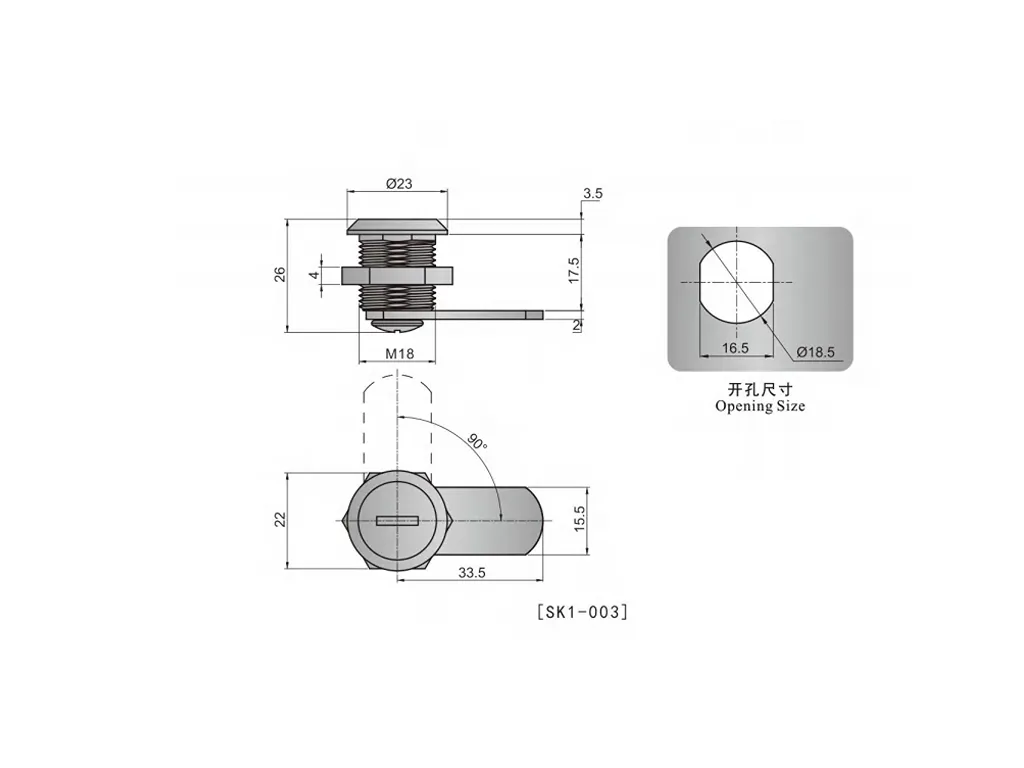
- Cut the hole — 16/19/22 mm to match the body — before any coating process.
- Insert the body from the front; the keyway face sits flush.
- Thread the mounting nut from behind with a lock washer or thread locker, hand-tight plus a half turn.
- Fit the cam in the correct orientation for the door hand; tighten its retaining screw firmly but not brutally (over-tightening cracks zinc tailpieces).
- Test the engagement: turn the lock and watch the cam. It must cross the inner edge of the frame by at least 5 mm.
- Cycle the lock open–closed–open with the door unloaded and pressed shut before calling it done.
Two steps get skipped most often: the engagement check above, and door-sag compensation. If the door has settled 1–2 mm since the hinges were new, re-align before re-locking. On outdoor cabinets, add a dust cap over the keyway and spacer washers where the panel is thinner than the body’s grip range. These accessories cost cents and prevent most outdoor failures.
Why Cam Locks Fail — and How to Fix or Replace Them
There is a pattern behind almost every cam lock failure, and it contradicts the first instinct of anyone holding a broken lock: most cam lock “failures” are geometry problems — engagement depth, clearance, or alignment — not broken locks.
The Diagnosis-First Rule
Three of the four failures below are fixable without buying a new lock.
The four symptom groups below are what industrial service calls are actually about.
The Key Won’t Turn, or the Lock Is Jammed Solid
Work through this sequence before declaring the lock dead:
- Check for interference first. A sagging door presses the cam hard against the frame, jamming the plug. On a test chamber door that ran hot all night, thermal expansion alone can jam the cam against its keeper. Lift the door slightly while turning the key. If it frees up, the problem is the door, not the lock.
- Clear the keyway. Outdoor cabinet locks collect grit, and coastal salt spray corrodes tumblers from the inside. Lubricate with a dry lubricant like graphite powder. Avoid wet sprays (the WD-40 class): they attract dust and turn into grinding paste.
- Suspect the tumblers. If the key enters smoothly but refuses to rotate, a spring has failed or a wafer has seized. The repair is a new cylinder, cheap and field-swappable.
- Check the tailpiece screw. If the key turns freely but nothing happens, the cam has come loose from the plug. Re-seat and re-tighten.
It Locks, but the Door Still Rattles or Pops Open
Two root causes, both geometric. Either the engagement depth has shrunk, through door sag, worn hinges, or a permanently compressed gasket, or the seal has lost tension. For the first: re-align the door, add spacer washers, or move to a longer cam. For the second: this is exactly what compression-style cam locks exist for, because their extra 2–4 mm squeeze stroke re-tightens the door against a fresh gasket. On equipment that vibrates in transit or in service, a compression lock with a spring-returned handle is the standard fix.
The Cam Won’t Catch the Frame at All
The most common geometry failure on industrial doors comes after a hinge settles or a cabinet gets modified: the cam swings through its full 90 degrees and meets nothing. Check three things: the cam’s effective length versus the distance from cylinder axis to frame edge; the cam profile versus the panel plane (flush panel needs straight, recessed needs offset, flanged frame needs cranked); and the door’s settled position after months of hinge wear. One to two millimeters of sag is enough to move the landing point off the keeper entirely.
The same geometry class shows up in flat-pack furniture forums, where the complaint is “the screw it was supposed to grab was too far in, so the cam caught nothing.” Same lesson, different product family: a furniture cam grabs a dowel screw, an industrial cam lock grabs a door frame, and both fail the same way when the geometry drifts.
Stripped Screws, Seized Nuts — and How to Replace the Lock
When replacement is genuinely required, extraction is half the job. For a stripped cam screw: lay a rubber band over the slot for grip, or tap in a slightly oversized flathead; an impact driver or screw extractor finishes the job. For a seized mounting nut, the galling warning from the materials section applies in full: penetrating oil, patience, and mild heat before you reach for anything destructive.
Then copy four numbers from the old lock before ordering: mounting hole diameter, cylinder length, cam length and profile, and the keying scheme. Match those four and the replacement fits; match none and it gets returned. And consider upgrading rather than replacing like-for-like. A corroded outdoor lock deserves stainless steel and disc tumblers; a rattling door deserves a compression style.
How Secure Is a Cam Lock, Really?
Time for the honest answer the product pages skip. A cam lock is an access-control device, not a theft-proof barrier. Most wafer-tumbler cam locks resist casual prying but fall quickly to a determined attacker with basic tools. The industry’s blunt formulation is that a cam lock “keeps honest people honest.” That is not a defect; it is the design’s purpose. The lock stops unauthorized use of a cabinet, not determined entry into it.
| Your scenario | Is a cam lock enough? | If not, the upgrade path |
|---|---|---|
| Office file cabinet, display case | Yes | — |
| Outdoor equipment cabinet | Yes, with disc tumblers + IP rating | Padlockable cam lock for dual control |
| Vending machine or kiosk | Borderline | High-security cylinder (pin/disc) |
| Cash or high-value enclosure | No | Padlock, multi-point locking, or electronic access |
Security is layered design: the lock is one layer, and the door, the hinges, and the strike matter equally. But the fact that matters more in the field: most cam locks die of wear and misalignment long before anyone tries to defeat them. The real-world failure is durability, not break-ins, a conclusion lock-security researchers have been documenting for decades (Marc Weber Tobias, Locks, Safes, and Security).
Can cam locks be picked?
Yes. Most wafer-tumbler cam locks resist casual prying but not a determined attacker — a cam lock controls access; it doesn’t stop forced entry. See the upgrade table above.
Why are cam locks not locking?
Usually geometry, not the lock: a sagging door, shallow engagement, or a loose tailpiece screw. Work the four-step checklist in the failure section above.
What are the disadvantages of using cam locks?
Limited anti-theft value, sensitivity to grit and misalignment over years of cycling, and key management at scale. The security section maps out when to upgrade.
What Cam Lock Failures Say About the Hardware Business
That gap between what buyers worry about, security, and what actually kills cam locks, geometry and wear, is the most useful piece of market intelligence in this article.
Look at the four failure groups above and count: three of them are assembly and matching problems, not broken locks. Yet every technician who hits them describes the outcome the same way: “the lock broke.” That attribution error, repeated across industrial service calls and echoed in consumer furniture forums, is a market signal. What actually drives replacement demand is fit and tolerance, not bitting sophistication. The suppliers who understand this behave differently from the ones who don’t.
Follow the complaints and three structural facts emerge. First, demand: maintenance teams do not distinguish “misadjusted” from “failed”, and they replace either way. That is why a replacement-parts business thrives alongside every cam lock catalog. Second, decision criteria: professional buyers, from cabinet makers to equipment builders to maintenance engineers, judge suppliers not by the datasheet but by the failure conversation. They want to know whether the supplier can tell them why the lock failed and what number to order to fix it. Third, disappointment concentration: the cheapest products collect complaints exactly where the mechanism is most sensitive, in plastic cams that shear, zinc castings that crack under over-tightening, and finishes that rust within a year outdoors.
Demand
Users replace ‘misadjusted’ and ‘failed’ alike — replacement-parts demand rides alongside every cam lock catalog.
Decision criteria
Buyers judge suppliers by the failure conversation, not the datasheet.
Disappointment
Cheap parts fail exactly where the mechanism is most sensitive — cams, castings, finishes.
The implications for anyone supplying this market are concrete. Stock replacement cams, nuts, and cylinders as separate SKUs, not just complete locks; the demand is provable in every repair forum and service log. Put a one-page engagement checklist in the box or on the support page, because most returns are fixable by adjustment, and a supplier that converts returns into adjustments keeps the account. In custom OEM work, make cam profile and engagement depth a confirmed line item at the quoting stage. That single step eliminates the failure mode behind most field complaints.
Now the same facts from the sourcing side. The product is simple; the risk lives in the specification. The market splits into two shapes: a stocked-standard business, where distributors and small buyers order catalog SKUs off short lead times, and a project business, where cabinet and equipment OEMs run drawing reviews, sample approval, and tooling for custom cams. Order sizes run the same spectrum: single-piece replacements and small-batch cabinet runs at one end, and project-volume deliveries for telecom cabinets, EV charging infrastructure, and test-chamber builders at the other. In the first shape, price transparency and stock depth win. In the second, tolerance control and sample speed win. Whoever assembles the door absorbs the cost of a misaligned lock, so buyers quietly pay more for suppliers who prevent that failure before it ships. That is why certifications are entry tickets in this market, not differentiators: every serious supplier has them. What actually closes deals is lead-time behavior, stock items shipping within a week and custom work within weeks rather than months, plus a sane minimum order for custom work.
If your equipment lives in one of the environments from the applications section above, a 5G cabinet on a rooftop, a charging station by the road, a test chamber cycling through temperature extremes, then the choice of cam lock is a specification decision, not an afterthought. KUNLONG manufactures cam locks for exactly these industrial applications: SUS304 and SUS316 stainless and zinc-alloy bodies, IP65-rated variants, and standard locks warranted for 20,000+ open-close cycles, published with full specifications in its catalog of cam locks rated for tens of thousands of open-close cycles.
Get a Cam Lock Matched to Your Panel Spec
Send KUNLONG your panel numbers and get a matching cam lock recommendation with a sample quote.
Request My Cam Lock QuoteReferences
- Historicallocks. “The cylinder lock.” https://www.historicallocks.com/en/site/h/other-locks/entrance-door-locks/the-cylinder-lock-/
- Marc Weber Tobias. Locks, Safes, and Security: An International Police Reference (2nd ed.). https://archive.org/details/locks-safes-and-security-2nd-edition-and-lss
- KUNLONG Hardware. “Cam Locks.” https://www.kunlonghardware.com/cam-lock/
- KUNLONG Hardware. Homepage. https://kunlonghardware.com/