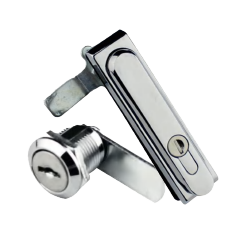



If you’ve ever searched “cam lock price” and come away more confused than when you started, you’re not alone. The same component — a quarter-turn cam lock for an industrial enclosure door — can appear on one supplier’s listing at $0.35 and another’s at $18.00. That’s not a typo. It’s not a scam. It’s just that cam lock pricing runs on variables most first-time buyers don’t know to ask about.
This guide unpacks every factor that determines what you’ll actually pay: material grade, dimensional specifications, IP sealing, order volume, customization, and — perhaps most importantly — the hidden lifetime costs that make a cheap lock surprisingly expensive. By the end, you’ll have a pricing framework you can take straight to your next RFQ.
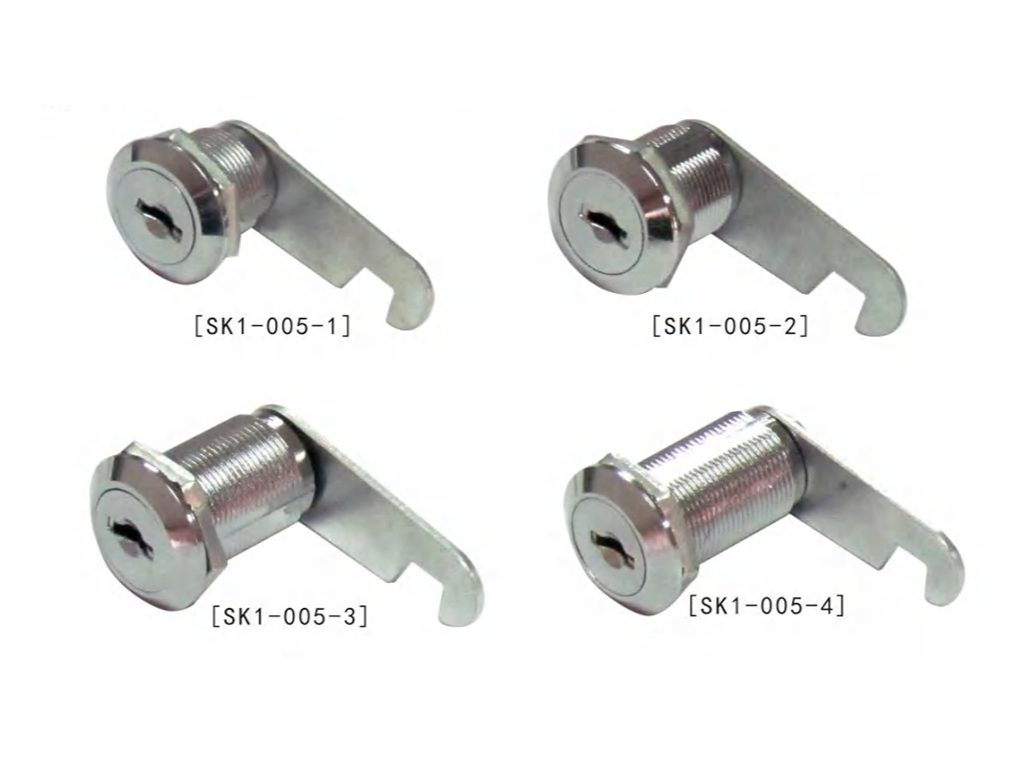
What Determines Cam Lock Pricing?
Before diving into numbers, here’s why the price range is so wide. Five variables drive nearly all cam lock cost differences:
Material. The single biggest cost lever. A zinc alloy lock body costs a fraction of a 316 stainless steel one — but they’re not interchangeable. The environment your equipment lives in dictates which material you need, and that choice alone can swing unit price by 20×.
Specifications and IP rating. Standard 22mm mounting hole, 20 – 25mm body length? Cheap and fast. Non-standard dimensions, IP65 sealing, or a pick-resistant tubular keyway? Each adds cost. More on this below.
Order volume. The same lock might cost $5 at 100 pieces and $1.50 at 10,000. MOQ price breaks are non-negotiable in industrial procurement — understanding them is half the battle.
Customization. Changing a finish color from a stock palette costs almost nothing. Commissioning a new mold for a custom lock body can run $500 – $3,000 before a single unit is produced.
Supplier type. A Western distributor stocking branded inventory runs a different cost structure than a Chinese factory selling FOB direct. Neither is inherently better — but they charge differently for what they offer (stock availability, local support, certifications already in place).
Think of it like buying a vehicle. You can spend $1,000 on a 20-year-old sedan or $100,000 on a new truck. The question isn’t “how much does a vehicle cost?” — it’s “what do you need it to do, and for how long?”
Cam Lock Price Ranges by Material and Grade
Material choice isn’t about “more expensive is better.” It’s about environment dictating material, and material dictating price. Below, we break down three material tiers: what you’ll pay, what you get, and where each one belongs.
Zinc Alloy Cam Locks — The Economical Standard
If your application is indoor, dry, and doesn’t demand heavy cycling, zinc alloy is the cost floor — and for many OEMs, it’s perfectly adequate.
FOB China pricing for zinc alloy cam locks breaks down by finish and complexity:
| Type | Unit Price (FOB) | Typical MOQ |
|---|---|---|
| Basic zinc alloy, chrome-plated | $0.23 – $0.63 | 150 – 5,000 pcs |
| Mid-range, nickel-plated or double-bit | $0.50 – $2.00 | 100 – 2,000 pcs |
| T-handle / compression-style | $4.50 – $19.00 | 50 – 500 pcs |
Most zinc alloy lock bodies use Zamak-3 (Zinc Alloy #3), a die-casting grade that takes chrome or nickel plating well and provides adequate strength for light-to-medium duty. Surface plating is the primary defense against corrosion — chrome-plated Zamak typically survives 48 – 96 hours of salt spray testing, which is fine for indoor electrical panels, office furniture, mailboxes, and retail display cases.
The limitation is environmental. Zinc alloy has no meaningful resistance to outdoor moisture cycling, chemical exposure, or salt air. In those conditions, the plating degrades, the substrate corrodes, and the lock seizes — sometimes within a year. That’s where stainless steel enters the picture.
304 Stainless Steel Cam Locks — The Industrial Workhorse
For the majority of industrial applications, 304 stainless steel (SUS304, AISI 304, 18/8 stainless) hits the sweet spot: corrosion resistance that handles outdoor exposure, strength for frequent cycling, and a price that doesn’t break the BOM.
FOB pricing for 304 stainless cam locks:
| Type | Unit Price (FOB) | Typical MOQ |
|---|---|---|
| Basic quarter-turn, no IP seal | $1.20 – $3.00 | 10 – 500 pcs |
| Mid-range with IP65 gasket seal | $2.50 – $5.00 | 50 – 500 pcs |
| Compression latch / paddle handle | $7.50 – $13.00 | 20 – 500 pcs |
The jump from zinc to 304 stainless buys you three things. First, corrosion resistance: 304 SS handles 200+ hours of salt spray (ASTM B117) versus zinc’s 48 – 96 hours. Second, mechanical life: a well-made 304 lock body with stainless internal springs can deliver 20,000+ cycles before failure, compared to 5,000 – 10,000 for typical zinc alloy units. Third, surface integrity: stainless doesn’t rely on plating that can chip or wear — the corrosion resistance is through the material, not on top of it.
Typical deployments include outdoor telecom cabinets, food processing equipment enclosures, cold storage doors, industrial machinery access panels, and coastal installations. If your enclosure has an IP65 or NEMA 4 rating, the lock needs to match — and 304 stainless is the practical baseline for sealed designs.
316 Stainless Steel and Specialty Cam Locks — Premium Performance
When 304 isn’t enough — chemical plant atmospheres, offshore platforms, saltwater exposure, pharmaceutical washdown environments — 316 stainless (SUS316, AISI 316) is the answer. The key difference is molybdenum: 2 – 3% molybdenum content gives 316 its resistance to chloride pitting, the failure mode that eventually eats through 304 in aggressive environments.
| Type | Unit Price (FOB) | Typical MOQ |
|---|---|---|
| 316 SS basic quarter-turn | $4.00 – $5.60 | 50 – 500 pcs |
| 316 SS with IP65 sealing | $5.80 – $8.00 | 100 – 500 pcs |
| High-security (tubular key / pin-tumbler) | $8.00 – $18.00 | 100 – 1,000 pcs |
At $15 – $18 per unit, a high-security 316 stainless cam lock with IP65 sealing can feel expensive next to a $0.50 zinc alternative. But the comparison is misleading: a $0.50 lock is the wrong tool for a chemical plant enclosure, and installing it means paying for the mistake later. Specialty locks — electronic, solenoid-actuated, or safety-interlock types — can exceed $150 per unit, but these sit outside standard industrial procurement and are specified by function rather than price.
For most buyers, the decision tree is simpler than it looks: indoor and dry → zinc alloy is fine. Outdoor, wet, or high-cycle → 304 stainless. Chemical, coastal, or washdown → 316 stainless.
$0.23 – $2.00
$1.20 – $13.00
$4.00 – $18.00
How Specifications, MOQ, and Customization Affect Your Quote
Knowing material-based price ranges is step one. Three other variables can double your per-unit cost — or cut it in half. Understanding which requirements drive cost and which are negotiable gives you leverage at the quoting table.
Dimensional Specifications and IP Ratings — The Technical Cost Multipliers
Non-standard dimensions and environmental sealing are the most overlooked line items on a cam lock quote. A buyer who thinks “just a little longer” doesn’t realize the factory may need to retool.
The baseline spec is a 22mm mounting hole with a 20 – 25mm lock body length (the “housing length” or “barrel length,” which determines the panel-to-tongue depth). As soon as you deviate, costs climb:
- Non-standard body length: +30 – 50% for lengths outside the 15 – 35mm common range
- Non-standard mounting hole pattern: +50 – 100% if the factory doesn’t have an existing die for your cutout shape
- IP rating upgrades: IP54 adds roughly 10 – 20% (basic gasket); IP65 adds 20 – 40% (integrated sealing ring + testing); IP67 adds 40 – 60% (full submersion-rated seal design). The IP rating standard is IEC 60529, and every step up requires an additional seal, tighter tolerances, and validation testing
Key type adds another layer. A standard flat key is the cost baseline. Tubular (round/barrel) keys — common on vending machines and higher-security cabinets — add 30 – 50%. Pin-tumbler mechanisms, required for medical cabinets and server racks, can add 50 – 100% depending on the number of pins and whether master-keying is needed.
| Spec Change | Cost Impact | Why |
|---|---|---|
| Non-standard body length (±5mm+) | +30 – 50% | Requires tooling adjustment or different blank |
| Non-standard mounting hole | +50 – 100% | May need new die if tooling doesn’t match |
| IP54 → IP65 sealing | +20 – 40% | Additional gasket + tighter tolerance + validation |
| Flat key → Tubular key | +30 – 50% | More complex cylinder + pick resistance |
| Flat key → Pin-tumbler | +50 – 100% | Higher precision cylinder + master-keying |
MOQ and Bulk Pricing — How Order Volume Changes Unit Cost
The most dramatic price swings in cam lock procurement come from order volume. Using a typical 304 stainless steel quarter-turn lock as an example:
| Order Quantity | Approx. Unit Price | Who This Tier Fits |
|---|---|---|
| 1 – 9 pcs (sample) | $5.00 – $8.00 | Prototyping, repair spares, first-article inspection |
| 10 – 99 pcs | $3.00 – $5.00 | Small OEM pilot runs, maintenance stock |
| 100 – 999 pcs | $2.00 – $3.00 | Quarterly OEM orders, mid-volume production |
| 1,000 – 9,999 pcs | $1.50 – $2.00 | Annual contracts, standard production runs |
| 10,000+ pcs | $1.00 – $1.50 | High-volume OEMs, distributor bulk stock |
The biggest price breaks happen between 100 and 1,000 pieces. Many Chinese factories set MOQ at 50 – 500 pcs for standard catalog items. Ordering below that threshold typically incurs a “small-order surcharge” of 20 – 50% on the unit price — the factory is essentially charging you for breaking a production batch.
Shipping mode also matters. Sea freight (2 – 6 weeks transit) adds negligible per-unit cost at volume. Air freight adds roughly $0.10 – $0.30 per piece and cuts delivery to 5 – 10 days. For urgent prototype orders, the air premium is a rounding error. For 50,000-unit production runs, it’s a line item worth negotiating.
Customization Costs — What Adds to the Price Tag
Not all customization burns budget. Some modifications cost almost nothing. Others require a new mold, a minimum 1,000-piece run, and a 45-day lead time. The difference is knowing which category your request falls into.
| Customization Level | Examples | Cost Impact | Typical MOQ |
|---|---|---|---|
| Low (near-zero) | Finish color from stock palette, key number change, packaging logo | 0 – 5% | Standard MOQ |
| Medium | Non-standard finish, body length ±5mm+, specified supplier | +10 – 30% | 200 – 1,000 pcs |
| High | New mold, custom hole pattern, custom security, smart integration | +30 – 100%+ | 1,000 – 5,000 pcs |
The high-impact items are expensive because they involve tooling. A new die-cast mold for a custom lock body costs $500 – $3,000 as a one-time charge, and the factory needs enough order volume to amortize that setup across the production run. This is why custom lock projects typically start at 1,000 – 5,000 piece minimums.
The good news: many customization requests fall into the low or medium tier. A different finish, a specific key coding, or branded packaging shouldn’t dramatically change your quote. If a supplier quotes a 50% premium for a color change from their existing palette, ask why — that cost shouldn’t be there.
Take a manufacturer like Guangdong Shangkun Industrial Technology (KUNLONG) as a concrete reference: their customization program covers five dimensions — material, dimension, function, intelligent control, and appearance — with an MOQ of just 100 pieces. That’s unusually low for industrial hardware, where 500 – 1,000 pc minimums are more common. Their standard product SKUs ship within 7 days from a 3,000+ model warehouse inventory, and custom orders follow a defined timeline: free 3D design drawings within 7 days, production delivery within 45 days, with air, sea, or express shipping options. When you’re sourcing custom cam locks, those are the kinds of concrete numbers to benchmark against — not vague promises of “ASAP.”
Total Cost of Ownership — Why the Cheapest Lock Often Costs the Most
Compare two supplier quotes side by side: a $2 lock and an $8 lock, 4× apart on paper. But if the $2 lock fails three times over a decade — and each replacement means a technician visit, equipment shutdown, removal, fitting, and verification — that unit price was never the real number.
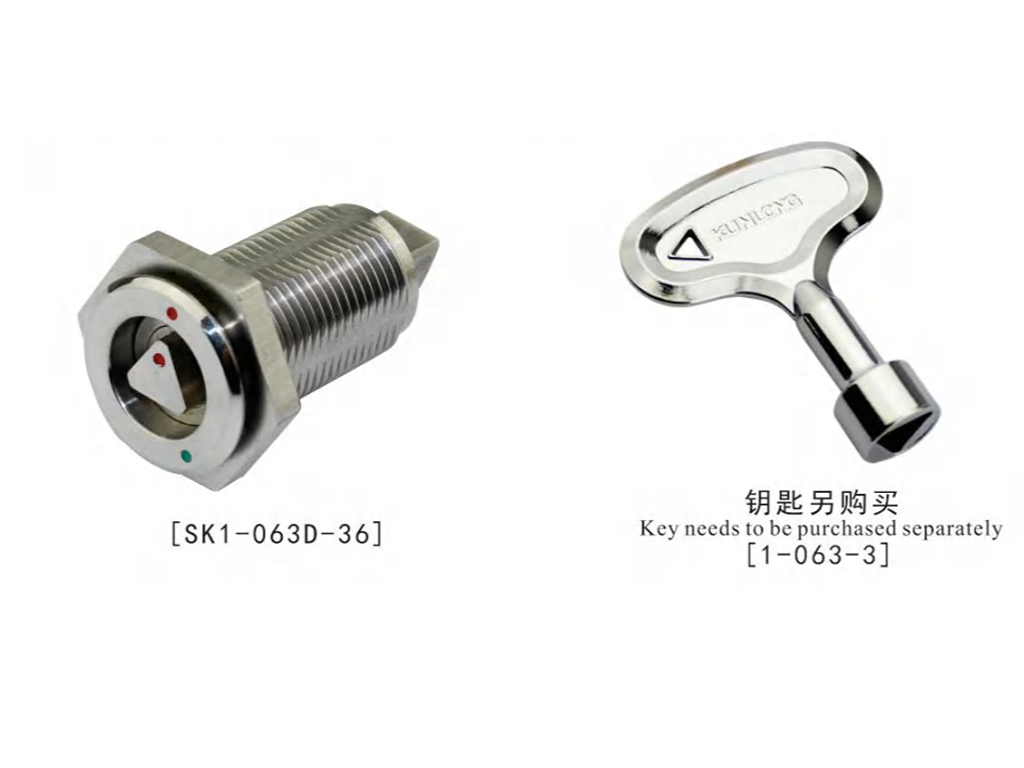
The Hidden Costs Behind a Cheap Cam Lock
The purchase price is the smallest slice of the total cost pie. Here’s what a 10-year ownership period looks like for a 1,000-lock deployment — think a fleet of outdoor enclosures or a production line of packaged equipment:
| Cost Component | Zinc Alloy ($2/unit) | 304 Stainless ($8/unit) | 316 Stainless ($15/unit) |
|---|---|---|---|
| Initial purchase (1,000 units) | $2,000 | $8,000 | $15,000 |
| Replacements over 10 years | 3 full replacements = $6,000 | 0 replacements = $0 | 0 replacements = $0 |
| Labor for replacements (3×) | $15,000 – $30,000 | $0 | $0 |
| Downtime & logistics | Equipment offline + spare parts inventory | $0 | $0 |
| Total 10-Year Cost | $23,000 – $38,000 | $8,000 | $15,000 |
The math is stark: the “cheapest” option costs 3 – 5× more than either stainless alternative when you account for the work of replacing failed units. Industrial electrician rates run $50 – $120 per hour in North America, €40 – €80 in Western Europe, and even in lower-cost manufacturing regions, the downtime and logistical friction of scheduling three replacement cycles dwarf the per-unit hardware savings.
The factors that eat budget silently:
- Downtime: if a lock fails on an outdoor telecom cabinet, that cabinet may be inaccessible (or insecure) until a technician arrives. For production equipment at a customer site, every hour of downtime has a dollar figure attached
- Labor: swapping a cam lock takes 15 – 45 minutes including removal, cleaning the mounting surface, fitting the new lock, aligning the cam, and testing. At industrial service rates, that’s $30 – $90 per replacement — more than most locks cost
- Spare parts inventory: if you know locks will fail, you stock spares. Those spares tie up cash and warehouse space
- Reputation: a lock failure at a customer’s facility is a visible quality failure. The cost of that conversation isn’t on any invoice but it’s real
When Premium Locks Pay for Themselves — A Decision Framework
Not every deployment needs 316 stainless. Using the right material in the right place — and avoiding over-specification — is what separates smart procurement from wasteful spending. Here’s a practical decision framework:
| Condition | Recommendation | Rationale |
|---|---|---|
| Outdoor exposure (rain, sun, temp swings) | Upgrade to 304 SS min | Zinc plating degrades under UV + moisture |
| Corrosive environment (chemicals, salt, coastal) | Upgrade to 316 SS | Molybdenum resists chloride pitting (PREN ≥ 24) |
| High-frequency access (>10 cycles/day) | Upgrade to 304 SS min | 36,500+ cycles/10yr exceeds zinc life rating |
| Equipment at customer site | Upgrade to 304 SS min | Field failure = service call + reputation damage |
| Replacement requires downtime | Upgrade to stainless | Labor cost of 1 replacement > hardware premium |
| Indoor, dry, low-cycle, factory access | Zinc alloy is sufficient | Don’t overpay for unneeded corrosion resistance |
A hybrid approach — stainless for outdoor and critical-access positions, zinc alloy for sheltered indoor panels — can cut total hardware spend by 30 – 40% while maintaining system-level reliability. The key is matching material to environment, not blindly upgrading everything.
How to Evaluate Cam Lock Suppliers Beyond Price
Once you have price benchmarks and a material strategy, the question becomes “who do I buy from?” A supplier’s unit price tells you almost nothing about whether they’ll deliver consistent quality, hit their lead times, or stand behind their product when something goes wrong. Here’s a six-dimension evaluation framework:
| # | Dimension | What to Ask | Red Flag |
|---|---|---|---|
| 1 | Material & Certification | Can they provide material certificates (SUS304/316 mill test reports, REACH/RoHS docs)? | Verbal assurances, no paperwork |
| 2 | Quality Control | ISO 9001 system? What specific tests — salt spray (ASTM B117), cycle life, torque, hardness? | Says “100% QC” but can’t name a test standard |
| 3 | Customization & MOQ | Minimum order for non-standard specs? Mold fee? Sample lead time? | Every product MOQ 10,000+ with no samples |
| 4 | Lead Time & Logistics | Days for standard stock? Weeks for custom? Which shipping modes? | Always says “soon” with no number |
| 5 | After-Sales & Warranty | Warranty period? Support after expiry? Engineers for technical questions? | No written warranty terms |
| 6 | Track Record | Years in business? Clients served? Reference projects in your industry? | No verifiable case studies |
A thorough supplier will have answers ready for all six. If they deflect on any dimension — particularly on certification paperwork or specific test standards — that’s information, not just absence of information.
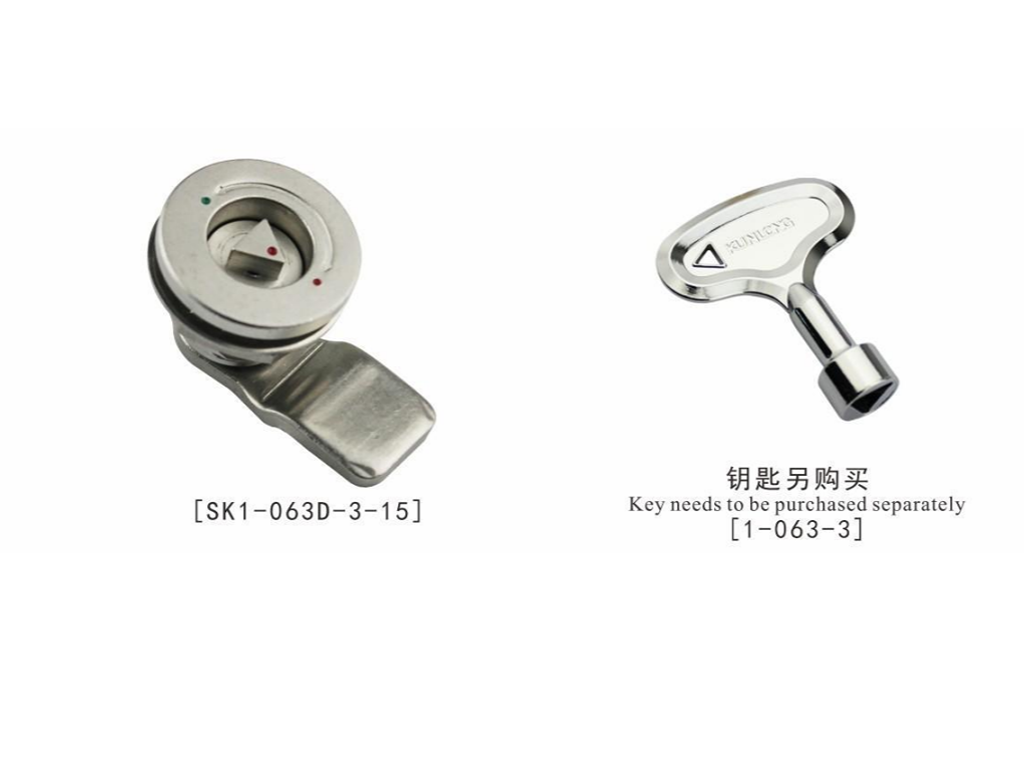
If you’re looking for a reference point to benchmark against, a manufacturer that checks all six boxes would provide ISO 9001 quality management with 15 documented inspection stages, REACH and RoHS compliance documentation on request, an MOQ as low as 100 pieces for custom work, 7-day standard-product shipping from warehouse stock, a minimum 1-year warranty with ongoing technical support from a team of experienced engineers, and a track record spanning 20 years across 3,000+ completed projects. That’s the standard to measure against — regardless of which supplier you ultimately choose. Request free samples and 3D CAD models to verify quality claims before placing a production order.
Understanding cam lock pricing isn’t about memorizing a price list — it’s about knowing which variables matter for your application and which don’t. Match the material to the environment. Map your order volume to the right price break. Understand which customizations are low-cost palette swaps and which are new-tooling investments. And never let unit price blind you to what a lock actually costs over the decade it’s installed in the field.
The difference between a $0.50 lock and an $8.00 lock isn’t $7.50. When you do the math, it’s often the opposite: the $8.00 lock is the cheaper one.