


When a commercial refrigerator goes down, every minute counts. A walk-in cooler holding $15,000 worth of inventory, a prep table keeping ingredients at safe temperatures during a dinner rush, a display case showcasing product to customers these aren’t just appliances. They’re revenue-protection machines. And when they fail, the first question every operator asks is the same: Where do I find the right part, right now?
The answer isn’t as simple as typing “commercial refrigerator parts” into Google and clicking the first link. The parts market is fragmented, quality varies dramatically, and a wrong decision can turn a $50 gasket replacement into a $1,500 compressor failure. This guide maps the landscape: from understanding what each component does to evaluating the supplier behind the part. So your next repair decision is grounded in knowledge, not urgency.
Key Components of a Commercial Refrigerator
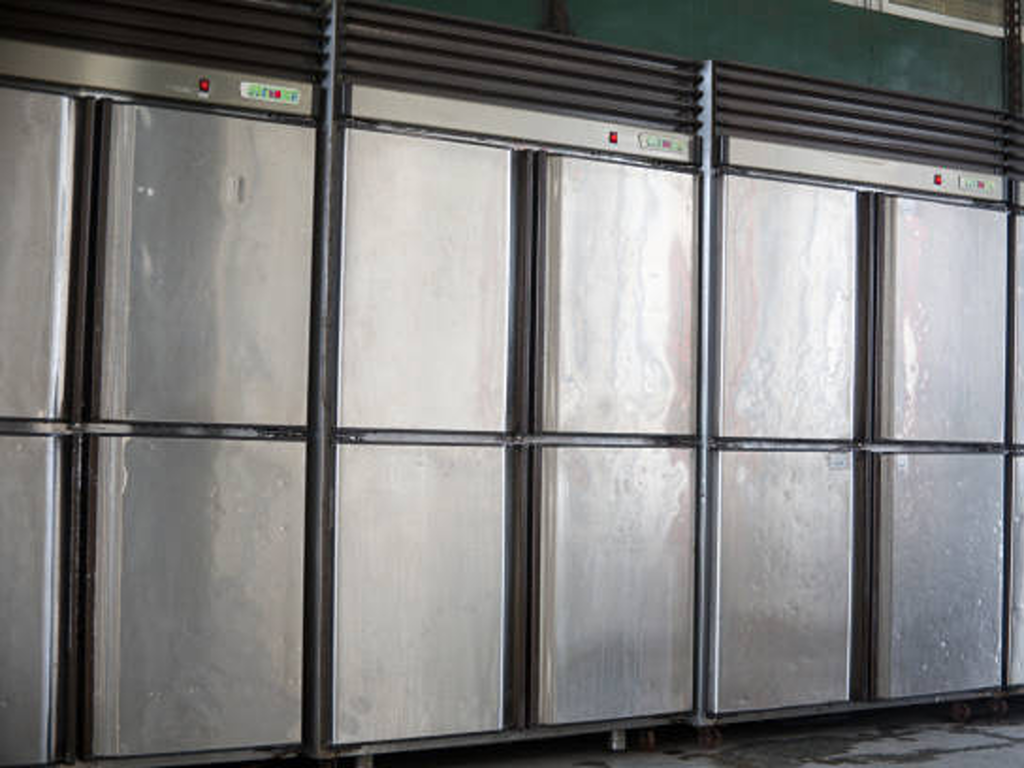
Before you can buy the right part, you need to know what you’re looking at. A commercial refrigerator is a precision heat-exchange system built from six interconnected subsystems. Understanding how these pieces fit together gives you the foundation to evaluate both the problem and the proposed solution.
The Refrigeration Cycle: Compressor, Condenser, Evaporator, and Expansion Valve
These four components form the closed loop that makes refrigeration possible. Think of it like the human circulatory system: the compressor is the heart, pumping refrigerant through the system; the condenser is the skin, shedding heat to the outside air; the expansion valve acts like capillaries, dropping pressure and temperature; and the evaporator is the lungs, absorbing heat from inside the cabinet.
| Component | Function | Failure Signal | Typical Replacement Cost |
|---|---|---|---|
| Compressor | Compresses refrigerant gas, raising pressure and temperature to start the cooling cycle | Unit runs but doesn’t cool; loud clicking or humming; tripped breaker | $300 – $1,500 (semi-hermetic) / $150 – $600 (hermetic, small commercial) |
| Condenser Coil | Rejects heat from refrigerant, converting gas to liquid | Compressor runs continuously; cabinet temperature rising despite compressor running; coil visibly clogged | $200 – $800 including labor |
| Evaporator Coil | Absorbs heat from inside the cabinet; refrigerant evaporates here | Frost buildup that doesn’t clear; uneven cabinet temperatures; compressor short-cycling | $400 – $1,200 |
| Expansion Valve (TXV) | Meters refrigerant flow into evaporator, controlling superheat | Fluctuating temperatures; frost on compressor (floodback); system not reaching setpoint | $150 – $400 |
The four components work in a continuous loop: compressor → condenser → expansion valve → evaporator → back to compressor. A failure at any point cascades. A clogged condenser, for example, forces the compressor to work against higher pressure, raising its operating temperature from a normal 65°C – 95°C (R134a systems) to well over 120°C. That range shortens compressor life dramatically.
Electrical and Control Components: Thermostats, Sensors, Boards, and Defrost Timers
If the refrigeration cycle is the muscle, the electrical system is the brain. These components don’t wear out as visibly as mechanical parts, which makes them trickier to diagnose. It also explains why control-related issues rank among the most common service calls.
- Thermostat: The temperature switch. Mechanical versions have a tolerance of ±2°F; digital controllers tighten this to ±0.5°F. When it fails, the unit either runs constantly or doesn’t run at all.
- Temperature sensor (thermistor): Feeds real-time readings to the control board. The industry-standard NTC thermistor reads 10KΩ at 25°C. A drifted sensor can cause the controller to misread cabinet temperature by 5°F or more.
- Control board: The central processor that coordinates compressors, fans, and defrost cycles. Failure often presents as erratic behavior rather than a dead unit.
- Defrost timer: Controls how often and how long the unit runs its defrost cycle. Freezers typically defrost every 6 – 8 hours; refrigerators every 12 – 24 hours. A stuck timer leads to ice-blocked evaporator coils.
- Start relay and capacitor: The electrical assist that gets the compressor motor spinning. Field data from LG commercial refrigeration systems shows OEM capacitors fail at a 9% rate, compared to 43% for generic aftermarket replacements. That’s a four-to-one gap, and these small, inexpensive parts carry disproportionate weight in system reliability.
Door Hardware, Gaskets, Shelving, and Structural Components
Door gaskets are the single most frequently replaced part on any commercial refrigerator, and the one most likely to cascade into bigger problems when neglected.
A gasket’s job is simple: create an airtight seal. But the engineering behind that seal is precise. Gaskets come in three mounting profiles: dart (barbed insert, pressed into a retainer groove), push-in (friction-fit into a channel), and screw-on (mechanically fastened). Ordering the wrong profile (even if the dimensions look right) means the gasket won’t seat properly. Always match by the equipment’s model and serial number, not by visual comparison.
The material matters, too. Commercial-grade PVC gaskets should sit at Shore A 65 75 hardness: firm enough to hold shape after 100,000+ door cycles, soft enough to compress fully against the cabinet face. The magnetic strip embedded in the gasket should read at least 45 gauss. Below that threshold, cold air leaks continuously, the compressor runs overtime, and energy costs climb 15 – 25%.
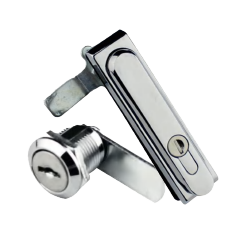
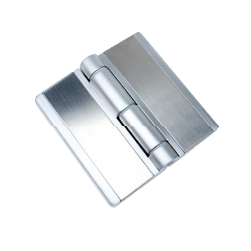
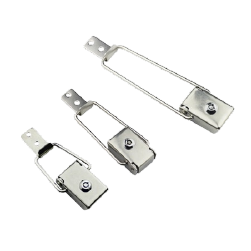
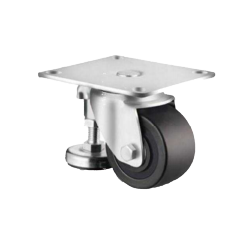
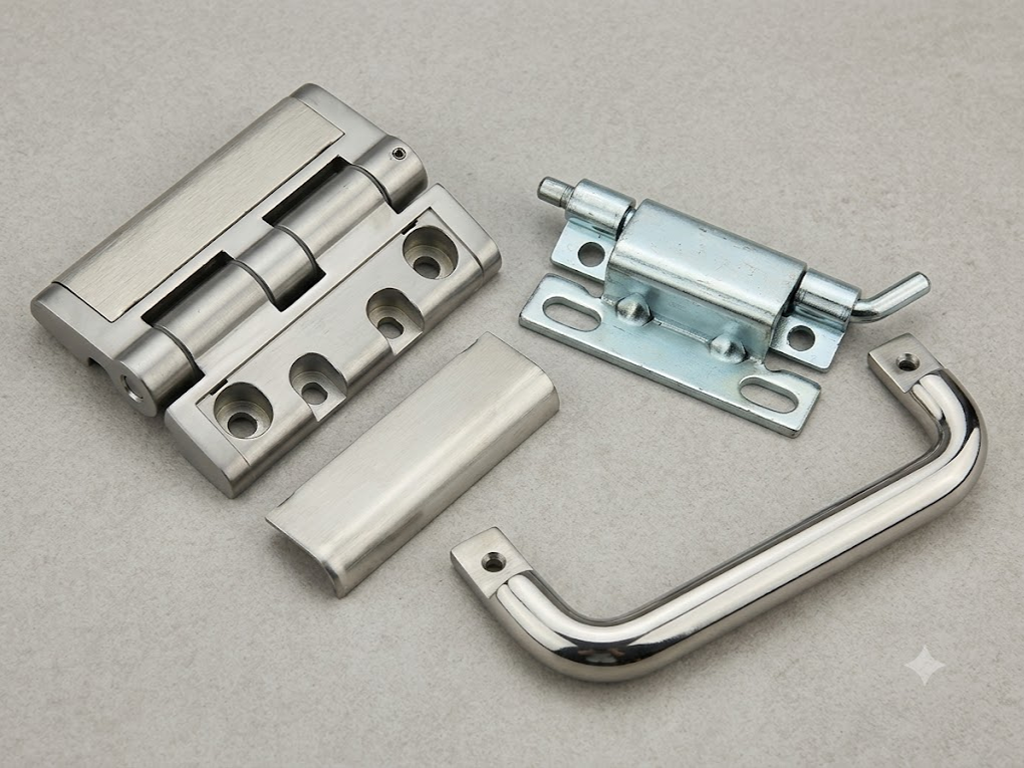
Hinges, handles, locks, shelves, and casters round out the structural category. These are the parts you interact with every day. They rarely cause catastrophic failures, but they directly shape the user experience. Sourcing them from quality-conscious manufacturers means fewer replacements over the equipment’s lifetime.
How to Identify the Correct Replacement Part
Nothing wastes more time and money than ordering the wrong part. Three steps eliminate the guesswork.
Step 1: Find the data plate. Every commercial refrigerator has a metal or laminated label, typically on the inside door frame, behind the front grille near the compressor compartment, or on the rear panel. The data plate lists the brand, model number, serial number, voltage, refrigerant type, and charge amount. Don’t confuse the model number with a part number. They’re different things entirely, and the same model can ship with different parts depending on production date.
Step 2: Locate the parts manual or exploded-view diagram. Search the manufacturer’s website for “parts manual” plus your model number. Most major brands True, Continental, Beverage-Air, Traulsen publish exploded-view diagrams that map every component to its unique part number. The part number is the only reliable identifier. Even two visually identical fan motors can have different RPM ratings or shaft dimensions.
Step 3: Cross-verify before ordering. Use the part number, not the model number, as your search term across suppliers. If the same part number appears with the same specifications from multiple sources, you’ve found the right component. Common pitfall: manufacturers sometimes revise parts mid-production run. If your serial number falls within a specific range, you may need the revised version. Check the manufacturer’s service bulletin for your model before placing the order.
OEM vs. Aftermarket Parts: Making the Right Choice
Walk into any discussion about commercial refrigerator parts and you’ll quickly hit the OEM-versus-aftermarket debate. The conventional wisdom tends toward extremes: either “always buy OEM” or “aftermarket is just as good and half the price.” The reality sits in between. But the stakes of getting it wrong are higher than most operators realize.
When OEM Parts Are Worth the Premium
OEM parts carry a brand markup of 60 – 100% over their manufacturing cost. That’s a significant premium. What you’re buying with that markup isn’t a better material composition in many cases, OEM and high-quality aftermarket parts come from the same component manufacturer. What you’re buying is zero-compatibility risk, warranty protection, and revision tracking.
The data supports this in critical applications. LG’s commercial refrigeration service data shows OEM compressor start capacitors failing at a 9% rate, versus 43% for generic aftermarket equivalents (FES Magazine, 2024). For door gaskets, field service records show OEM gaskets lasting 100,000+ door cycles, while generic replacements average 40,000 – 60,000 cycles before losing seal integrity. A leaking gasket might save $30 upfront but the resulting compressor overwork can cost $1,500 in replacement and $500 per day in lost revenue during downtime.
Three scenarios where OEM is the right call:
- Equipment under warranty: Installing non-OEM parts voids approximately 75% of extended warranty contracts. The short-term savings evaporate the moment a major component fails and the manufacturer denies coverage.
- Core refrigeration components: Compressor, control board, expansion valve, and thermostat. These parts directly control temperature and energy consumption. A mismatched TXV can reduce system efficiency by up to 25% (FES Magazine, 2024).
- NSF-regulated equipment: In food-service applications subject to health inspection, parts in food zones must meet NSF/ANSI 7 standards for materials, design, and cleanability (NSF International, 2023). Non-certified parts can trigger a health-code violation.
When Aftermarket and OCM Parts Make More Sense
Here’s a distinction most buyers miss: not all non-OEM parts are created equal. An Original Component Manufacturer (OCM) part is made by the same factory that produces the OEM-branded version same tooling, same materials, same production line. The difference is the label on the box. Danfoss controllers, Embraco compressors, and Parker-Sporlan valves, for instance, are the actual components inside many major-brand refrigerators. Buying them directly through OCM channels typically saves 30 – 50% over the OEM-branded equivalent.
How to identify an OCM source: look for manufacturer codes stamped on the original part, then search that code rather than the equipment brand. Industry directories like AHRIdirectory.org list certified component manufacturers and their part cross-references.
Three scenarios where OCM or quality aftermarket makes business sense:
- Non-critical structural parts: Shelves, casters, handles, hinges. These don’t affect refrigeration performance or food safety. If the material grade matches (304 stainless vs. coated carbon steel, for example), aftermarket is a rational choice.
- Older equipment with discontinued OEM parts: When the original manufacturer stops stocking a part, certified aftermarket becomes your only practical option. Better a quality replacement than retiring functional equipment.
- Budget-constrained maintenance with verified sourcing: If you can confirm the aftermarket supplier holds ISO 9001 certification and provides test documentation, non-OEM parts for non-critical applications become a calculated risk rather than a gamble.
Quality Standards That Actually Matter: Certifications, Materials, and Testing
Most buyers know certifications exist. Few know which ones apply to their situation and what they actually verify. What follows is a practical decoder for the certifications that matter most in commercial refrigeration parts.
| Certification | What It Covers | Relevance to Refrigeration Parts | Mandatory? |
|---|---|---|---|
| NSF/ANSI 7 | Materials, design, construction, and performance of commercial refrigerators and freezers | Parts in food-contact and splash zones must comply. Covers gaskets, shelving, interior panels, drain components. | Yes U.S. and Canada food-service equipment |
| NSF/ANSI 51 | Food equipment materials chemical composition, corrosion resistance, cleanability | Determines which materials are permitted in each equipment zone | Yes referenced by NSF/ANSI 7 |
| UL 471 | Electrical safety for commercial refrigerators and freezers | Covers control boards, wiring, compressors, fan motors, defrost heaters | Required by most U.S. electrical codes |
| ISO 9001:2015 | Quality management system process certification, not product certification | Indicates documented, audited quality controls. A baseline signal, not a guarantee. | Voluntary but absence is a red flag |
| RoHS (2011/65/EU) | Restricts six hazardous substances in electrical/electronic equipment | Relevant for parts with electronic components sold into the EU market | Mandatory for EU-bound products |
Beyond certifications, material quality separates durable parts from disposable ones. Stainless steel tells the clearest story: 304-grade stainless withstands salt-spray testing (ASTM B117) for at least 400 hours without red rust. For coastal or high-humidity environments, 316-grade pushes that to 1,000+ hours. A hinge or latch made from 430-grade which costs roughly 40% less starts showing corrosion at 100 – 200 hours in the same test.
The manufacturer’s testing regimen reveals more than any certificate on the wall. A credible supplier runs a full battery of tests on finished products: salt-spray corrosion testing, cyclic life testing (20,000+ cycles for latches and hinges), hardness testing, thermal cycling, and coating adhesion tests. When a manufacturer invests in 15 distinct quality tests per batch and maintains a 99.8% first-pass yield rate as industrial hardware manufacturer KUNLONG does across its production lines it signals a level of process control that goes beyond paper certifications. Their test regimen includes constant temperature and humidity, UV aging, load-bearing, and impact testing, with salt-spray endurance rated at 400 – 1,000 hours, well above the 300-hour industry norm for comparable hardware (KUNLONG quality control). For any buyer evaluating a parts supplier, the question isn’t whether they have certifications. It’s whether they can produce the test data behind them.
How to Evaluate a Commercial Refrigerator Parts Supplier
A good part is a one-time win. A good supplier is a competitive advantage. Yet most buyers spend hours comparing part specifications and minutes vetting the company behind them. Flip that ratio.
Five Criteria for Vetting a Parts Supplier
Use this framework to score potential suppliers. A passing grade requires meeting at least four of five benchmarks.
1. Delivery reliability. The baseline is ≥95% on-time delivery. Below 85%, eliminate the supplier. Late parts mean equipment sitting idle. Also check order confirmation response time: under two hours signals operational discipline.
2. Quality control system. Look beyond the ISO 9001 certificate on the wall. Ask for: the number of distinct QC tests performed per production batch, first-pass yield rate, and a sample test report for the specific part you’re ordering. A supplier that can’t produce test data on request is a supplier you can’t verify.
3. Technical capability. Does the supplier employ dedicated engineers, not just sales staff who can read a catalog? The ratio of engineers to total headcount is a leading indicator. Thirty-plus engineers with an average of ten years’ experience suggests genuine technical depth rather than reseller-level knowledge. Also check whether they provide 3D CAD models and detailed specification sheets. These assets indicate investment in customer support infrastructure.
4. After-sales support. A ≥1 year minimum warranty is the floor, not the ceiling. More important is response time to technical issues: twelve hours is the industry benchmark for export-grade suppliers. Ask whether support covers installation guidance, troubleshooting, and warranty claims in your time zone.
5. Production stability. Factory square footage, number of production lines, and raw-material sourcing strategy all affect a supplier’s ability to deliver consistently. A facility under ≥2,000 m² is typically a trading company with a workshop, not an integrated manufacturer. In-house control over key processes casting, stamping, CNC machining, surface treatment means fewer external dependencies and tighter quality control.
Red Flags When Selecting a Supplier
Some warning signs are universal. A supplier that sends gaskets folded or rolled for shipping rather than flat-packed with rigid board support doesn’t understand (or doesn’t care about) the product they’re selling. Creased gaskets never seal properly, and the only fix is a replacement. Prices more than 30% below market average without a credible explanation almost always reflect skipped testing, substandard materials, or both. And a supplier unwilling to provide overseas customer references or verifiable delivery history is one you should walk away from.
Where to Source: OEM Dealers, Online Platforms, and Direct from Manufacturers
Your sourcing channel should match your buying volume and urgency:
| Channel | Best For | Typical Price | Lead Time | MOQ |
|---|---|---|---|---|
| OEM authorized dealer | Single-unit emergency repairs | Highest (60 – 100% markup over factory) | 1 – 3 days (domestic stock) | 1 unit |
| B2B online platform | Mid-volume regular procurement | Mid-range (20 – 50% below OEM dealer) | 7 – 14 days express / 15 – 45 days sea freight | 100 – 500 units |
| Direct from manufacturer | High-volume, long-term supply | Lowest (factory-direct pricing) | 15 – 45 days production + 7 – 14 days shipping | 100 – 1,000+ units |
For a single emergency repair on a unit that’s losing temperature right now, pay the OEM dealer premium and get the part overnight. For stocking five walk-in coolers across three locations, build a relationship with a verified manufacturer and negotiate volume pricing. The mistake is using the emergency channel for routine procurement or expecting emergency speed from a factory-direct order.
Smart Procurement Practices for Long-Term Savings
The operators who spend the least on refrigeration maintenance aren’t the ones who find the cheapest parts. They’re the ones who rarely need emergency repairs. Here are five practices that shift you from reactive to proactive.
References
- FES Magazine. “Understanding the Difference: OEM vs. Non-OEM Parts.” 2024. https://fesmag.com/topics/perspectives/point-of-view/13986-understanding-the-difference-oem-vs-non-oem-parts
- ANSI Blog. “NSF/ANSI 7-2023: Commercial Refrigerators and Freezers.” 2023. https://blog.ansi.org/ansi/nsf-ansi-7-2023-commercial-refrigerators-freezers/
- KUNLONG Hardware. “Comprehensive Quality Control.” https://www.kunlonghardware.com/comprehensive-quality-control/
- KUNLONG Hardware. “Certificates & Patents.” https://www.kunlonghardware.com/certificates-patents/
- KUNLONG Hardware. Homepage. https://www.kunlonghardware.com/