


What Is a Curing Oven (and What Actually Makes It Cure)?
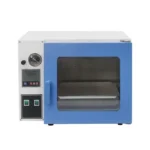
A curing oven is thermal processing equipment that applies controlled heat to start a chemical reaction, such as polymerization, cross-linking, or solvent evaporation, so a coating, adhesive, or composite reaches its final strength. Powder coating lines use them to fuse and harden the powder film, composite shops to cure resins and prepregs, and paint lines to bake solvent-based coatings into a durable finish.
Two things separate an industrial curing oven from a kitchen oven: the precision of the temperature control, and how evenly that heat moves through the chamber. That’s why industrial units are described by their uniformity specs and cure profiles, not by dial settings. And because the process depends on holding a temperature window for a set time, everything that lets heat escape or contaminates the atmosphere inside is a process problem, not just an inconvenience.
One clarification before we go further: “curing oven” is also used for food-curing cabinets, DTF (direct-to-film) curing units, and semiconductor pressure curing ovens. Those are different machines with different physics. This article is about industrial curing ovens, specifically the batch ovens with doors that process coated and bonded parts, and about the part of them that gets the least attention and causes the most trouble: the door.
Curing Oven Types: Where the Door Hardware Lives
Curing ovens split into two broad families: batch ovens and continuous ovens.
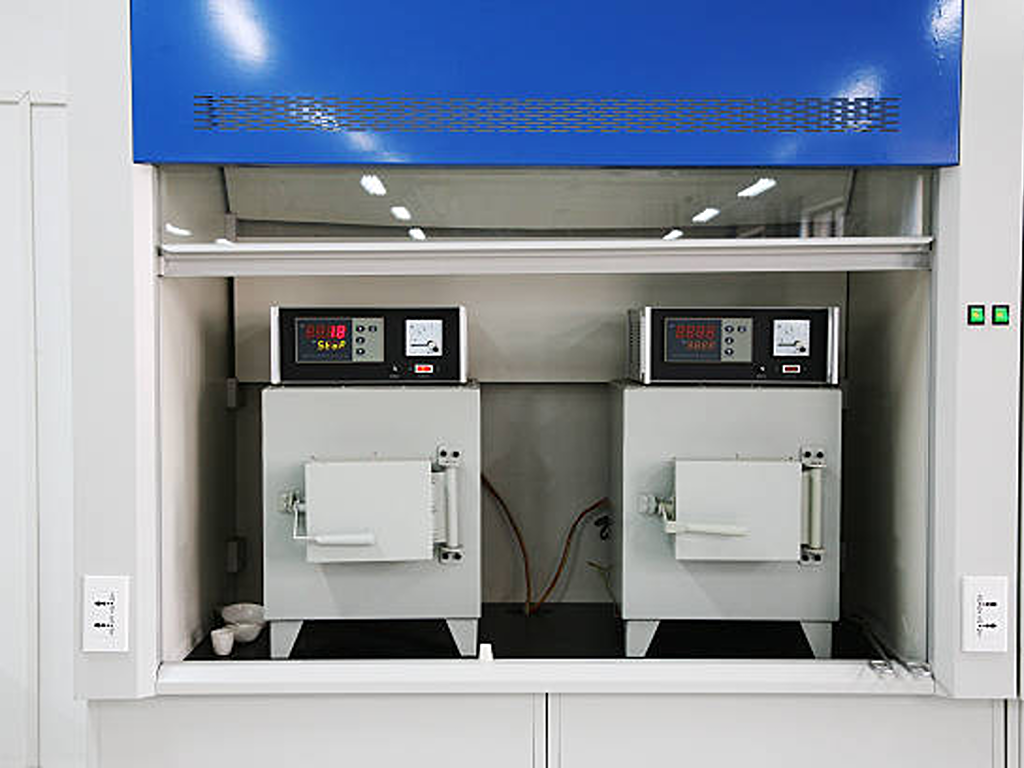
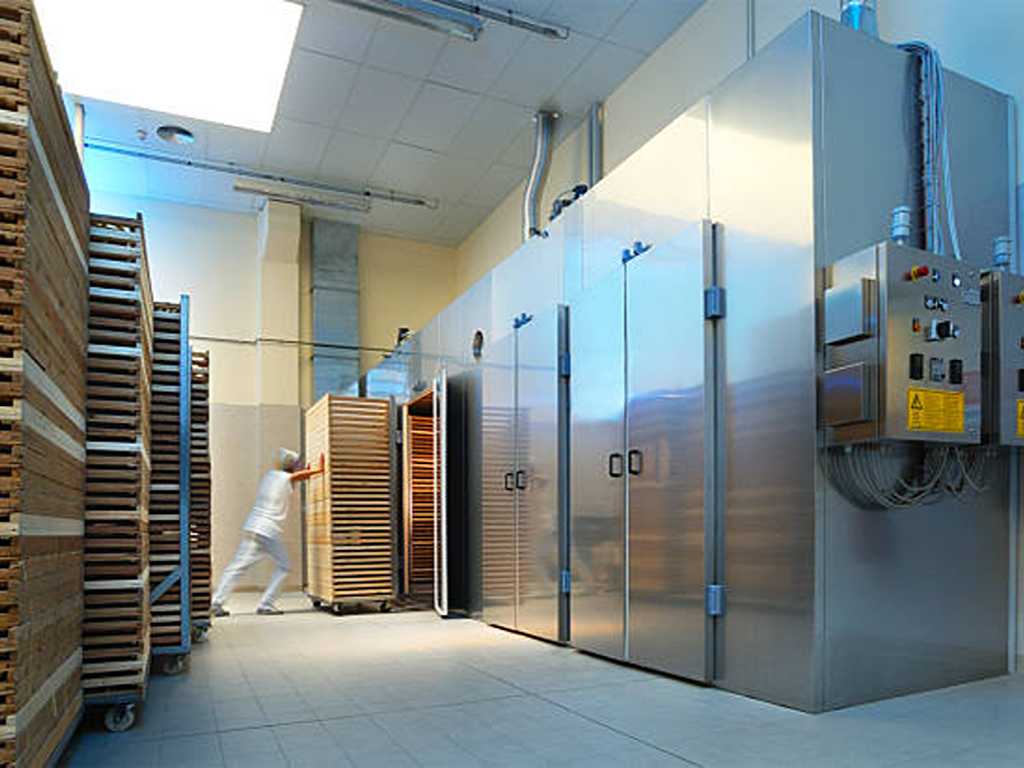
Batch ovens are boxes. Parts go in, the door closes, the chamber comes up to temperature, and the batch cures on a fixed schedule. Walk-in batch ovens and cabinet ovens are the most common forms. Continuous ovens move parts through on a conveyor, so instead of a sealed door they use entry and exit openings with curtains or vestibules.
The difference matters for this article because the door hardware lives almost entirely in the batch family. A batch oven’s door is its sealing interface: the only movable boundary between the conditioned chamber and the shop floor. On a conveyor oven, heat retention at the openings is handled by insulation curtains, not by hardware; the engineering problem is completely different. So when we talk about door latches, hinges, and seals from here on, we’re talking about batch and walk-in ovens, where a heavy door (often over 100 kg with its frame and insulation) has to seal reliably cycle after cycle at process temperatures.
The Door Is a Sealed System: Pressure Builds Inside
Why an Oven Door Must Actually Seal
An oven door has one job: keep the chamber at its cure profile. A failing seal means heat escapes, the chamber can’t hold its temperature window, and parts cure unevenly, showing up as soft spots in a powder coat finish, under-cured adhesive lines, or warped composites. Worse than uneven curing is what leaks out: solvent vapors from paint and coating lines are flammable and toxic, and a door that breathes puts those vapors into the work area.
This is not a theoretical concern. In a powder coating forum, a shop owner trying to patch a leaking oven door with high-temperature RTV sealant was told by other operators to stop: the repeated thermal cycling and curing fumes break the silicone down, and the patch fails mid-season. Door seal failure is common enough that parts distributors run entire replacement categories for oven door latches. The door is the first thing to check when cure quality drifts.
Seal failure isn’t cosmetic. Heat escapes, cure quality drifts, and solvent vapors leak into the work area — check the door first when quality moves.
Sealed Systems Create Pressure
Here’s the part that catches most people off guard: the tighter you seal a curing oven, the more pressure you create inside it. A sealed chamber filled with hot air and process gases is a pressure vessel in miniature.
Pressure builds from several sources at once. Solvent vapors and moisture boiling off the parts add gas volume. The chamber atmosphere itself expands as temperature climbs; a 200°C rise over ambient expands a fixed volume of air by roughly two-thirds. And the oven’s own ventilation only removes some of it; the rest stays contained. Then, at the end of the cycle, the cooling phase reverses the whole problem: the chamber contracts and pulls a vacuum, which can warp door panels inward if the hardware doesn’t let the door relieve it.
That’s why industrial ovens built to fire and explosion safety standards like NFPA 86 are designed with explosion relief and pressure management as core requirements, and why the door hardware on a modern curing oven is a safety component, not a decorative handle. The tighter the seal, the higher the pressure, and the more precisely the release hardware has to work. That sentence is the whole argument for the rest of this article.
The tighter the seal, the higher the pressure, and the more precisely the release hardware has to work.
Three Signs Your Door Hardware Is Out of Balance
If you own or maintain a batch oven, three symptoms tell you the seal-pressure balance has drifted:
- The door bulges or the hinges sink. Visible deformation when the chamber is hot means pressure is loading the door structure.
- The door “puffs” when you crack it open. That’s compressed chamber air venting, and it means pressure is building beyond the latch’s designed release point.
- The seal strip is hard, cracked, or flattened. A hardened gasket can’t compress, so the latch has to pull harder to get the same seal, which wears both parts faster.
Each of these is checkable in minutes and tells you exactly which part of the system is failing, before it becomes a scrap batch or a safety incident.
Choosing Pressure Release Latches: Mechanisms and Release Force
Three Latch Mechanisms, Three Trigger Logics
Search results for “pressure release latches for curing ovens” return mostly product catalogs, and the names don’t agree. Once you strip the marketing apart, there are three distinct mechanisms, and they differ in when they release:
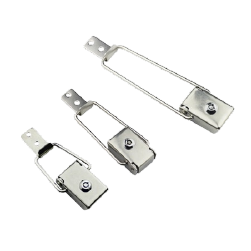
- Push-to-close venting latches seal through the closing force of the door itself and pop open automatically if internal pressure overcomes that force. They’re the simplest line of defense: no adjustment, no calibration; the seal strength is the release point.
- Pressure release latches hold the door shut against a preset release force and open automatically when the chamber pressure exceeds it. Specs here are explicit: release forces from 3.9 to 285 lbs per latch, with multiple latches linked to handle large doors needing combined release forces over 3,000 lbs.
- Explosion venting latches are the disaster backup. They release at designated pressures to protect the enclosure in an explosive event, not to manage day-to-day pressure. They are the last line, not the first.
The practical difference: push-to-close and pressure release latches manage normal process pressure, while explosion venting hardware handles the catastrophic case. A complete oven door package usually needs both jobs covered: a day-to-day release behavior and an emergency venting behavior.
Setting Release Force: It’s a Calculation, Not a Guess
Release force isn’t a catalog preference; it’s a function of three variables: door weight × sealing pressure × safety margin.
A door that weighs over 100 kg needs enough holding force to stay sealed against the chamber’s internal pressure. Too little, and the latch pops during normal operation, dumping the cure cycle. Too much, and the door won’t relieve pressure when it should, loading the hinges and frame instead. That’s why the 3.9–285 lbs range exists: the correct value for your oven sits somewhere in that band, and it’s determined by your door’s weight and your chamber’s pressure behavior, not by what’s in stock.
| Mechanism | Best for | Where it fails |
|---|---|---|
| Push-to-close venting latch | Small ovens, low internal pressure, simple doors | Short sealing travel can’t hold heavy doors or high chamber pressure |
| Pressure release latch (adjustable) | Mid-to-large batch ovens, solvent-based processes | Release force drifts with wear and needs periodic calibration |
| Explosion venting latch | Any oven running flammable solvents or powders | Catastrophe backup only — it doesn’t manage daily pressure |
For large doors, multiple latches are ganged so the combined release force reaches what a single latch can’t carry, a design decision that has to account for even load distribution, or the door binds on one edge.
The Heavy-Door Problem: When One Latch Isn’t Enough
The tension at the heart of oven door hardware: a 100 kg-plus door has to be pulled shut hard enough to seal, but allowed to open when pressure demands it. Those two requirements pull in opposite directions, and a catalog latch can only satisfy one of them by default. This is the specific reason the hardware on industrial ovens ends up engineered per oven: release force, latch count, and hinge capacity are inputs to the door design, not afterthoughts. If your supplier hands you a latch without asking about door weight and chamber pressure, you’re carrying the engineering risk.
Release force is set by three inputs
Too low, and the latch pops mid-cycle. Too high, and the door won’t vent when it should.
Materials, Finishes, and Certifications for Oven Door Hardware
Oven door hardware lives in one of the most punishing environments in a plant: sustained high temperature, solvent vapor exposure, and, for powder coating lines, airborne abrasive dust. Material selection is a three-tier decision: workhorse, corrosion, or spark-proof.
| Tier | Examples | Right environment | Where it falls short |
|---|---|---|---|
| Workhorse | Cast iron, cast steel + plain coating | Controlled, dry plants | Can’t reach 400–1,000 h salt spray targets |
| Corrosion | Stainless SUS304, SUS316 | Humidity, wash-down, coastal conditions | Costs more than plain steel where it isn’t needed |
| Spark-proof | Brass, aluminum | Electrostatic discharge, shock risk | Over-spec for processes without flammable dust |
Finish matters as much as base material: plating, anodizing, or powder coating changes both corrosion performance and how the hardware holds up to solvent wiping. Ask for the finish spec alongside the material grade.
Certification follows the oven, not the hardware. A curing oven exported with CE marking carries its safety hardware into that compliance scope, and FM-approved release latches are rated specifically for pressure-release duty in finishing equipment.
If your oven carries a safety standard, the door release hardware should carry a rating that matches.
…and the supplier should be able to show you the documentation.
One boundary worth naming: spark-proof materials exist for a reason, but not every oven needs them. If your process has no flammable dust or electrostatic risk, the extra cost buys you nothing; the stainless tier is the honest default for most batch ovens.
How Oven Door Latches Fail — and How to Test Before You Trust
Door hardware fails in four predictable ways, all of them accelerated by the oven environment:
- Wear and release-force drift. The latch mechanism loosens, and the release point moves off spec. This is the most common failure, and it’s why replacement latches for industrial ovens are a standing parts category, with single units running from roughly $150 to over $400 at parts distributors.
- Spring fatigue. The latch spring loses tension under repeated thermal cycling, and the door seals progressively weaker.
- Seal aging. The gasket hardens, cracks, or flattens, forcing the latch to pull harder than designed.
- Corrosion pitting. On steel hardware in humid or wash-down environments, pitting attacks the mechanism and eventually seizes it.
Because these failures are slow and measurable, they’re testable before you commit to a supplier. Walk in with four requests:
Cycle data: rated lifespan in cycles (20,000+ is the working bar) and warranty terms (typically 1 year or 24,000 cycles).
Salt spray reports: actual hours tested, not “corrosion resistant” language.
Release-force calibration: how the release point is set and whether it can be recalibrated in service.
Full test coverage: which of the standard checks (load, durability, temperature cycling, salt spray, torque, impact) are run on finished product.
A supplier who can produce these four documents is demonstrating data, not adjectives.
The Business Case: Door Hardware Is a Safety Component, Not a Commodity
Here’s the cost structure most oven builders discover the hard way. A catalog latch bought on price does one job: it holds the door closed. The engineering job, holding a 100 kg door sealed against chamber pressure, releasing it at a preset force, surviving solvent vapor and salt spray for years, and carrying a safety rating your oven’s certification can rely on, is a different product entirely. The market already prices that difference: replacement latches for industrial ovens sell for hundreds of dollars, and the recurring cost of premature wear is baked into every season of production.
Replacement loop
Replacement latch $150–$400+ per unit, recurring every wear cycle.
Engineered once
Door hardware spec’ed to door weight, release force and coating environment, engineered into the oven build.
That’s why treating door hardware as a spec input, not a catalog line, changes the economics. When release force, door weight, materials, and certification are given to a supplier as design requirements, the hardware stops being the part that fails first.
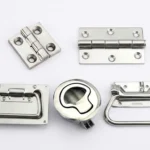
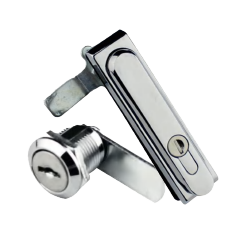
We build the sealing and release hardware for exactly this trade-off. Kunlong’s compression latches, cam locks, and container latches are engineered for oven doors; our engineers take release force, door weight, and coating environment as design inputs, with five-dimension customization (material, dimension, function, intelligent control, appearance) backed by a 30-engineer team. Every finished piece goes through 15-point quality checks, and many suppliers run half that list. The oven segment’s expectations of 400–1,000 hours of salt spray resistance and 20,000+ cycle lifespans are built into the test plan, not left to chance. Custom-engineering your door hardware starts with a spec conversation, and our 15-point quality checks are documented on every order.
If you’re spec’ing door hardware for a curing oven, send us your door weight, release-force requirement, and coating environment: our team will walk the trade-off with you before you commit to a catalog part.
Door Hardware Spec’d, Not Picked
Send us the release-force requirement, door weight, and coating environment of your curing oven. We’ll return a hardware package that holds the seal and lets go when it should.
Discuss Your Oven Door Spec