


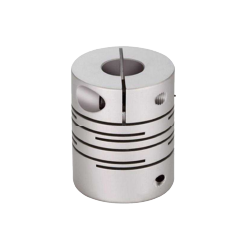
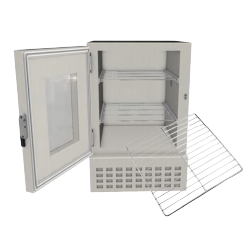
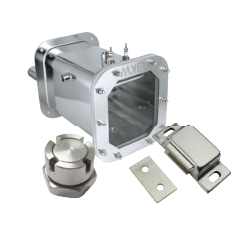
A laboratory oven looks like a simple metal box — until you look at what holds it together and keeps it accurate. Shelves, gaskets, hinges, handles, latches, thermocouples, feet, casters: every one of these lab oven accessories has a job, a failure mode, and a set of numbers you should be able to state before you buy. This guide maps the full parts picture, then shows you what to check, what to spec, and what to demand from a supplier.
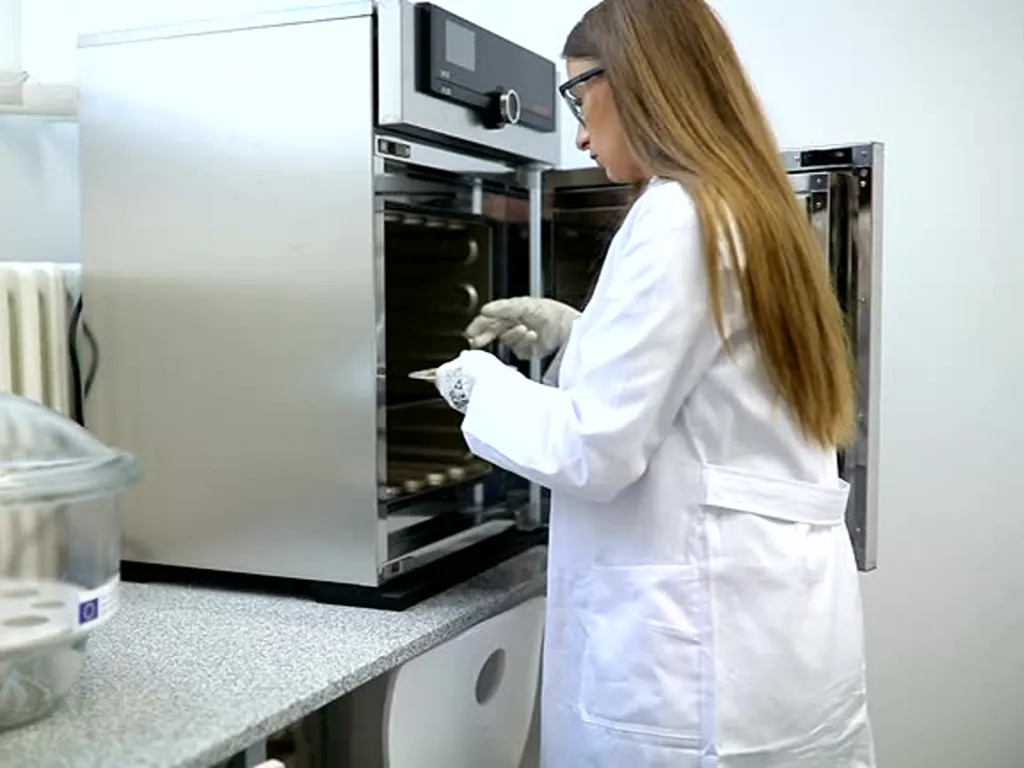
What Parts Are on a Lab Oven? The Three-Group Accessories Map
First, a quick disambiguation, because “oven accessories” is one of the most polluted search terms in hardware: this article is about laboratory ovens — the drying, curing, sterilizing, and annealing chambers used in chemistry, biology, pharma, electronics, and materials labs — not kitchen ovens. Everything below applies to lab ovens from benchtop gravity-convection units to industrial forced-air chambers. (Vacuum ovens share the same accessory families, with the addition of vacuum-rated seals and ports.)
Once you stop thinking in brand names and start thinking in function, every lab oven part falls into three groups:
Consumables & Seals
Gaskets, sealing strips, shelf clips — fail first, cheapest to replace, high-frequency items
Electrical & Temperature Control
Heating elements, thermocouples, controllers, fans, fuses — fail with clear symptoms, need diagnosis and safe handling
Structural Hardware
Hinges, handles, latches, feet, casters, shelves — longest-lived, most expensive to replace, decided once at assembly
The three groups behave completely differently in practice. Consumables fail first and cost little; electrical parts fail with obvious symptoms and need a diagnosis before you buy; structural hardware outlives everything but is the only group that gets “locked in” the day the oven is assembled. A lab oven that reaches 300 °C is standard in chemistry and pharma labs; physics, electronics, and materials processing commonly run above it (iFixit, Laboratory Oven device page) — and the parts on the door and chamber must keep working across that whole envelope.
Consumables & Seals: Gaskets, Sealing Strips, and Shelf Clips That Fail First
The door gasket is the most frequently replaced part on any lab oven, and for a simple reason: it is a wear item doing a sealing job, and when it fails, the failure is invisible until your temperature uniformity drifts and a batch of samples comes out wrong. A leaking seal means the oven works harder, cycles longer, and produces results that no longer match your calibration record.
Replacement gaskets are not interchangeable. They are made for different temperature ranges, and the price difference reflects it; this is the selection logic no catalog explains. The three common constructions, with published pricing from an industrial oven manufacturer’s parts catalog (Grieve Corporation, Replacement Parts):
| Gasket construction | Typical use | Catalog price (per foot) |
|---|---|---|
| Silicone rubber “P” gasket | General-purpose drying ovens up to ~200 °C | $31.93 |
| Fiberglass tadpole gasket | Medium/high-temperature ovens | $49.39 |
| Vermiculite fiberglass tadpole | Inner seal for high-temperature ovens (1,250 °F rated) | $74.20 |
The 2.3× spread between the cheapest and most expensive gasket is not markup; it is temperature rating. Before you order, confirm the oven’s maximum operating temperature and match the gasket class to it; a silicone gasket run above its rating hardens, cracks, and leaks within months.
Two more consumables worth knowing: shelf clips (the small retainers that hold shelves in place) and sealing strips for the door frame. Both are cheap, high-frequency replacement items, and both need a spec check before ordering — clip size and slot pitch vary between brands and generations of the same brand. For vacuum ovens, the door seal is a different animal: vacuum-rated gaskets and ports, not standard door seals.
Electrical & Temperature-Control Parts: Diagnose the Failure Before You Buy a Replacement
Heating elements, thermocouples, temperature controllers, fans, and fuses are the parts lab technicians most often misdiagnose — and misdiagnosis is expensive, because these are the most expensive components on the oven. The classic failure story is the controller that “worked great for years, then suddenly started throwing an error” (a real report from a lab maintenance group). The classic mistake: buying a new controller when the thermocouple was dead all along.
Work the diagnosis in this order before spending anything:
Each step is a ten-minute check with a multimeter, and it is the difference between a $40 part and a $400 part. Electrical work has a hard safety boundary: power down and lock out the oven before touching any component, and never substitute fuse ratings; an oversize fuse turns a minor fault into a fire hazard.
When you do need parts, understand the compatibility landscape. Original equipment from the oven brand is the safest fit, but brand support has a lifespan: when a manufacturer stops supporting a model, the aftermarket is the only source; the ecosystem of specialists serving Thermo Scientific, Blue M, Gruenberg, Tenney, and Lunaire ovens exists precisely for this (Thermal Product Solutions, Replacement Parts).
When to Match the Original, When to Go Aftermarket
Two more things worth knowing. First, the repair-versus-replace threshold: when a quoted repair approaches 30–50% of a replacement oven’s price — or the unit is past its rated life — replacing the oven beats replacing parts. Second, the direction the category is moving: connectivity. Dataloggers, RS-485 links, and remote monitoring are now standard accessories on new lab ovens, with datalogger options priced from $544 to over $6,700 and RS-485 converter cables around $200 (Cascade TEK, Forced Air Lab Oven Accessories). If you are buying or specifying an oven today, “connected-ready” is the specification that will save you the retrofit.
Structural Hardware: Hinges, Handles, Latches, Feet, and Casters — What to Spec
This is the group that matters most, and the group catalogs explain least. Consumables and electrical parts can be replaced on a schedule; structural hardware is decided once, at assembly, and lives with the oven for its entire service life. A sagging door cannot be fixed with a firmware update. A corroded hinge cannot be patched. That asymmetry is the single most important fact about lab oven accessories. The parameters below are what you check before you buy and what you put in a spec sheet if you build ovens.
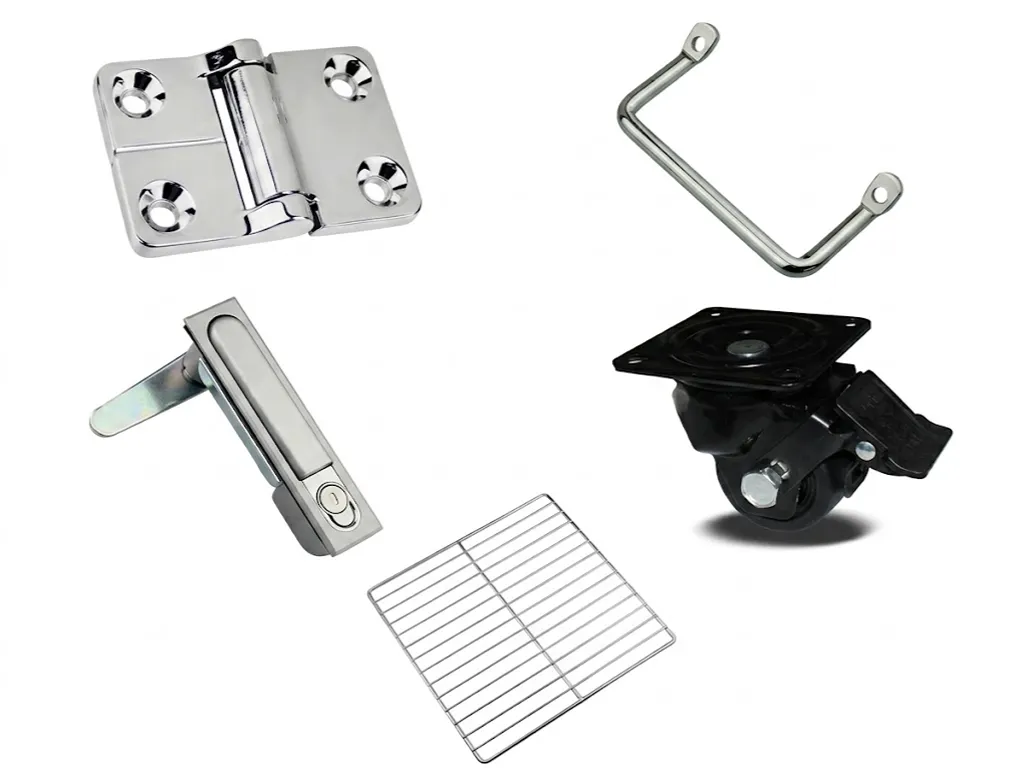
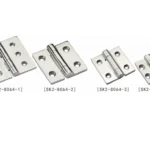
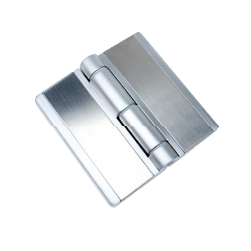
Door hinges. Start with the door load. A full-size oven door with insulation and glazing routinely exceeds 100 kg, and hinges are the components holding that weight through tens of thousands of open-close cycles. Specify hinges by load capacity first, then by environment: hardware for test chambers and industrial ovens is expected to survive from −70 °C to 260 °C, salt-spray resistance of 400–1,000 hours (many general hardware lines pass only ~300 hours), and 20,000+ operating cycles. Material follows environment: SUS304/SUS316 stainless for humid or aggressive labs, plated steel for dry general use. A door hinge for a laboratory oven sells at roughly $58 (published top/bottom hinge pricing from an industrial oven parts catalog, Grieve Corporation). It is the cheapest component on the door, and the one that decides whether the door seals in year five.
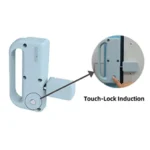
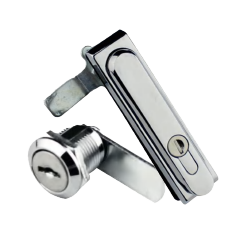
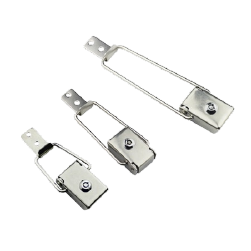
Handles and latches. The handle and latch set determines the door’s sealing force. A compression handle or latch pulls the door tight against the gasket; when the closing mechanism loses its hold, you get the same leak-and-drift failure as a worn gasket — which is why sealing hardware and gaskets fail as a pair. Handles also fail in a specific, visible way: plastic handles age, embrittle, and crack in the heat, which is the single most common handle failure mode on older ovens. For pharmaceutical and biomedical labs, specify antimicrobial handles and alcohol-resistant surfaces, because the wipe-down routine is daily. Catalog evidence: oven door handles list at about $36, and door latches about $30 (Grieve Corporation).
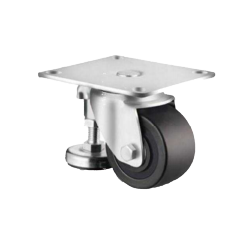
Feet, casters, and shelves. The rest of the kit is position and storage. Leveling feet keep a benchtop oven stable and true (sets list around $31); casters with brakes, on caster platforms, turn a floor oven into a movable asset (platforms around $248). Shelves carry the load: standard stainless shelves are rated in load tiers — 50 lb and 75 lb reinforced, priced from $95 to $312 depending on size and rating (Cascade TEK) — and the rating, not the size, is what you check when your lab runs heavy fixtures.
The boundary matrix below is the decision tool: for each structural part, the parameter you demand and the condition under which it fails.
| Part | Spec parameter | Failure boundary |
|---|---|---|
| Door hinge | Load rating (100 kg+ doors), −70 to 260 °C, 20,000+ cycles | Sagging and fatigue under over-load; corrosion below ~400 h salt-spray rating |
| Door handle | Heat-rated material, antimicrobial/alcohol-resistant for pharma | Plastic embrittlement and cracking on old ovens |
| Compression latch / handle | Sealing force against gasket | Lost sealing force = leak and temperature drift (fails as a pair with the gasket) |
| Leveling feet / casters | Load rating, brake holding, vibration damping | Buckling or creep under over-load; unstable bench ovens |
| Shelves | Load rating (50 lb / 75 lb reinforced) | Bowing and collapse beyond rated load |
An oven door often weighs more than 100 kg.
The hinge you spec on day one is the hinge the lab lives with for the machine’s entire life.
How to Vet a Lab Oven Hardware Supplier: A Seven-Point Checklist
Once you know the parameters, the remaining question is whether a supplier can actually meet them. The gap between “claims” and “can show you” is where most procurement mistakes live. Use this checklist as a questionnaire; every item is a question you can ask in an email:
- Ask for test reports, not adjectives: salt-spray hours (400 h minimum for oven hardware; 1,000 h available), temperature range, cycle life
- Warranty language: does it say “20,000+ cycles” or just “1 year”?
- Material certificates: SUS304/316 stainless with source documentation
- Customization depth: material, size, surface finish, logo — and how many options (30+ colors, 10+ finishes)
- MOQ: can they support prototype and small-batch volumes?
- Lead time: standard items in 7 days; custom typically 30–45 days depending on scope
- Design integration: can they hand you 3D CAD models to lock the specification at design time?
Every point on this list is a verifiable action — a report to read, a number to confirm, a file to receive. A supplier who answers all seven with documents is a supplier whose parts will do what the spec sheet says.
That’s the standard we build to at KUNLONG: our hinges, oven handles, compression latches, and draw latches are designed for extreme-temperature environments and 24,000 operating cycles, with SUS304/316 stainless and plated options, salt-spray-tested surfaces, and a 99.8% defect-free rate across 15 finished-product inspection items — including high/low-temperature, salt-spray, UV-aging, and lifetime tests (KUNLONG, Handles). What we do not stock as standard, we customize: material, dimensions, surface treatment, and logo, at a 100-piece MOQ, with 30+ color and 10+ finish options (bespoke services). And because we know your engineers decide the hinge before the oven exists, our 6,000+ model 3D CAD library lets you drop the exact part into your assembly and lock the specification in your BOM — the hardware we supply for test chambers and industrial ovens is specified this way every day.
Why Oven OEMs Should Spec Structural Hardware, Not Just Buy It
Step back and look at what this guide has established, because it changes the procurement math for oven manufacturers.
First: consumables and electrical parts have a mature replacement ecosystem. Gaskets, elements, sensors, and controllers can be bought from the original brand or from established aftermarket specialists whenever they fail — you pay a premium, but the market always has a part. Second: structural hardware has no such safety net. It is assembled into the oven once; a hinge chosen by load rating and environment lives the machine’s life, while a hinge chosen by price lives on as a sagging door, a leaking seal, and a warranty call. Third: the price difference between the two choices is trivial. The hinge and handle set on an oven door lists for well under $100 even from a Western catalog; the difference between a correct spec and a cheap spec is measured in dollars per oven.
The conclusion writes itself: buying structural hardware as generic catalog items is betting the reliability of the whole machine on someone’s catalog page. Specifying it parametrically (load, temperature range, salt-spray hours, cycle life, and the material certificates to prove them) costs a rounding error per unit and removes the one failure class that cannot be fixed in the field. Oven OEMs who treat hinges, handles, latches, feet, and casters as design decisions, not purchase orders, get the reliability their customers actually measure.
If you are building or maintaining laboratory ovens and want the structural hardware specified, tested, and delivered on those numbers, contact our engineering team for a specification review — we respond to overseas inquiries within 12 hours (contact).
Put Verified Numbers in Your Oven Hardware Spec
Hinges, handles, latches, and feet rated from −70 to 260 °C with 24,000-cycle life — built for oven and chamber OEMs, MOQ 100, standard items out in a week.
Request oven-hardware specificationsReferences
- [Grieve Corporation]. “Industrial Oven Replacement Parts — door gaskets, hinges, handles, latches, oven feet, heating elements.” 2026. https://www.grievecorp.com/industrial-oven-replacement-parts/
- [Cascade TEK by Sheldon Manufacturing]. “Forced Air Lab Oven Accessories — dataloggers, stands, shelves, calibration, connectivity.” 2026. https://www.cascadetek.com/forced-air-lab-oven-accessories/
- [Thermal Product Solutions]. “Industrial Oven, Furnace, & Chamber Replacement Parts (Blue M, Gruenberg, Tenney, Lunaire).” 2026. https://www.thermalproductsolutions.com/support/replacement-parts
- [iFixit]. “Laboratory Oven — Repair and service information, temperature classes.” 2026. https://www.ifixit.com/Device/Laboratory_Oven
- [KUNLONG]. “Handles — industrial handle series, 24,000-cycle service life, 15 inspection items.” 2026. https://www.kunlonghardware.com/handles/
- [KUNLONG]. “Hinges — industrial hinge series, extreme-temperature design.” 2026. https://www.kunlonghardware.com/hinges/
- [KUNLONG]. “Test Chambers & Industrial Ovens — hardware solutions for extreme environments.” 2026. https://www.kunlonghardware.com/test-chambers-industrial-ovens/
- [KUNLONG]. “Bespoke Services — customization dimensions, MOQ, colors, finishes.” 2026. https://www.kunlonghardware.com/bespoke-services/
- [KUNLONG]. “3D Models Library — 6,000+ CAD models.” 2026. https://www.kunlonghardware.com/3d-models-library/
- [KUNLONG]. “Contact Us.” 2026. https://www.kunlonghardware.com/contact-us/
- [KUNLONG]. “Home.” 2026. https://www.kunlonghardware.com/