


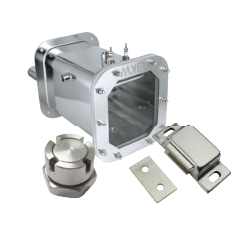
Somewhere right now, a walk-in cooler door is drifting open on its own. A few streets away, someone is lifting a sagging refrigerator door back into line. Both doors turn on the same small part, and both owners end up asking the same question: which hinge is this, and what should replace it?
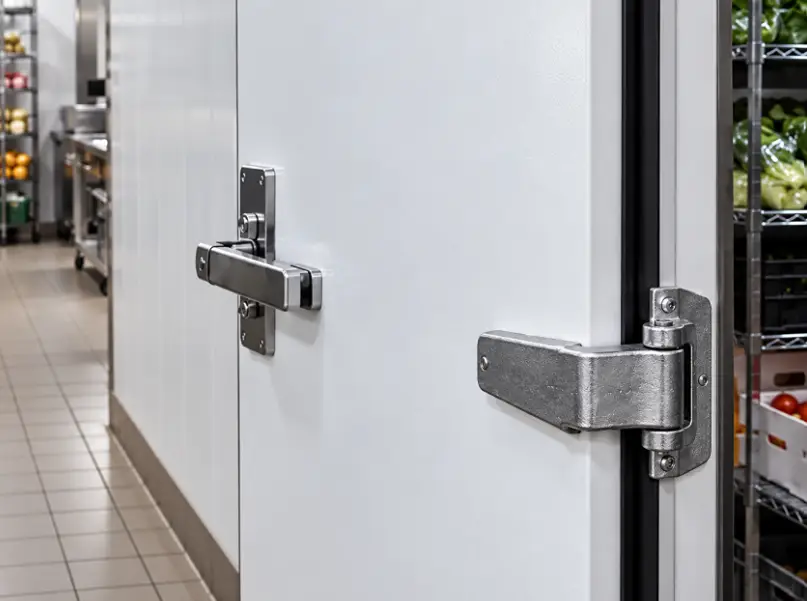
Refrigerator Door Hinge Types at a Glance: The Three-Question Frame
Every hinge on a refrigerated door, from a household fridge to a walk-in freezer, can be pinned down with three questions. Where does it mount, and what shape does it take? What does it do as the door moves? And what was it made to withstand?
The first question sorts hinges by structure: exposed or concealed, offset or straight, lift-off or fixed. The second sorts them by mechanism: a hinge that swings freely, one that pulls the door shut, one that lifts the door clear of its gasket. The third sorts them by material and duty rating, which is where a kitchen hinge and a cold storage hinge part ways.
The three-question frame
Structure — mount, silhouette, service access
Mechanism — free swing, self-close, cam-lift, torque hold
Material and duty — alloy grade, load, cold, corrosion
That last split matters more than most lists admit. A consumer guide and a commercial parts catalog will both talk about “refrigerator door hinges.” Yet the plastic cam hinge inside a household cabinet, the chrome hinge on a restaurant reach-in, and the cast hinge on a 100 kg cold storage door are not interchangeable parts. They share a name and little else.
Before going deeper, place yourself on that map:
Which hinge are you holding?
Is the hinge visible when the door is closed, or hidden inside the cabinet and the cabinet liner?
Does the door swing freely, pull itself shut, or lift as it opens?
Is the door a home kitchen door, a commercial reach-in, or a walk-in cold room door over 100 kg?
Is the mounting surface a plastic liner, a painted steel cabinet, or a stainless frame?
The Type Panorama: Identify Every Refrigerator Door Hinge by Structure
The lists that rank for this topic name anywhere from three to six “types,” and they disagree with each other because they mix up different sorting axes. Structure, mechanism, and material are separate questions. This section answers the structural one, so you can identify any hinge on sight.
Exposed Hinges: The Ones You Can See
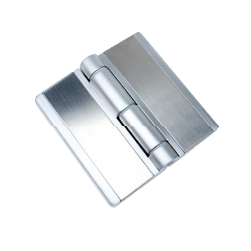
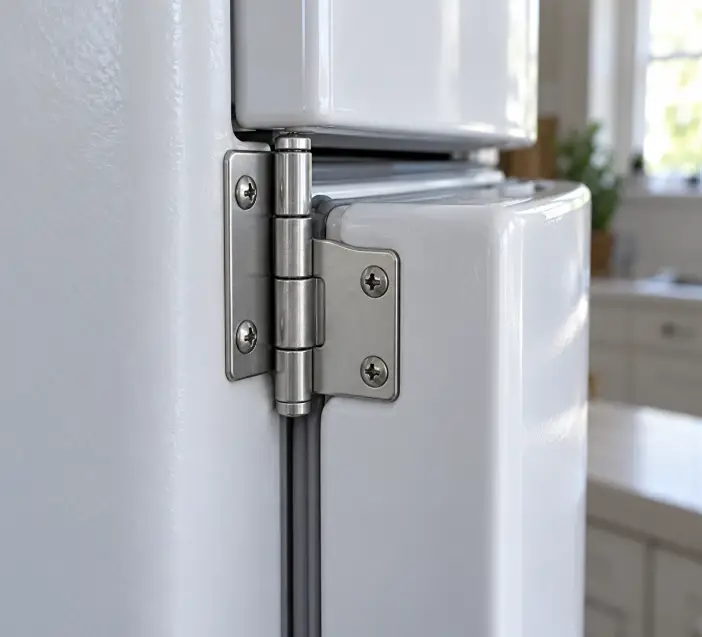
Exposed hinges mount on the outside of the door and cabinet, usually at the top and bottom edges, and they carry most refrigerator doors in homes and commercial kitchens alike. On a top-freezer fridge you will find one hinge set at the bottom carrying the fresh food door and another at the top for the freezer. French door models add a center mullion hinge between the two door leaves. Identification is visual: pin, two leaves, mounting screws into the cabinet frame. When a technician orders parts, position and hand of the hinge (left or right) come first, because the same model is often mirrored.
Concealed and Flush Hinges: Hidden Inside the Cabinet
Concealed hinges disappear inside the door and liner, which gives a flush exterior and keeps the hinge away from spilled food and cleaning water. Built-in refrigerators take this further with two distinct systems. In door-on-door designs, the appliance door carries the furniture panel directly. In sliding-door systems, the cabinet door slides on rails fixed to the appliance door. Anyone fitting a fridge into cabinetry needs to know which system the model uses, because the two are not interchangeable. Door-on-door designs tolerate thicker custom panels; sliding systems need consistent panel thickness and precise alignment.
Offset Hinges: Geometry That Clears the Seal
An offset hinge bends the mounting plane outward, so the door stands proud of the cabinet face by a fixed distance. The offset matters on commercial and walk-in doors because the raised position lets the door swing clear of the frame and compress the gasket fully instead of scraping it. Walk-in door hardware is commonly specified by this measurement, with 1-3/8 inch offsets being a widespread standard in that market. If a replacement hinge has the wrong offset, the door either rides on its gasket or stands too far off to seal.
Lift-Off and Detachable Hinges: Service Without Tools
A lift-off hinge separates into two halves, so the door can be lifted clear for cleaning, regasketing, or repair without unscrewing anything. Detachable designs work the same way with a release action. Fixed hinges, by contrast, keep the door captive. In food service and cold storage, lift-off construction earns its keep during deep cleaning cycles, when the door has to come off weekly and a fixed hinge would turn a ten-minute job into an hour with a drill.
Strap and Continuous Hinges: Spread the Load
Strap hinges run a long leaf across the door face, and continuous (piano) hinges run the full door height. Both exist to spread load and resist racking on heavy or tall doors. They are rare on household refrigerators and common on larger industrial and cold room doors where a two-point butt hinge would concentrate too much weight in too small a zone.
| Type | Visible shape | Typical mount | Recognition cue |
|---|---|---|---|
| Exposed (top/bottom, mullion) | Pin and two leaves, outside mount | Home fridges, reach-ins | Mirrored left/right versions |
| Concealed / flush | Hidden inside liner | Built-in and integrated fridges | Flush exterior, no visible pin |
| Offset | Bent leaf, door stands off frame | Walk-in and commercial doors | Door face proud of cabinet |
| Lift-off / detachable | Two separating halves | Food service, cold rooms | Door lifts off without tools |
| Strap / continuous | Long or full-height leaf | Heavy industrial doors | Leaf runs along the door |
Mechanisms and Failure: Why Refrigerator Doors Sag and Stop Sealing
Structure tells you what a hinge looks like. Mechanism tells you how it fails, and that is where diagnosis actually happens.
Free-Swinging and Spring-Closed Hinges
Most household refrigerator hinges are free-swinging butt hinges: the door stays where you leave it, and gravity plus the gasket do the rest of the work. Their failure mode is slow and visible. Nylon bushings and hinge pads between the door and hinge wear down under the door’s weight, the door tips lower on the worn side, and one day it drags on the cabinet or misses its latch. Spring-closed hinges add a spring that pulls the door shut. When the spring collapses or the cam inside wears, the door stops closing on its own, which is the classic “it won’t stay shut” complaint.
Cam-Lift and Torque Hinges
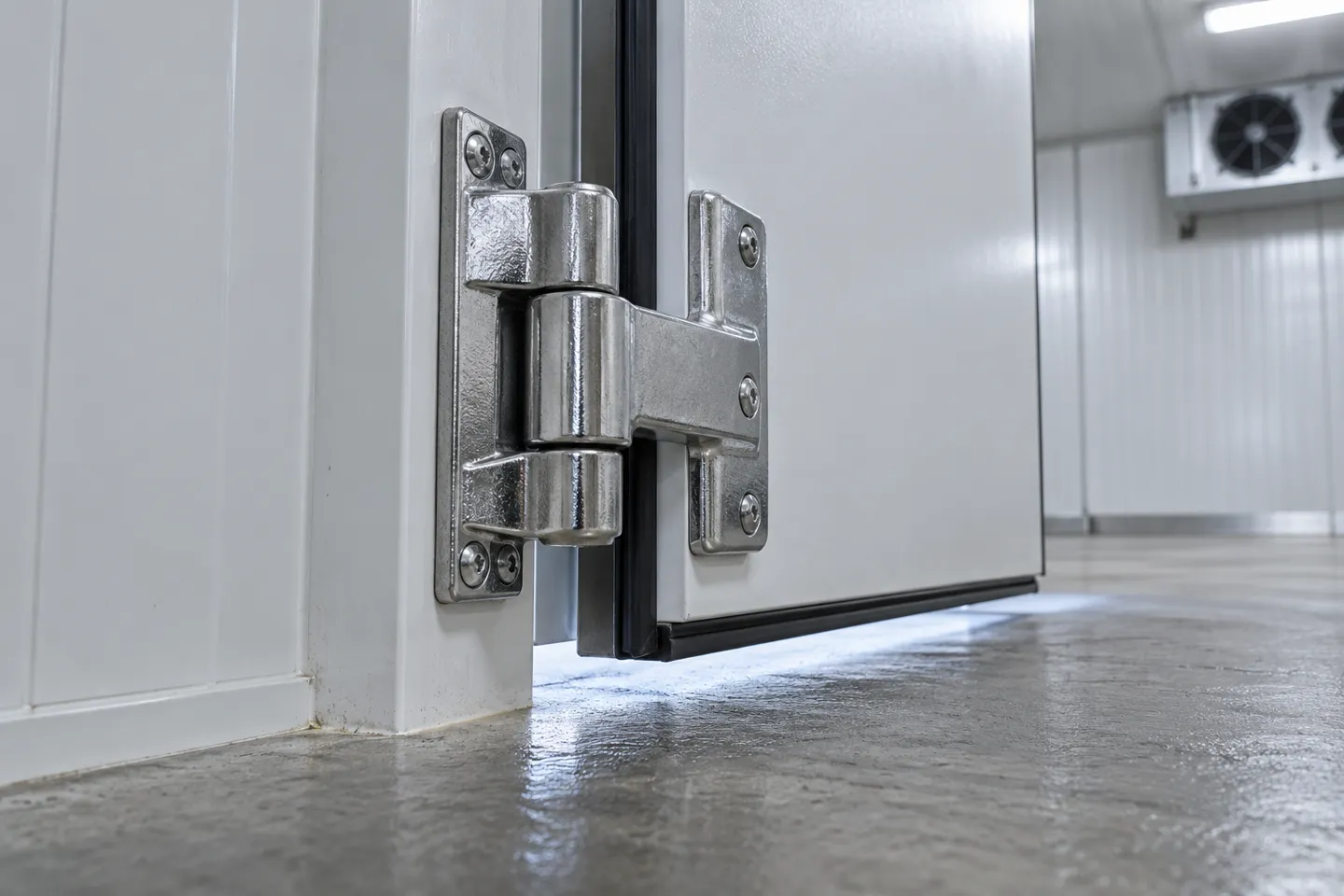
Walk-in cooler and freezer doors need something stronger. Cam-lift hinges (also sold as cam-rise) lift the door slightly as it opens and let it drop back down as it closes, so the door’s own weight presses the gasket shut and the sweep clears the floor instead of grinding it. This is the mechanism that dominates the North American walk-in market; the Kason 1245 series cam-lift hinge is widely described by parts distributors as the standard fitting used by major walk-in brands. The catch is that the cam is a wear part: as its surface wears flat, the lift height drops, the door drags, and the sweep and gasket take the damage. Torque hinges sit at the other end of the scale. They hold a door at any angle through internal friction, which is how glass panels and control panels on display and test equipment stay put.
One Symptom, Three Root Causes
A sagging or non-sealing door is one symptom with at least three distinct causes, and the repair differs for each:
| Symptom | Root cause | How to confirm |
|---|---|---|
| Door droops, drags on frame | Worn nylon bushings or hinge pads | Lift the door gently; play at the hinge pin means the wear parts are gone |
| Door drifts open, won’t lift clear | Worn cam on a cam-lift hinge | Measure lift height or inspect the cam surface for a flat spot |
| Door swings but won’t self-close | Collapsed spring or failed closer | Check spring tension at the hinge; isolate a separate door closer before blaming the hinge |
The failure also chains. Worn bushings let the door ride on its gasket, the gasket wears, the seal leaks, and the compressor runs longer.
Do not straighten a cast commercial hinge by bending it. Cast cam-lift hinges snap under bending force, and a broken hinge on a loaded cold room door is a safety incident, not a repair delay. Replace the part.
The practical sequence for a tech: check the free wear items first (bushings, pads, spacers), then the wear surfaces (cam, spring), and only then order a full hinge assembly. One caution belongs here: the hinge is not always the culprit. A distorted door, an aged gasket, or a failed closer on the frame produce the same symptoms, and parts replaced on a bent diagnosis get returned.
Hinge failure is a chain, not a single point.
Bolt a new cam over a worn shim or spacer and the new part fails early the same way. Replace the worn layer, not just the part above it.
Material and Duty Limits: What Each Refrigerator Hinge Can Take
Shape and mechanism being equal, material decides how long a hinge survives its environment. Four grades cover the market.
Zinc alloy die castings (ZDC) hold fine detail and tight tolerances at reasonable cost. That is why they dominate mid-duty refrigerator and cabinet hinges, almost always behind a chrome plating that carries the corrosion protection. Stainless steel castings, usually SUS304, trade cost for corrosion resistance and low-temperature toughness, and solid cast stainless bodies are what heavy cold storage and oven doors specify. Coated steel sits at the cost floor: the paint or zinc layer is the entire corrosion strategy, and once it is scratched the base metal rusts quickly in wet environments. Nylon and plastic parts are the fourth grade, not as hinges themselves but as the bushings, pads, and spacers that wear first by design, protecting the metal around them.
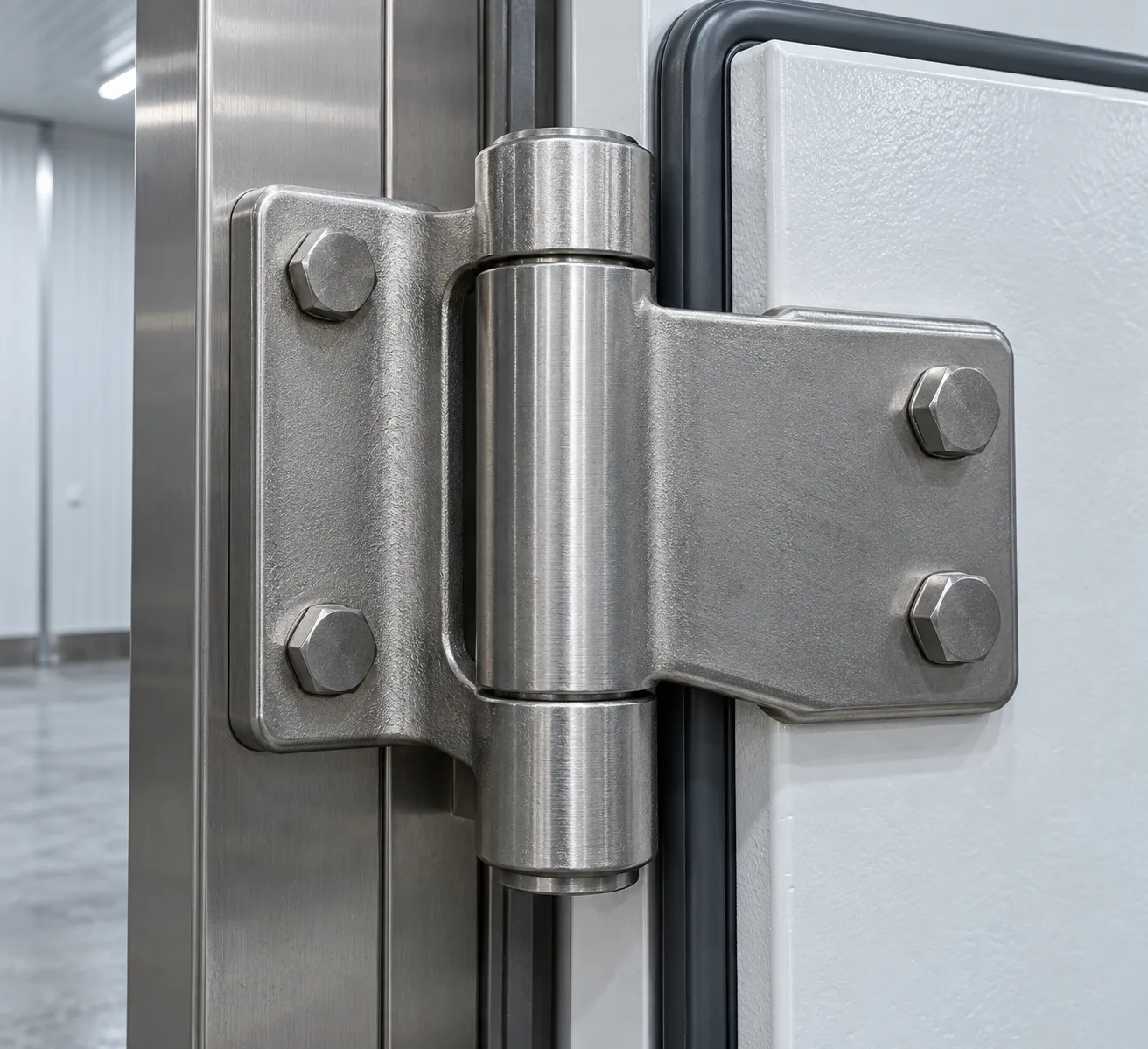
Three site conditions decide which grade a door needs. Door weight is the first variable. A household door may weigh under 50 kg, while loaded walk-in and test chamber doors routinely exceed 100 kg. Hinge ratings must be read against the real load, not the catalog photo. Temperature is the second: deep-freeze service hardens ordinary lubricants and can embrittle marginal alloys, so the low end of the duty range matters more than the average. Corrosion is the third, and it is graded in salt-spray test hours, with specifications commonly running from a few hundred hours up to 1,000 hours for washdown and coastal duty.
Three duty numbers that size the hinge
| Hinge material | Handles well | Fails early when | Confirm before specifying |
|---|---|---|---|
| Zinc alloy (ZDC), chrome plated | Mid-duty doors, indoor cold rooms | Washdown or coastal salt exposure outpaces the plating | Plating spec and gasket material |
| Stainless steel (SUS304) cast | Heavy doors, deep cold, corrosive sites | Rating taken from the material, not the actual casting design | Door weight vs rated load |
| Coated steel | Dry, indoor, light duty | First scratch in a wet environment | Coating type and edge coverage |
| Nylon bushings / pads (wear parts) | Protecting metal-to-metal contact | Operating past their wear life unmonitored | Availability of replacement inserts |
That regulatory pressure is real at the equipment level, not just the part level: since 2016 the U.S. Department of Energy’s test procedures for walk-in coolers and freezers have brought walk-in door energy performance into a federal compliance framework (U.S. DOE / Federal Register, 2016). A door that leaks because its hinges let it ride on the gasket is working against that framework.
How to Choose: Turn Your Conditions into a Requirements List
Choosing stops being guesswork once the first three sections are converted into four steps.
Send KUNLONG your door weight, service temperature, and corrosion exposure — the quote answers each parameter with test evidence.
Start a spec-based quoteStep one, weigh and measure. Get the real door weight, check the opening angle the layout needs, confirm the hand of the door, and measure any offset the frame demands. Step two, place the environment: service temperature at its coldest, washdown frequency, and salt or chemical exposure select the material grade. Step three, decide the behavior the door must have: free-swinging, self-closing, cam-lift with a positive gasket drop, or position-holding torque. Step four, demand evidence for anything duty-critical: cycle-life figures and salt-spray test hours in writing, not adjectives.
The fork in the road comes after diagnosis. Wear parts like bushings, pads, and spacers are worth replacing on their own. A worn cam or collapsed spring justifies a mechanism-level repair. But a cracked casting, elongated screw holes, or a distorted door frame mean the hinge is the wrong plan entirely, and the honest quote covers door or frame repair first.
Four steps to a hinge requirement
Weigh & measure — door weight, opening angle, hand, offset.
Place the environment — lowest service temperature, washdown and corrosion exposure.
Fix the behavior — free-swing, self-closing, cam-lift, or torque hold.
Demand evidence — cycle-life count, salt-spray hours, load rating in writing.
For Equipment Makers: Buy Refrigerator Hinges as Seal Components
Everything above reads differently from the equipment maker’s side of the glass. The failure chain that starts with a worn bushing in a home fridge becomes a warranty line and an energy penalty on a walk-in or test chamber door. The hinge wears, the door rides its gasket, the seal leaks, and the machine pays for it every compressor cycle. That is the argument for treating door hinges as seal components rather than trim.
It is also an argument about purchasing language. Hinges bought by appearance and unit price arrive without cycle counts, salt-spray hours, or load ratings, and their failure date arrives unannounced. Hinges bought against the parameters in the previous section come with numbers attached: real door weight, coldest service temperature, corrosion exposure, required cycles. Those numbers turn the failure chain into a schedule. The DOE has also folded walk-in door performance into a federal test framework. A door’s sealing behavior is no longer a private matter between a manufacturer and its supplier. It is part of compliance.
The practical takeaway fits in one line. Write the four parameters into the RFQ, ask bidders for test evidence against each one, and treat a hinge quote without numbers as incomplete. The lowest quote that survives that filter is rarely the highest-priced failure avoided two winters later.
If you are specifying hinges for cold storage, oven, or chamber doors, KUNLONG’s refrigerator door hinges built for cold-storage duty are available with SUS304 solid-cast and ZDC low-profile 180° options.
Get hinges specified for cold-storage duty
Door weight, coldest service temperature, salt-spray hours, cycle life — send the four parameters and the quote answers each one with numbers.
Request a specification quoteReferences
- U.S. Department of Energy / Federal Register. “Energy Conservation Program: Test Procedure for Walk-in Coolers and Walk-in Freezers.” 2016. https://www.federalregister.gov/documents/2016/12/28/2016-29708/energy-conservation-program-test-procedure-for-walk-in-coolers-and-walk-in-freezers